Quick Answer:
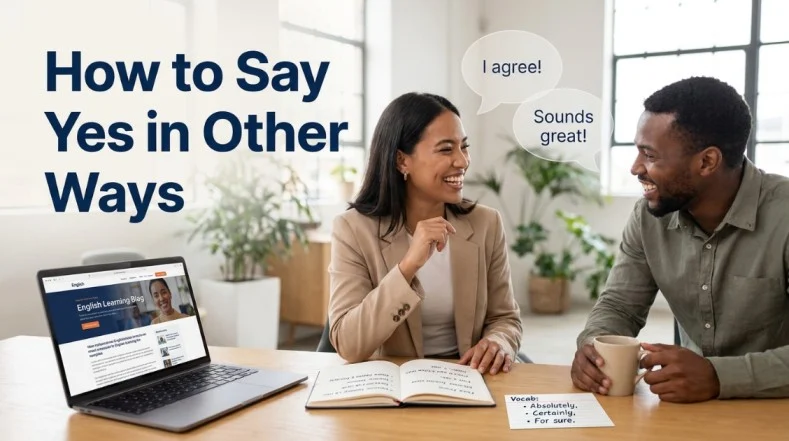
Looking for other ways to say yes? Some of the best alternatives are absolutely, certainly, of course, I agree, and that sounds great. The right phrase depends on whether you want to show agreement, accept an offer, or express excitement.
Learning other ways to say yes helps you sound more natural and confident in English. While “yes” is simple and correct, repeating it in every conversation can make your speech feel limited. Different alternatives can show agreement, acceptance, excitement, or polite approval.
You can use these phrases with friends, coworkers, teachers, and clients. Some sound formal, while others are better for casual chats. This guide explains 30 useful alternatives to help you choose the right words for each situation. You will also learn how to express excitement in English and use professional reaction phrases naturally.
Quick Categories
Formal alternatives to “yes”
- Certainly
- Absolutely
- Indeed
- Affirmative
Pro Tip: Use formal alternatives when you want to sound respectful, clear, and professional.
Casual alternatives
- Sure
- Of course
- Sounds good
- Definitely
Pro Tip: Casual phrases work well with friends and people you know comfortably.
Professional alternatives
- I agree
- That works for me
- I would be happy to
- That sounds good
Pro Tip: Choose a phrase that clearly shows agreement without sounding too informal.
Informal expressions
- Yep
- Yeah
- You bet
- Why not?
Pro Tip: Informal expressions in English are useful in relaxed conversations, but they may not fit every professional setting.
“A simple yes becomes more powerful when your tone matches the situation.”
Common Mistakes
1. Using “yeah” in every situation
Mistake: “Yeah, I agree with the company policy.”
Better: “I agree with the company policy.”
Why: “Yeah” is casual and may sound less professional in formal settings.
2. Using “sure” when you mean strong agreement
Mistake: “Sure, this is the best solution.”
Better: “Absolutely, this is the best solution.”
Why: “Sure” can sound uncertain, while “absolutely” shows stronger agreement.
3. Saying “of course” with an annoyed tone
Mistake: “Of course, I already told you that.”
Better: “Of course, I would be happy to help.”
Why: Tone changes the meaning. “Of course” can sound friendly or impatient.
4. Using “affirmative” in casual conversations
Mistake: “Affirmative, I will meet you for coffee.”
Better: “Sure, I will meet you for coffee.”
Why: “Affirmative” sounds official and is uncommon in everyday conversation.
5. Using “why not?” when you want to sound enthusiastic
Mistake: “Why not? I am excited to join the project.”
Better: “Absolutely! I am excited to join the project.”
Why: “Why not?” can sound hesitant, while “absolutely” shows clear enthusiasm.
What Does “Yes” Mean?
Yes is a word used to show agreement, acceptance, confirmation, or a positive answer to a question.
It is commonly used as an interjection, but it can also appear in short answers and expressions.
Example: “Yes, I would like to join the meeting.”
When to Use “Yes”
You can use the word in several common situations:
- Answering questions: When someone asks for information or confirmation.
- Showing agreement: When you agree with an idea or opinion.
- Accepting an offer: When someone invites you or offers help.
- Professional communication: When you want to confirm something clearly.
- Casual conversations: When you want a simple and natural response.
Spoken vs. Written: “Yes” works well in both spoken and written English.
Formal vs. Informal: It is neutral and appropriate in most situations, but alternatives can help you sound more expressive.
Is It Professional or Polite to Say “Yes”?
Polite? ✔️ Yes
Professional? ✔️ Yes
“Yes” is both polite and professional. However, a more specific phrase can make your response clearer and more helpful.
Business-style example: “Yes, I agree with your proposal and would be happy to discuss the next steps.”
The best alternative depends on whether you are confirming, agreeing, or accepting an offer.
Pros and Cons of Using “Yes”
Pros
- Simple and natural: Everyone understands it.
- Friendly tone: It can sound warm and positive.
- Common usage: It works in everyday and professional English.
- Easy to understand: It clearly shows agreement or acceptance.
Cons
- Too simple for some situations: It may not explain why you agree.
- Overused: Repeating it can make conversations feel less expressive.
- Limited emotional range: It does not always show excitement or enthusiasm.
- Not always suitable for detailed responses: Some situations need a more complete answer.
“The right alternative can turn a basic answer into a confident and meaningful response.”
Other Ways to Say “Yes” With Examples
These alternatives will help you sound more fluent, confident, and natural in different situations.
Use them according to tone, context, and audience to express agreement, acceptance, or excitement.
1. Phrase: Absolutely
Meaning: A strong way to say yes or show complete agreement.
Explanation: Use it when you feel very sure about something.
Example Sentence: “Absolutely! I would love to help with the project.”
Best Use: Strong agreement
Worst Use: Uncertain answers
Tone: Confident, enthusiastic, positive
Context Variability: Casual: “Absolutely!” Professional: “Absolutely, I agree with your recommendation.” Spoken: “Absolutely, that sounds great.”
2. Phrase: Certainly
Meaning: A polite and formal way to say yes.
Explanation: It shows agreement or willingness to do something.
Example Sentence: “Certainly, I can send you the report this afternoon.”
Best Use: Professional requests
Worst Use: Casual jokes
Tone: Formal, polite, respectful
Context Variability: Casual: “Sure, I can help.” Professional: “Certainly, I can assist you.” Spoken: “Certainly, I would be happy to.”
3. Phrase: Of Course
Meaning: A friendly way to show agreement or willingness.
Explanation: It often suggests that the answer is obvious or that you are happy to help.
Example Sentence: “Of course, you can use my notes.”
Best Use: Friendly agreement
Worst Use: Impatient replies
Tone: Friendly, warm, helpful
Context Variability: Casual: “Of course!” Professional: “Of course, I can arrange that.” Spoken: “Of course, I would be happy to help.”
4. Phrase: Definitely
Meaning: A strong way to say yes with confidence.
Explanation: It shows that you are sure about your answer or decision.
Example Sentence: “Definitely, I will join the meeting tomorrow.”
Best Use: Confident agreement
Worst Use: Uncertain decisions
Tone: Confident, positive, informal
Context Variability: Casual: “Definitely!” Professional: “Definitely, we should consider this option.” Spoken: “Definitely, that is a good idea.”
5. Phrase: Sure
Meaning: A casual way to say yes or agree to a request.
Explanation: It is common in everyday conversations and friendly replies.
Example Sentence: “Sure, I can help you with that.”
Best Use: Casual requests
Worst Use: Formal announcements
Tone: Casual, friendly, relaxed
Context Variability: Casual: “Sure!” Professional: “Certainly, I can help.” Spoken: “Sure, that works for me.”
6. Phrase: I Agree
Meaning: A direct way to show that you share someone’s opinion.
Explanation: It is useful when discussing ideas, plans, or decisions.
Example Sentence: “I agree that we should start earlier.”
Best Use: Professional discussions
Worst Use: Accepting invitations
Tone: Clear, professional, respectful
Context Variability: Casual: “I agree with you.” Professional: “I agree with your recommendation.” Spoken: “I agree, that is a good point.”
7. Phrase: That Sounds Good
Meaning: A friendly way to accept an idea or suggestion.
Explanation: It shows that you like the proposed plan.
Example Sentence: “That sounds good. Let us meet at three.”
Best Use: Accepting plans
Worst Use: Strong disagreement
Tone: Friendly, positive, natural
Context Variability: Casual: “Sounds good!” Professional: “That sounds good to me.” Spoken: “That sounds good, I will be there.”
8. Phrase: That Works for Me
Meaning: A way to say that a plan or suggestion is acceptable.
Explanation: It is useful when agreeing to a time, place, or arrangement.
Example Sentence: “Friday afternoon works for me.”
Best Use: Making arrangements
Worst Use: Emotional approval
Tone: Professional, practical, neutral
Context Variability: Casual: “That works for me.” Professional: “That schedule works for me.” Spoken: “Yes, that works for me.”
9. Phrase: I Would Be Happy To
Meaning: A polite way to agree to help or do something.
Explanation: It shows willingness and a positive attitude.
Example Sentence: “I would be happy to review your presentation.”
Best Use: Professional offers
Worst Use: Casual jokes
Tone: Polite, professional, warm
Context Variability: Casual: “Sure, I can help.” Professional: “I would be happy to assist you.” Spoken: “I would be happy to help.”
10. Phrase: Indeed
Meaning: A formal way to agree or confirm something.
Explanation: It is more common in formal writing and serious discussions.
Example Sentence: “Indeed, this is an important issue.”
Best Use: Formal agreement
Worst Use: Casual chat
Tone: Formal, serious, respectful
Context Variability: Casual: “Yes, that is true.” Professional: “Indeed, your point is well taken.” Spoken: “Indeed, that is correct.”
11. Phrase: Affirmative
Meaning: An official or formal way to say yes.
Explanation: It is often used in official, military, or technical communication.
Example Sentence: “Affirmative, the meeting will begin at nine.”
Best Use: Official confirmation
Worst Use: Friendly conversations
Tone: Formal, official, direct
Context Variability: Casual: “Yes, that is right.” Professional: “Affirmative, the request has been approved.” Spoken: “Affirmative, I received the message.”
12. Phrase: You Bet
Meaning: A casual and enthusiastic way to say yes.
Explanation: It often shows that you are happy to agree or help.
Example Sentence: “You bet! I would love to come along.”
Best Use: Friendly agreement
Worst Use: Formal writing
Tone: Casual, enthusiastic, friendly
Context Variability: Casual: “You bet!” Professional: “Certainly, I would be happy to help.” Spoken: “You bet, that sounds fun.”
13. Phrase: Why Not?
Meaning: A casual way to accept a suggestion or idea.
Explanation: It shows that you see no reason to refuse.
Example Sentence: “Why not? Let us try something new.”
Best Use: Casual suggestions
Worst Use: Formal decisions
Tone: Informal, open, relaxed
Context Variability: Casual: “Why not?” Professional: “That sounds like a reasonable option.” Spoken: “Why not, I am free this afternoon.”
14. Phrase: I Would Love To
Meaning: A warm way to accept an invitation or offer.
Explanation: It shows genuine interest and enthusiasm.
Example Sentence: “I would love to join you for dinner.”
Best Use: Friendly invitations
Worst Use: Formal approvals
Tone: Warm, enthusiastic, friendly
Context Variability: Casual: “I would love to!” Professional: “I would be delighted to participate.” Spoken: “I would love to come.”
15. Phrase: I Am In
Meaning: A casual way to say that you want to participate.
Explanation: It is often used when agreeing to a plan or activity.
Example Sentence: “I am in! Let us plan the trip.”
Best Use: Casual plans
Worst Use: Formal meetings
Tone: Informal, enthusiastic, friendly
Context Variability: Casual: “I am in!” Professional: “I would be happy to participate.” Spoken: “I am in, that sounds exciting.”
16. Phrase: Count Me In
Meaning: A friendly way to say that you want to join.
Explanation: It shows enthusiasm about participating in an activity.
Example Sentence: “Count me in for the weekend picnic.”
Best Use: Group activities
Worst Use: Formal approvals
Tone: Casual, enthusiastic, positive
Context Variability: Casual: “Count me in!” Professional: “I would be happy to participate.” Spoken: “Count me in, that sounds great.”
17. Phrase: Go Ahead
Meaning: A way to give permission or approve an action.
Explanation: It tells someone that they can continue or proceed.
Example Sentence: “Go ahead and send the email.”
Best Use: Giving permission
Worst Use: Showing agreement with opinions
Tone: Casual, direct, helpful
Context Variability: Casual: “Go ahead.” Professional: “Please proceed with the request.” Spoken: “Go ahead, you can start.”
18. Phrase: By All Means
Meaning: A formal and polite way to give permission or encouragement.
Explanation: It shows that you are happy for someone to do something.
Example Sentence: “By all means, please use the conference room.”
Best Use: Polite permission
Worst Use: Casual jokes
Tone: Formal, polite, encouraging
Context Variability: Casual: “Sure, go ahead.” Professional: “By all means, please continue.” Spoken: “By all means, you may proceed.”
19. Phrase: I Approve
Meaning: A direct way to say that you accept or support something.
Explanation: It is often used for decisions, plans, or proposals.
Example Sentence: “I approve of the proposed changes.”
Best Use: Formal decisions
Worst Use: Casual invitations
Tone: Formal, direct, professional
Context Variability: Casual: “That sounds good.” Professional: “I approve the proposed budget.” Spoken: “I approve of this plan.”
20. Phrase: That Is Fine
Meaning: A polite way to say that something is acceptable.
Explanation: It is useful when agreeing to a request or arrangement.
Example Sentence: “That is fine with me. We can meet tomorrow.”
Best Use: Accepting arrangements
Worst Use: Showing excitement
Tone: Neutral, polite, calm
Context Variability: Casual: “That is fine.” Professional: “That arrangement is acceptable.” Spoken: “That is fine with me.”
21. Phrase: No Problem
Meaning: A casual way to agree to a request or offer help.
Explanation: It shows that something is easy or not an inconvenience.
Example Sentence: “No problem, I can send the file again.”
Best Use: Casual requests
Worst Use: Formal approvals
Tone: Casual, friendly, helpful
Context Variability: Casual: “No problem!” Professional: “Certainly, I can resend the file.” Spoken: “No problem, I will take care of it.”
22. Phrase: That Is Correct
Meaning: A formal way to confirm that something is true or accurate.
Explanation: It is useful when answering questions or checking information.
Example Sentence: “That is correct. The meeting starts at ten.”
Best Use: Formal confirmation
Worst Use: Casual invitations
Tone: Formal, precise, professional
Context Variability: Casual: “Yes, that is right.” Professional: “That is correct, the figures have been updated.” Spoken: “That is correct.”
23. Phrase: I Confirm
Meaning: A formal way to say that information or an arrangement is correct.
Explanation: It is commonly used in emails and professional communication.
Example Sentence: “I confirm that I will attend the meeting.”
Best Use: Written confirmation
Worst Use: Casual chat
Tone: Formal, clear, professional
Context Variability: Casual: “Yes, I will be there.” Professional: “I confirm my attendance.” Spoken: “I confirm that the details are correct.”
24. Phrase: I Accept
Meaning: A formal way to agree to an offer, proposal, or invitation.
Explanation: It is useful when making a clear decision.
Example Sentence: “I accept your offer and look forward to working with you.”
Best Use: Formal decisions
Worst Use: Casual invitations
Tone: Formal, clear, professional
Context Variability: Casual: “Sure, I would love to.” Professional: “I accept the proposed terms.” Spoken: “I accept your offer.”
25. Phrase: I Am Happy To
Meaning: A polite way to show willingness to do something.
Explanation: It communicates a positive attitude without sounding overly formal.
Example Sentence: “I am happy to answer any questions.”
Best Use: Professional assistance
Worst Use: Strong disagreement
Tone: Polite, friendly, professional
Context Variability: Casual: “Sure, I can help.” Professional: “I am happy to assist.” Spoken: “I am happy to help.”
26. Phrase: That Makes Sense
Meaning: A way to agree that an idea is logical or understandable.
Explanation: It is useful when someone explains a reason or suggestion.
Example Sentence: “That makes sense. We should check the results first.”
Best Use: Agreeing with ideas
Worst Use: Accepting invitations
Tone: Casual, thoughtful, positive
Context Variability: Casual: “That makes sense.” Professional: “That reasoning makes sense to me.” Spoken: “Yes, that makes sense.”
27. Phrase: I Could Not Agree More
Meaning: A strong way to say that you completely agree.
Explanation: It emphasizes that you share the same opinion.
Example Sentence: “I could not agree more with your suggestion.”
Best Use: Strong agreement
Worst Use: Simple confirmations
Tone: Strong, formal, confident
Context Variability: Casual: “I totally agree.” Professional: “I could not agree more with your assessment.” Spoken: “I could not agree more.”
28. Phrase: That Is a Great Idea
Meaning: A positive way to agree with a suggestion.
Explanation: It shows approval and often adds enthusiasm.
Example Sentence: “That is a great idea. Let us try it next week.”
Best Use: Positive suggestions
Worst Use: Formal confirmations
Tone: Friendly, enthusiastic, positive
Context Variability: Casual: “Great idea!” Professional: “That is a great idea for the project.” Spoken: “That is a great idea.”
29. Phrase: I Am Happy With That
Meaning: A way to say that you are satisfied with a decision or arrangement.
Explanation: It shows that you accept something and have no objection.
Example Sentence: “I am happy with that plan.”
Best Use: Accepting arrangements
Worst Use: Strong enthusiasm
Tone: Neutral, positive, professional
Context Variability: Casual: “That is fine with me.” Professional: “I am happy with that arrangement.” Spoken: “I am happy with that.”
30. Phrase: I Am Delighted To
Meaning: A formal and enthusiastic way to say yes.
Explanation: It shows that you are very pleased to accept an offer or invitation.
Example Sentence: “I am delighted to accept your invitation.”
Best Use: Formal acceptance
Worst Use: Casual requests
Tone: Formal, warm, enthusiastic
Context Variability: Casual: “I would love to.” Professional: “I am delighted to accept the invitation.” Spoken: “I am delighted to join you.”
“Strong agreement, polite acceptance, and genuine excitement all deserve different expressions.”
Mini Quiz / Self-Check
1. Which phrase is most suitable for a formal business email?
A. Yep
B. You bet
C. I confirm
D. Why not?
Answer: C. I confirm
2. Which phrase best shows strong agreement?
A. Maybe
B. Absolutely
C. That is fine
D. I suppose so
Answer: B. Absolutely
3. Which sentence is most professional?
A. Yeah, I will send the report.
B. You bet, I will send the report.
C. I confirm that I will send the report.
D. Why not, I will send the report.
Answer: C. I confirm that I will send the report.
4. Which phrase best accepts a casual invitation?
A. I approve
B. Affirmative
C. I would love to
D. I confirm
Answer: C. I would love to
Comparison Table: Top Alternatives
| Phrase | Tone | Best Use |
|---|---|---|
| Absolutely | Confident, enthusiastic | Strong agreement |
| Certainly | Formal, polite | Professional requests |
| Of course | Friendly, warm | Everyday agreement |
| Definitely | Confident, positive | Casual agreement |
| I agree | Clear, professional | Discussions |
| That sounds good | Friendly, positive | Accepting plans |
| That works for me | Practical, neutral | Making arrangements |
| I would be happy to | Polite, professional | Offering help |
| I confirm | Formal, precise | Written confirmation |
| I would love to | Warm, enthusiastic | Accepting invitations |
FAQs
What are the best other ways to say yes?
Some of the best alternatives are absolutely, certainly, of course, definitely, and I agree. The best choice depends on your tone and situation.
What is a polite way to say yes?
Certainly, of course, I would be happy to, and I would love to are polite ways to agree or accept an offer.
What is the professional way to say yes?
In professional communication, use I agree, that works for me, I confirm, or I would be happy to.
How can I say yes without sounding boring?
Use phrases such as absolutely, definitely, that sounds good, or that is a great idea to add confidence and enthusiasm.
What are informal expressions in English for yes?
Common informal expressions include yep, yeah, sure, you bet, and count me in. Use them in relaxed conversations rather than formal writing.
Conclusion
Learning other ways to say yes helps you communicate with more variety and confidence. From absolutely to I confirm, each phrase has a different tone and purpose.
Practice these alternatives in short sentences and real conversations. The more you notice context and tone, the more naturally you will express agreement, acceptance, and excitement in English.
Read More Related Articles:
Other Ways to Say Next Steps | Smart Phrases That Move …
You’re Welcome Other Ways to Say | 30+ Polished …
Other Ways to Say Diarrhea | Polite, Professional & Clear …

Emma Richardson is a professional content writer at Replynst.com. She creates clear, engaging and well-researched content designed to answer readers’ questions while following modern SEO best practices. Her focus is on helpful, reader-friendly articles that deliver genuine value.