Quick Answer:
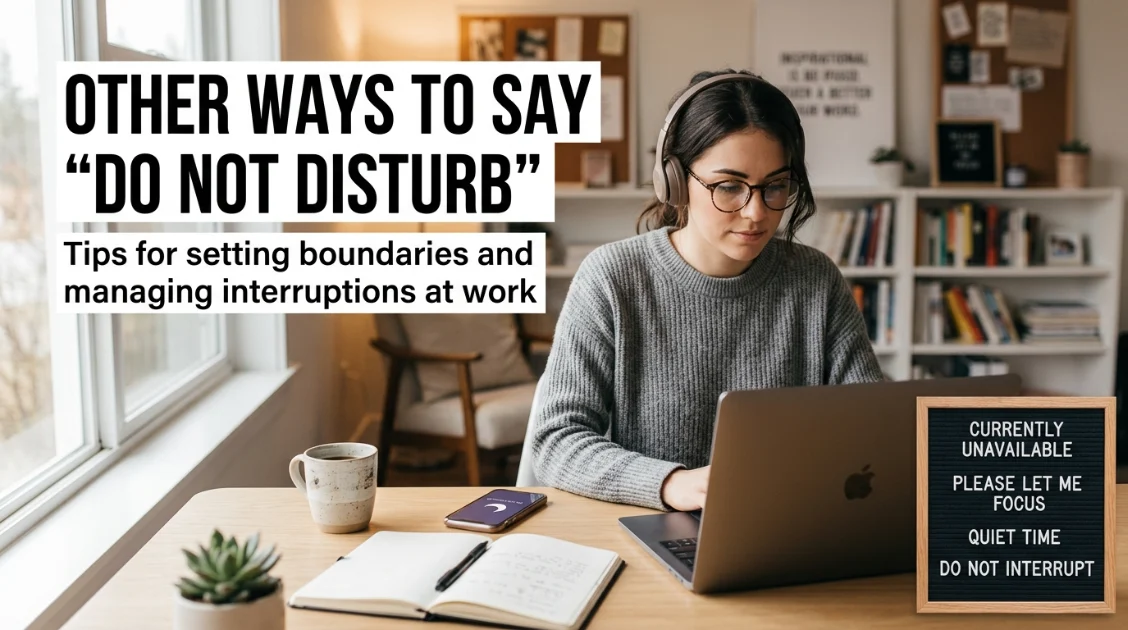
The best alternatives to do not disturb include please give me some privacy, please do not interrupt, I need some quiet time, please let me focus, and I am unavailable right now. The right expression depends on whether you want to sound polite, professional, direct, or casual.
Knowing other ways to say do not disturb can help you communicate boundaries without sounding rude or unfriendly. The phrase is common in workplaces, homes, classrooms, messages, and digital communication when someone needs privacy, concentration, or uninterrupted time.
Learning alternatives to do not disturb also helps English learners choose language that matches the situation. A professional message may require a polite expression, while a conversation with a friend can sound more relaxed. Just as learners practice how to express excitement in English, understanding tone makes everyday communication more natural, respectful, and confident. This guide explains 30 useful alternatives, with meanings, examples, tones, and practical contexts so you can choose the right phrase for professional, casual, spoken, or written English.
Quick Categories
Formal alternatives to “do not disturb”
- Please do not interrupt
- Please refrain from disturbing me
- I require some privacy
- I am unavailable at present
Pro Tip: Use formal alternatives when communicating boundaries in professional, academic, or official situations.
Casual alternatives
- Give me a minute
- I need some quiet time
- Let me focus
- I need some space
Pro Tip: Casual phrases work best when speaking with friends, family members, or people you know well.
Professional alternatives
- I am currently unavailable
- Please allow me some uninterrupted time
- I am in a focused work session
- I will get back to you later
Pro Tip: Professional communication should communicate your boundary while remaining respectful and solution-focused.
Informal expressions
- Not right now
- Can you give me a moment?
- I need a little peace
- Please leave me alone for a bit
Pro Tip: Informal expressions in English are useful in relaxed conversations, but choose softer wording when speaking with colleagues or clients.
“A clear boundary does not have to sound rude. The right words can make your message both firm and respectful.”
Common Mistakes
1. Using “do not disturb” without considering tone
Mistake: “Do not disturb me.”
Better: “Could you please give me a few minutes to focus?”
Why: The original phrase can sound commanding when used directly with another person.
2. Using “leave me alone” in professional situations
Mistake: “Please leave me alone while I work.”
Better: “Please allow me some uninterrupted time to finish this task.”
Why: “Leave me alone” can sound irritated or confrontational.
3. Forgetting to explain temporary unavailability
Mistake: “I am unavailable.”
Better: “I am unavailable right now, but I will respond this afternoon.”
Why: Adding a timeframe makes the message more helpful and professional.
4. Using overly formal language with close friends
Mistake: “Please refrain from disturbing me during this period.”
Better: “Give me a few minutes, please.”
Why: Extremely formal language can sound unnatural in casual conversations.
5. Confusing privacy with concentration
Mistake: “I need privacy” when you simply need to finish a task.
Better: “I need some uninterrupted time to focus.”
Why: “Privacy” suggests being alone or keeping something personal, while “uninterrupted time” focuses on concentration.
“Professional boundaries sound stronger when they explain what you need instead of simply telling others what not to do.”
What Does “Do Not Disturb” Mean?
Do not disturb is a phrase used to tell someone not to interrupt, contact, visit, or bother you for a particular period.
It can describe a physical request, such as asking someone not to enter a room, or a digital setting, such as activating a phone’s Do Not Disturb mode.
The phrase is generally understandable and direct. However, its tone can change depending on how it is delivered.
Example: “Please do not disturb me while I am preparing the presentation.”
When to Use “Do Not Disturb”
You can use the phrase in several common situations:
- At work: When you need uninterrupted time to complete an important task.
- At home: When you need privacy or rest.
- In classrooms: When a student needs concentration.
- During meetings: When interruptions should be avoided.
- On digital devices: When you do not want notifications or calls.
- In written notices: When visitors should wait before entering.
Spoken vs. Written
In spoken English, “do not disturb” can sound direct. A softer alternative may be more appropriate when you are speaking to another person.
In written communication, the phrase is common on signs, status messages, hotel doors, and digital notifications.
Formal vs. Informal
The phrase itself is neutral, but the direct command “Do not disturb me” can sound firm.
For a more polite tone, use expressions such as “Please give me some uninterrupted time” or “I am currently unavailable.”
Is It Professional or Polite to Say “Do Not Disturb”?
Polite? ✔️ Yes, depending on wording
Professional? ✔️ Yes, in appropriate contexts
“Do not disturb” is not inherently rude. However, a direct command can sound stronger than necessary in some professional situations.
A softer workplace alternative is often better.
Business-style example:
“Please allow me some uninterrupted time to complete this report. I will be available after 3 p.m.”
This approach communicates the same boundary while giving the other person useful information.
Pros and Cons of Using “Do Not Disturb”
Pros
- Simple and natural: Most English speakers immediately understand it.
- Clear message: It communicates a boundary without unnecessary explanation.
- Common usage: It appears in speech, writing, signs, and digital settings.
- Easy to understand: The meaning is straightforward.
Cons
- Can sound direct: “Do not disturb me” may feel commanding.
- Limited emotional range: It does not explain whether you need privacy, concentration, or rest.
- May sound unfriendly: The wording can feel cold without “please” or additional context.
- Not always ideal for professional communication: Softer alternatives may create a more cooperative tone.
“When you want people to respect your time, clarity and courtesy work better together.”
Other Ways to Say “Do Not Disturb” With Examples
These alternatives will help you sound more fluent, confident, and natural in different situations.
Use them according to tone, context, and audience to communicate boundaries respectfully and clearly.
1. Phrase: Please Do Not Interrupt
Meaning: A polite request asking someone not to break your concentration or activity.
Explanation: This phrase is direct but appropriate when you want someone to wait until you finish.
Example Sentence: “Please do not interrupt while I am presenting the results.”
Best Use: Formal conversations
Worst Use: Friendly teasing
Tone: Polite, direct, professional
Context Variability: Casual: “Please don’t interrupt.” Professional: “Please do not interrupt during the presentation.” Spoken: “Please do not interrupt me for a moment.”
2. Phrase: I Am Currently Unavailable
Meaning: You are not available to communicate or respond at the moment.
Explanation: This is one of the most useful professional alternatives because it communicates a boundary without sounding hostile.
Example Sentence: “I am currently unavailable but will respond to your message later today.”
Best Use: Workplace communication
Worst Use: Casual family chat
Tone: Professional, polite, neutral
Context Variability: Casual: “I can’t talk right now.” Professional: “I am currently unavailable.” Spoken: “I am currently unavailable, but I will call you later.”
3. Phrase: Please Give Me Some Privacy
Meaning: A request for personal space or freedom from interruption.
Explanation: Use this phrase when you specifically want to be left alone rather than simply needing to concentrate.
Example Sentence: “Please give me some privacy while I make this important call.”
Best Use: Personal situations
Worst Use: Routine teamwork
Tone: Polite, firm, respectful
Context Variability: Casual: “Can you give me some privacy?” Professional: “I would appreciate some privacy for this discussion.” Spoken: “Please give me some privacy for a few minutes.”
4. Phrase: I Need Some Quiet Time
Meaning: You need a period without noise or interruptions.
Explanation: This is a gentle alternative that works especially well when you need rest or concentration.
Example Sentence: “I need some quiet time to finish reading this report.”
Best Use: Casual situations
Worst Use: Formal notices
Tone: Gentle, calm, friendly
Context Variability: Casual: “I need some quiet time.” Professional: “I need some uninterrupted time to complete this task.” Spoken: “I just need some quiet time.”
5. Phrase: Please Let Me Focus
Meaning: A request for someone to avoid interrupting while you concentrate.
Explanation: This expression is short, natural, and useful when completing a task.
Example Sentence: “Please let me focus for a few minutes so I can finish this.”
Best Use: Work situations
Worst Use: Formal letters
Tone: Direct, polite, focused
Context Variability: Casual: “Let me focus for a minute.” Professional: “Please allow me some time to focus.” Spoken: “Please let me focus for a moment.”
6. Phrase: I Need Some Uninterrupted Time
Meaning: You need time without interruptions.
Explanation: This is an excellent professional alternative because it focuses on the task rather than criticizing other people.
Example Sentence: “I need some uninterrupted time to complete the financial report.”
Best Use: Professional settings
Worst Use: Casual jokes
Tone: Professional, polite, clear
Context Variability: Casual: “I need some quiet time.” Professional: “I need some uninterrupted time.” Spoken: “I need some uninterrupted time to finish this.”
7. Phrase: I Am in a Focused Work Session
Meaning: You are concentrating on a specific task and prefer not to be interrupted.
Explanation: This phrase is especially suitable for modern workplace communication.
Example Sentence: “I am in a focused work session and will respond when I am finished.”
Best Use: Workplace messages
Worst Use: Casual conversations
Tone: Professional, modern, clear
Context Variability: Casual: “I’m working right now.” Professional: “I am in a focused work session.” Spoken: “I’m in a focused work session at the moment.”
8. Phrase: I Will Get Back to You Later
Meaning: You cannot respond now but intend to respond afterward.
Explanation: This alternative is useful when the main goal is to postpone communication politely.
Example Sentence: “I am busy at the moment, but I will get back to you later.”
Best Use: Professional messages
Worst Use: Urgent situations
Tone: Polite, reassuring, professional
Context Variability: Casual: “I’ll get back to you later.” Professional: “I will get back to you later today.” Spoken: “Let me finish this and I’ll get back to you.”
9. Phrase: Please Allow Me Some Time
Meaning: A polite request for time without interruption.
Explanation: This phrase works well when you want to sound respectful and measured.
Example Sentence: “Please allow me some time to review the proposal.”
Best Use: Formal communication
Worst Use: Casual banter
Tone: Formal, polite, respectful
Context Variability: Casual: “Give me a minute.” Professional: “Please allow me some time.” Spoken: “Please allow me a little time to review this.”
10. Phrase: I Need a Moment
Meaning: You need a short amount of time before continuing.
Explanation: This concise expression is natural in everyday spoken English.
Example Sentence: “I need a moment to finish this message.”
Best Use: Everyday speech
Worst Use: Formal notices
Tone: Casual, calm, natural
Context Variability: Casual: “I need a moment.” Professional: “Could you give me a moment to finish?” Spoken: “I just need a moment.”
11. Phrase: Give Me a Minute
Meaning: Wait briefly and avoid interrupting until you are ready.
Explanation: This is an informal phrase commonly used with friends, family, and familiar colleagues.
Example Sentence: “Give me a minute, and I will help you with that.”
Best Use: Casual speech
Worst Use: Formal emails
Tone: Informal, friendly, direct
Context Variability: Casual: “Give me a minute.” Professional: “Could you give me a few minutes?” Spoken: “Give me a minute and I’ll be there.”
12. Phrase: I Need Some Space
Meaning: You want physical or emotional distance for a while.
Explanation: This phrase is useful when you need personal space, but it can imply an emotional issue depending on context.
Example Sentence: “I need some space right now, and I will talk to you later.”
Best Use: Personal conversations
Worst Use: Routine work requests
Tone: Direct, personal, serious
Context Variability: Casual: “I need some space.” Professional: “I need some uninterrupted time.” Spoken: “I just need some space for a while.”
13. Phrase: Please Leave Me Alone for a Bit
Meaning: A request for someone not to interact with you temporarily.
Explanation: This is clear but more direct than many professional alternatives.
Example Sentence: “Please leave me alone for a bit so I can calm down.”
Best Use: Personal situations
Worst Use: Workplace communication
Tone: Direct, firm, informal
Context Variability: Casual: “Please leave me alone for a bit.” Professional: “I need some time to myself.” Spoken: “Can you please leave me alone for a little while?”
14. Phrase: Not Right Now
Meaning: You do not want to communicate or engage at the present moment.
Explanation: This short expression is natural but can sound abrupt without a polite addition.
Example Sentence: “Not right now, please. I need to finish this task.”
Best Use: Casual conversations
Worst Use: Formal requests
Tone: Direct, casual, brief
Context Variability: Casual: “Not right now.” Professional: “I am unavailable right now.” Spoken: “Not right now, please.”
15. Phrase: Please Wait Until I Am Finished
Meaning: A request for someone to wait until your current activity is complete.
Explanation: This phrase is clear and appropriate when an interruption would disrupt your work.
Example Sentence: “Please wait until I am finished before asking questions.”
Best Use: Work settings
Worst Use: Casual greetings
Tone: Direct, polite, instructional
Context Variability: Casual: “Wait until I’m finished.” Professional: “Please wait until I am finished.” Spoken: “Please wait until I finish this.”
16. Phrase: I Am Busy Right Now
Meaning: You are occupied and cannot give attention to someone at the moment.
Explanation: This is a common everyday phrase that communicates temporary unavailability.
Example Sentence: “I am busy right now, but I can speak with you later.”
Best Use: Everyday communication
Worst Use: Formal reports
Tone: Casual, direct, neutral
Context Variability: Casual: “I’m busy right now.” Professional: “I am currently unavailable.” Spoken: “I’m busy right now, can we talk later?”
17. Phrase: I Am Working on Something Important
Meaning: You are engaged in a task that requires your attention.
Explanation: This phrase gives a reason for requesting uninterrupted time.
Example Sentence: “I am working on something important, so could we talk later?”
Best Use: Workplace speech
Worst Use: Formal notices
Tone: Polite, clear, professional
Context Variability: Casual: “I’m working on something.” Professional: “I am working on something important.” Spoken: “I’m working on something important right now.”
18. Phrase: Please Hold Off for Now
Meaning: A request to postpone an action or conversation temporarily.
Explanation: This is useful when someone is about to interrupt or request something while you are occupied.
Example Sentence: “Please hold off for now while I finish the presentation.”
Best Use: Professional settings
Worst Use: Personal emergencies
Tone: Professional, firm, polite
Context Variability: Casual: “Can you wait a bit?” Professional: “Please hold off for now.” Spoken: “Please hold off for a moment.”
19. Phrase: I Cannot Talk Right Now
Meaning: You are unable to have a conversation at the present moment.
Explanation: This is a straightforward way to establish temporary unavailability.
Example Sentence: “I cannot talk right now, but I will call you after the meeting.”
Best Use: Everyday communication
Worst Use: Formal announcements
Tone: Direct, neutral, polite
Context Variability: Casual: “I can’t talk right now.” Professional: “I am unable to speak at the moment.” Spoken: “I can’t talk right now.”
20. Phrase: I Am Not Available at the Moment
Meaning: You cannot respond or interact temporarily.
Explanation: This is a polished alternative for professional messages and workplace conversations.
Example Sentence: “I am not available at the moment, but I will respond shortly.”
Best Use: Professional communication
Worst Use: Casual jokes
Tone: Formal, polite, professional
Context Variability: Casual: “I’m not free right now.” Professional: “I am not available at the moment.” Spoken: “I’m not available at the moment.”
21. Phrase: Please Give Me a Few Minutes
Meaning: A polite request for a short period without interruption.
Explanation: This phrase is friendly and practical when you need only a brief amount of time.
Example Sentence: “Please give me a few minutes to finish this email.”
Best Use: Everyday work
Worst Use: Long-term unavailability
Tone: Polite, friendly, clear
Context Variability: Casual: “Give me a few minutes.” Professional: “Please give me a few minutes to complete this.” Spoken: “Please give me a few minutes.”
22. Phrase: I Need to Concentrate
Meaning: You need to focus your attention on a task.
Explanation: This is a clear alternative when concentration rather than privacy is the main concern.
Example Sentence: “I need to concentrate, so could we talk later?”
Best Use: Study sessions
Worst Use: Social invitations
Tone: Direct, neutral, polite
Context Variability: Casual: “I need to concentrate.” Professional: “I need some time to concentrate on this task.” Spoken: “I need to concentrate for a while.”
23. Phrase: Please Give Me Some Time to Finish
Meaning: You need time to complete something before interacting.
Explanation: This phrase communicates a specific reason for temporary unavailability.
Example Sentence: “Please give me some time to finish the report before we discuss it.”
Best Use: Professional communication
Worst Use: Casual greetings
Tone: Polite, professional, clear
Context Variability: Casual: “Give me some time to finish.” Professional: “Please give me some time to finish the report.” Spoken: “Please give me a little time to finish.”
24. Phrase: I Need a Little Peace and Quiet
Meaning: You want a calm environment without noise or interruptions.
Explanation: This is a gentle and natural expression for home, study, or relaxation.
Example Sentence: “I need a little peace and quiet so I can read.”
Best Use: Personal situations
Worst Use: Formal emails
Tone: Gentle, casual, friendly
Context Variability: Casual: “I need some peace and quiet.” Professional: “I need a quiet environment to concentrate.” Spoken: “I just need a little peace and quiet.”
25. Phrase: Please Do Not Contact Me Right Now
Meaning: A direct request not to receive messages, calls, or other communication temporarily.
Explanation: This phrase is useful when you specifically want to stop communication rather than physical interruptions.
Example Sentence: “Please do not contact me right now. I will reach out when I am available.”
Best Use: Digital communication
Worst Use: Friendly conversation
Tone: Firm, direct, professional
Context Variability: Casual: “Don’t message me right now.” Professional: “Please do not contact me right now.” Spoken: “Please don’t contact me until later.”
26. Phrase: I Am Taking Some Time to Myself
Meaning: You are intentionally spending time alone.
Explanation: This is a softer alternative when you want personal space without sounding angry.
Example Sentence: “I am taking some time to myself and will speak with you later.”
Best Use: Personal communication
Worst Use: Urgent work tasks
Tone: Gentle, personal, respectful
Context Variability: Casual: “I’m taking some time to myself.” Professional: “I am taking some personal time.” Spoken: “I’m taking some time to myself right now.”
27. Phrase: I Will Be Available Later
Meaning: You are unavailable now but expect to become available later.
Explanation: This phrase creates a clear expectation and sounds cooperative.
Example Sentence: “I will be available later this afternoon if you would like to discuss it.”
Best Use: Workplace messages
Worst Use: Immediate emergencies
Tone: Professional, reassuring, polite
Context Variability: Casual: “I’ll be free later.” Professional: “I will be available later this afternoon.” Spoken: “I’ll be available later.”
28. Phrase: Please Allow Me to Work Without Interruptions
Meaning: A formal request for uninterrupted concentration.
Explanation: This is particularly useful when you need to complete an important professional task.
Example Sentence: “Please allow me to work without interruptions until the report is complete.”
Best Use: Professional settings
Worst Use: Casual conversations
Tone: Formal, firm, respectful
Context Variability: Casual: “Let me work for a bit.” Professional: “Please allow me to work without interruptions.” Spoken: “Please allow me to finish this without interruptions.”
29. Phrase: I Would Appreciate Some Quiet Time
Meaning: A polite request for a period without noise or interruptions.
Explanation: This phrase softens the request and works particularly well in respectful professional communication.
Example Sentence: “I would appreciate some quiet time to prepare for the meeting.”
Best Use: Professional communication
Worst Use: Casual teasing
Tone: Polite, respectful, professional
Context Variability: Casual: “I’d like some quiet time.” Professional: “I would appreciate some quiet time.” Spoken: “I would appreciate some quiet time to prepare.”
30. Phrase: I Will Respond When I Am Available
Meaning: You are unavailable now but intend to respond later.
Explanation: This phrase is excellent for professional emails, status messages, and workplace communication.
Example Sentence: “I am currently unavailable and will respond when I am available.”
Best Use: Professional messages
Worst Use: Casual chat
Tone: Professional, neutral, reassuring
Context Variability: Casual: “I’ll reply later.” Professional: “I will respond when I am available.” Spoken: “I’ll get back to you when I’m available.”
“Instead of simply saying you do not want interruptions, explain when you will be available again whenever possible.”
Mini Quiz / Self-Check
1. Which alternative is most appropriate for a professional email?
A. Leave me alone
B. Not right now
C. I am currently unavailable
D. Give me a minute
Answer: C. I am currently unavailable
2. Which phrase is most suitable for a close friend?
A. Please refrain from disturbing me
B. Give me a minute
C. Please allow me to work without interruptions
D. I am unavailable at present
Answer: B. Give me a minute
3. You need to finish an important report without interruptions. Which sentence is best?
A. Leave me alone.
B. I need some uninterrupted time to complete the report.
C. Don’t bother me.
D. Not right now.
Answer: B. I need some uninterrupted time to complete the report.
4. Which phrase clearly suggests that you will communicate later?
A. I need some space.
B. Please do not interrupt.
C. I will get back to you later.
D. Leave me alone for a bit.
Answer: C. I will get back to you later.
Comparison Table: Top Alternatives
| Phrase | Tone | Best Use |
|---|---|---|
| I am currently unavailable | Professional, neutral | Workplace messages |
| Please do not interrupt | Polite, direct | Formal situations |
| Please give me some privacy | Polite, firm | Personal situations |
| I need some uninterrupted time | Professional, clear | Work and study |
| Please let me focus | Direct, polite | Concentration |
| I need some quiet time | Gentle, casual | Home and study |
| Give me a minute | Informal, friendly | Casual conversations |
| I cannot talk right now | Direct, neutral | Everyday communication |
| I would appreciate some quiet time | Polite, respectful | Professional settings |
| I will get back to you later | Professional, reassuring | Workplace communication |
FAQs
What are the best other ways to say do not disturb?
Some useful alternatives include I am currently unavailable, please do not interrupt, please let me focus, I need some uninterrupted time, and please give me some privacy.
What is a polite way to say do not disturb?
You can say “I would appreciate some quiet time,” “Please allow me some uninterrupted time,” or “Please give me a few minutes.” These expressions communicate your boundary respectfully.
How can I say do not disturb professionally?
For professional communication, try “I am currently unavailable,” “I need some uninterrupted time,” or “I will get back to you later.” These phrases sound clear without being unnecessarily harsh.
Is “leave me alone” rude?
“Leave me alone” can sound rude or irritated, especially in professional situations. Softer alternatives such as “I need some space” or “Please give me a few minutes” are often more appropriate.
What can I write instead of do not disturb on a work status?
You can write “Currently unavailable,” “Focused work session,” “Please allow some uninterrupted time,” or “I will respond when available.” These are concise and professional status messages.
Conclusion
Learning other ways to say do not disturb gives you more control over your tone and helps you communicate boundaries naturally. Whether you need privacy, concentration, quiet time, or temporary unavailability, choosing the right expression can make your English sound more respectful and confident.
Practice these alternatives in different situations and notice how small changes affect tone. Professional communication often depends on more than grammar. It also requires knowing when to be direct, when to soften a request, and when to explain that you will be available later.
Read More Related Articles:
- 30+ Other Ways to Say One-Stop Shop | Better Words for …
- How to Say Yes in Other Ways | 30+ Fresh Replies That …
- 30+ Other Ways to Say Leave Me Alone | Set Boundaries with …

Ethan Parker is a professional content writer at Replynst.com. He creates clear, engaging and well-researched articles focused on providing useful information, answering readers’ questions.