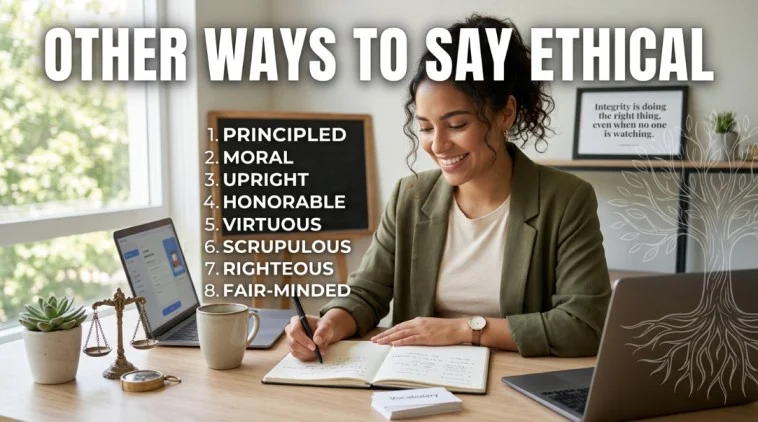
Quick Answer:
If you need other ways to say ethical, useful choices include moral, principled, honorable, responsible, trustworthy, fair, and conscientious. The best alternative depends on whether you are speaking casually, writing professionally, or discussing moral standards.
The word ethical is used to describe behavior, decisions, or actions that are morally right, fair, honest, and responsible. You may hear it in conversations about business, leadership, healthcare, education, law, and personal behavior.
Learning other ways to say ethical can make your English more natural and precise. Different alternatives highlight different ideas, such as honesty, fairness, responsibility, or strong personal values. Knowing these options helps you avoid repetition and choose words that fit your audience.
Exploring alternatives to ethical is especially useful for professionals and English learners who want stronger vocabulary. Just as learners use different phrases to express excitement in English, they can use different words to describe moral behavior with the right level of formality and professionalism.
Quick Categories
Formal Alternatives to “Ethical”
- Principled
- Honorable
- Upright
- Morally sound
Pro Tips Box: Use these words in formal writing, academic discussions, and serious conversations about values.
Casual Alternatives
- Fair
- Honest
- Decent
- Doing the right thing
Pro Tips Box: Simpler alternatives often sound more natural in everyday conversations.
Professional Alternatives
- Responsible
- Trustworthy
- Conscientious
- Integrity-driven
Pro Tips Box: In professional writing, choose a word that clearly explains the specific value you mean.
Informal Expressions
- By the book
- Aboveboard
- Straightforward
- Fair-minded
Pro Tips Box: Use informal expressions carefully because some may not fit reports, formal emails, or academic writing.
Common Mistakes When Using “Ethical”
1. Using Ethical as a Noun
Incorrect: He is an ethical.
Correct: He is an ethical person.
2. Confusing Ethical With Legal
Something can be legal without being ethical.
Example: The action was legal, but many people believed it was unethical.
3. Using Ethical Without Context
Simply calling something ethical may sound vague.
Weak: The company made an ethical decision.
Better: The company made an ethical decision by treating all employees fairly.
4. Using Ethical When You Only Mean Honest
Ethical is broader than honest.
Example: An ethical person should be honest, fair, and responsible.
5. Repeating Ethical Too Often
Using the same word repeatedly can make writing sound unnatural.
Example: The organization promotes responsible, transparent, and ethical practices.
“The best alternatives to ethical depend on the exact value you want to describe.”
What Does “Ethical” Mean?
Ethical means behaving in a way that is morally right, fair, honest, and responsible.
It is an adjective. It can describe a person, action, decision, company, policy, or behavior.
Example Sentence:
The manager made an ethical decision that protected the employees.
When searching for other ways to say ethical, remember that some alternatives focus on morality, while others focus on honesty, fairness, or responsibility.
When to Use “Ethical”
You can use ethical in the following contexts:
- Business decisions
- Workplace behavior
- Personal values
- Leadership discussions
- Healthcare and research
- Legal and social issues
- Company policies
- Environmental responsibility
Spoken vs Written
Spoken English: Ethical is understandable and natural, although simpler words may sound better in casual conversations.
Written English: It is highly suitable for professional, academic, and formal writing.
Formal vs Informal
Formal: Ethical works very well.
Informal: Words like fair, honest, or decent may sound more natural.
Is It Professional or Polite to Say “Ethical”?
The word ethical is generally polite and respectful. It is also suitable for many professional situations.
Polite? ✔️ Yes
Professional? ✔️ Yes
Business-style example:
Our company is committed to ethical and responsible business practices.
However, professional communication can sometimes benefit from more specific alternatives. For example, transparent may describe openness, while accountable may describe responsibility.
“The right tone makes professional English sound clear, confident, and credible.”
Pros and Cons of Using “Ethical”
Pros
- Simple and natural
- Friendly tone
- Common usage
- Easy to understand
Cons
- Can become overused
- May sound too broad
- Limited emotional range
- Sometimes less specific than other alternatives
Other Ways to Say “Ethical” With Examples
These other ways to say ethical will help you sound more fluent, confident, and natural in different situations.
Use them according to tone, context, and audience when discussing moral behavior, fairness, honesty, responsibility, or professional standards.
1. Phrase: Moral
- Meaning: Based on ideas about right and wrong.
- Explanation: This is one of the closest alternatives to ethical.
- Example Sentence: She believed it was the moral thing to do.
- Best Use: Moral discussions
- Worst Use: Casual jokes
- Tone: Serious, thoughtful, formal
- Context Variability: Professional, spoken, academic
2. Phrase: Principled
- Meaning: Guided by strong beliefs and values.
- Explanation: It describes someone who follows their moral principles.
- Example Sentence: He is a principled leader who stands by his values.
- Best Use: Leadership discussions
- Worst Use: Casual texting
- Tone: Strong, respectful, formal
- Context Variability: Professional, written, spoken
3. Phrase: Honorable
- Meaning: Deserving respect because of good behavior.
- Explanation: It suggests dignity, integrity, and moral character.
- Example Sentence: Returning the lost wallet was an honorable action.
- Best Use: Character praise
- Worst Use: Technical writing
- Tone: Respectful, positive, formal
- Context Variability: Spoken, professional, written
4. Phrase: Upright
- Meaning: Honest and morally good.
- Explanation: It often describes a person with strong character.
- Example Sentence: She is known as an upright and trustworthy person.
- Best Use: Character descriptions
- Worst Use: Casual chats
- Tone: Formal, respectful, traditional
- Context Variability: Written, professional, spoken
5. Phrase: Responsible
- Meaning: Showing good judgment and care.
- Explanation: It is especially useful for businesses and workplaces.
- Example Sentence: The company takes a responsible approach to customer privacy.
- Best Use: Business communication
- Worst Use: Moral philosophy
- Tone: Professional, practical, neutral
- Context Variability: Professional, spoken, written
6. Phrase: Honest
- Meaning: Truthful and sincere.
- Explanation: It focuses mainly on telling the truth.
- Example Sentence: We appreciate your honest feedback.
- Best Use: Everyday communication
- Worst Use: Complex ethics
- Tone: Friendly, direct, natural
- Context Variability: Casual, professional, spoken
7. Phrase: Fair
- Meaning: Treating people equally and reasonably.
- Explanation: Use this when ethics involve justice or equal treatment.
- Example Sentence: The manager made a fair decision for everyone.
- Best Use: Everyday decisions
- Worst Use: Philosophy papers
- Tone: Neutral, simple, natural
- Context Variability: Casual, professional, spoken
8. Phrase: Trustworthy
- Meaning: Worthy of trust.
- Explanation: It highlights reliability and good character.
- Example Sentence: Customers prefer trustworthy companies.
- Best Use: Professional reputation
- Worst Use: Moral theory
- Tone: Positive, professional, clear
- Context Variability: Professional, casual, written
9. Phrase: Conscientious
- Meaning: Careful about doing what is right.
- Explanation: It describes someone who takes responsibilities seriously.
- Example Sentence: She is a conscientious employee who considers every decision carefully.
- Best Use: Workplace descriptions
- Worst Use: Casual texting
- Tone: Formal, positive, professional
- Context Variability: Professional, written
10. Phrase: Morally Sound
- Meaning: Acceptable according to moral standards.
- Explanation: It is useful when evaluating an action or decision.
- Example Sentence: The proposal appears morally sound and responsible.
- Best Use: Formal evaluation
- Worst Use: Casual conversation
- Tone: Formal, serious, analytical
- Context Variability: Academic, professional, written
11. Phrase: Virtuous
- Meaning: Having high moral standards.
- Explanation: It is often used in serious or literary discussions.
- Example Sentence: He tried to live a virtuous life.
- Best Use: Moral discussions
- Worst Use: Business emails
- Tone: Formal, thoughtful, elevated
- Context Variability: Written, academic, spoken
12. Phrase: Respectable
- Meaning: Worthy of respect.
- Explanation: It describes behavior that meets accepted standards.
- Example Sentence: They built a respectable business through honest work.
- Best Use: Reputation discussions
- Worst Use: Technical ethics
- Tone: Positive, polite, neutral
- Context Variability: Spoken, professional, written
13. Phrase: Fair-Minded
- Meaning: Willing to judge people without bias.
- Explanation: It emphasizes fairness and balanced thinking.
- Example Sentence: We need a fair-minded person to review the situation.
- Best Use: Decision making
- Worst Use: Legal contracts
- Tone: Positive, balanced, natural
- Context Variability: Spoken, professional
14. Phrase: Just
- Meaning: Based on fairness and justice.
- Explanation: It works well when discussing rights and fair decisions.
- Example Sentence: Everyone deserves a just outcome.
- Best Use: Justice discussions
- Worst Use: Casual praise
- Tone: Formal, serious, strong
- Context Variability: Academic, professional, spoken
15. Phrase: Decent
- Meaning: Morally acceptable and respectable.
- Explanation: It is a simple and conversational alternative.
- Example Sentence: He is a decent person who tries to help others.
- Best Use: Casual descriptions
- Worst Use: Academic papers
- Tone: Friendly, casual, positive
- Context Variability: Casual, spoken
“Simple words can sound just as powerful as formal words when they fit the situation.”
16. Phrase: Scrupulous
- Meaning: Extremely careful about doing what is right.
- Explanation: It suggests close attention to honesty and standards.
- Example Sentence: The auditor was scrupulous about following proper procedures.
- Best Use: Formal descriptions
- Worst Use: Everyday chats
- Tone: Formal, precise, serious
- Context Variability: Professional, written
17. Phrase: Integrity-Driven
- Meaning: Guided by honesty and strong values.
- Explanation: It is useful for describing leaders and organizations.
- Example Sentence: The company promotes an integrity-driven workplace culture.
- Best Use: Corporate communication
- Worst Use: Casual conversations
- Tone: Professional, modern, positive
- Context Variability: Professional, written
18. Phrase: Values-Driven
- Meaning: Guided by important values and principles.
- Explanation: It is commonly used in leadership and business communication.
- Example Sentence: She is a values-driven leader who puts people first.
- Best Use: Leadership communication
- Worst Use: Casual texting
- Tone: Professional, positive, modern
- Context Variability: Professional, written, spoken
19. Phrase: Transparent
- Meaning: Open and honest about actions.
- Explanation: It is especially useful for ethical business behavior.
- Example Sentence: The organization is transparent about its policies.
- Best Use: Business communication
- Worst Use: Personal morality
- Tone: Professional, clear, modern
- Context Variability: Professional, written, spoken
20. Phrase: Accountable
- Meaning: Willing to accept responsibility for actions.
- Explanation: It focuses on responsibility and ownership.
- Example Sentence: Good leaders are accountable for their decisions.
- Best Use: Workplace communication
- Worst Use: Casual compliments
- Tone: Professional, serious, direct
- Context Variability: Professional, written, spoken
21. Phrase: Law-Abiding
- Meaning: Following laws and legal rules.
- Explanation: Legal behavior is not always identical to ethical behavior.
- Example Sentence: The organization aims to remain law-abiding and responsible.
- Best Use: Legal contexts
- Worst Use: Casual compliments
- Tone: Formal, neutral, professional
- Context Variability: Professional, written
22. Phrase: By the Book
- Meaning: Following rules exactly.
- Explanation: This phrase is useful when discussing strict procedures.
- Example Sentence: Our compliance team does everything by the book.
- Best Use: Workplace conversations
- Worst Use: Academic writing
- Tone: Informal, practical, natural
- Context Variability: Casual, professional, spoken
23. Phrase: Aboveboard
- Meaning: Honest and open.
- Explanation: It suggests that nothing dishonest is hidden.
- Example Sentence: The entire process was completely aboveboard.
- Best Use: Trust discussions
- Worst Use: Formal reports
- Tone: Informal, positive, clear
- Context Variability: Spoken, casual
24. Phrase: Beyond Reproach
- Meaning: Impossible to criticize for wrongdoing.
- Explanation: It describes extremely high standards of behavior.
- Example Sentence: Her professional conduct was beyond reproach.
- Best Use: Formal praise
- Worst Use: Casual conversation
- Tone: Formal, strong, respectful
- Context Variability: Professional, written
25. Phrase: Uncorrupt
- Meaning: Free from dishonesty or corruption.
- Explanation: It is useful when discussing institutions and public officials.
- Example Sentence: Citizens expect public institutions to remain uncorrupt.
- Best Use: Public institutions
- Worst Use: Everyday chats
- Tone: Serious, formal, direct
- Context Variability: Written, professional
26. Phrase: Good-Hearted
- Meaning: Kind and caring toward others.
- Explanation: It focuses more on kindness than complete ethical behavior.
- Example Sentence: She is a good-hearted person who enjoys helping others.
- Best Use: Personal descriptions
- Worst Use: Business reports
- Tone: Warm, friendly, positive
- Context Variability: Casual, spoken
27. Phrase: Straightforward
- Meaning: Honest and direct.
- Explanation: It works when openness is the main idea.
- Example Sentence: He gave us a straightforward answer.
- Best Use: Everyday communication
- Worst Use: Moral philosophy
- Tone: Direct, neutral, natural
- Context Variability: Casual, professional, spoken
28. Phrase: Socially Responsible
- Meaning: Concerned about society and the community.
- Explanation: It is commonly used when discussing companies and organizations.
- Example Sentence: Consumers increasingly support socially responsible businesses.
- Best Use: Corporate discussions
- Worst Use: Personal compliments
- Tone: Professional, formal, modern
- Context Variability: Professional, written
29. Phrase: Doing the Right Thing
- Meaning: Choosing the morally correct action.
- Explanation: It is simple, natural, and easy to understand.
- Example Sentence: Doing the right thing is not always easy.
- Best Use: Everyday conversation
- Worst Use: Formal reports
- Tone: Natural, friendly, sincere
- Context Variability: Casual, spoken
30. Phrase: Of Good Character
- Meaning: Having strong moral qualities.
- Explanation: It is a formal way to describe someone’s behavior.
- Example Sentence: The candidate is known as a person of good character.
- Best Use: Formal recommendations
- Worst Use: Casual texting
- Tone: Formal, respectful, positive
- Context Variability: Professional, written
“Learning other ways to say ethical helps you communicate with more precision in every situation.”
Comparison Table: Top Alternatives
| Phrase | Tone | Best Use |
|---|---|---|
| Moral | Serious, formal | Moral discussions |
| Principled | Strong, respectful | Leadership |
| Honorable | Positive, formal | Character praise |
| Upright | Traditional, formal | Character descriptions |
| Responsible | Professional, neutral | Business communication |
| Honest | Friendly, direct | Everyday communication |
| Fair | Simple, neutral | Fair decisions |
| Trustworthy | Positive, professional | Reputation |
| Conscientious | Formal, professional | Workplace |
| Transparent | Modern, professional | Business practices |
See Also
- See also: Read our guide on Other Ways to Say Honest to discover more vocabulary for describing truthfulness and integrity.
- See also: Explore our Professional English Guide for useful professional reaction phrases, workplace vocabulary, and stronger business communication.
CTA: Which of these alternatives will you try first? Choose three phrases and practice using them in your daily English conversations.
Mini Quiz and Self-Check
1. Which alternative is best for a leader who strongly follows moral values?
A. Decent
B. Principled
C. Casual
D. Aboveboard
Answer: B. Principled
2. Which phrase is most suitable for a professional business report?
A. Doing the right thing
B. Good-hearted
C. Socially responsible
D. Pretty decent
Answer: C. Socially responsible
3. Which word focuses most strongly on fairness?
A. Fair-minded
B. Virtuous
C. Uncorrupt
D. Aboveboard
Answer: A. Fair-minded
4. Which phrase sounds most natural in casual spoken English?
A. Scrupulous
B. Morally sound
C. Doing the right thing
D. Beyond reproach
Answer: C. Doing the right thing
Frequently Asked Questions
What are the best other ways to say ethical?
The best alternatives include moral, principled, honorable, responsible, fair, trustworthy, and upright.
What is a professional alternative to ethical?
Professional alternatives include responsible, conscientious, transparent, integrity-driven, and accountable.
Can I use moral instead of ethical?
Yes, in many situations. However, moral usually focuses directly on right and wrong, while ethical can also describe professional standards.
What are informal alternatives to ethical?
Some useful informal expressions in English include fair, honest, decent, doing the right thing, and by the book.
What is the difference between ethical and honest?
Honest mainly means truthful, while ethical has a broader meaning that includes honesty, fairness, responsibility, and moral behavior.
Conclusion
Learning other ways to say ethical helps you communicate more clearly and avoid repeating the same vocabulary. Whether you are writing professionally, speaking with colleagues, or discussing personal values, the right alternative can make your message more accurate.
Practice these phrases in your daily conversations and writing. Pay attention to tone, audience, and context because vocabulary becomes more powerful when you know exactly when to use each word.
Read More Related Articles:
- 30+ Other Ways to Say Happy Birthday Funny – Replynst.com
- 30+ Other Ways to Say Says in an Essay | Better Words to Make …
- 30+ Other Ways to Say Happy Birthday to a Friend

Ethan Parker is a professional content writer at Replynst.com. He creates clear, engaging and well-researched articles focused on providing useful information, answering readers’ questions.