Quick Answer:
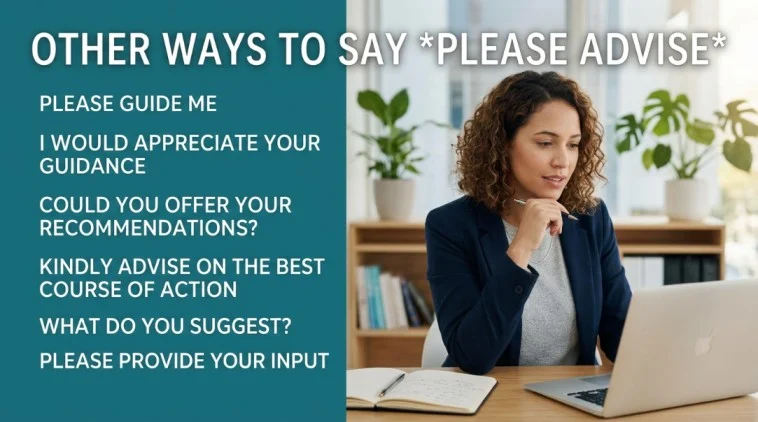
If you want alternatives to “please advise,” choose your wording based on how formal and professional the situation is. Top options include please let me know, kindly advise, could you clarify, I would appreciate your guidance, and please provide your feedback.
The phrase “please advise” is commonly used when you want someone to give you information, guidance, or instructions. You may see it in emails, workplace messages, customer service conversations, and professional communication.
However, using the same phrase repeatedly can make your English sound limited or overly direct. Learning alternatives to please advise helps you communicate with more confidence and choose language that matches the situation.
Different phrases can sound formal, polite, friendly, or highly professional. Just as learners study different ways to express excitement in English, it is useful to learn several ways to ask for guidance. The right wording can make your message clearer and create a better impression on colleagues, clients, and managers.
“The right words do more than ask for information. They show confidence, respect, and professionalism.”
Quick Categories
Formal alternatives to “please advise”
- Kindly advise
- I would appreciate your guidance
- Please provide your recommendations
- Could you kindly clarify?
Pro Tip: Use formal alternatives when writing to senior colleagues, clients, or people you do not know well.
Casual alternatives
- Let me know what you think
- What do you suggest?
- Can you help me with this?
- Tell me what you think
Pro Tip: Casual wording works best with friends, close coworkers, and relaxed conversations.
Professional alternatives
- Please provide your guidance
- Could you provide clarification?
- I would appreciate your input
- Please let me know how you would like to proceed
Pro Tip: In professional emails, explain the situation first so the other person knows exactly what advice you need.
Informal expressions
- What should I do?
- Any ideas?
- Can you give me some advice?
- What do you recommend?
Pro Tip: Use informal expressions in English when the relationship and situation are relaxed.
“Professional English is not about using difficult words. It is about choosing the right tone.”
Common Mistakes When Using “Please Advise”
1. Using it without explaining the problem
Mistake: Please advise.
Better: The client has requested changes to the contract. Please advise on the next steps.
2. Using it in very casual conversations
“Please advise” can sound too formal when speaking with friends.
Example: Instead of saying, “Please advise where we should eat,” say, “What do you feel like eating?”
3. Using it too often in emails
Repeating the phrase can make your writing sound mechanical.
Example: Use “Please let me know” instead of writing “please advise” several times.
4. Asking for advice when you actually need information
Advice and information are not always the same thing.
Example: “Please confirm the meeting time” is better than “Please advise the meeting time.”
5. Using a vague request
Your reader may not know what kind of response you want.
Example: “Could you advise whether we should approve the proposal?” is clearer.
What Does “Please Advise” Mean?
“Please advise” means please give me guidance, information, or your opinion about what I should do.
The verb advise means to give someone guidance or recommendations. In this phrase, you are politely asking another person to tell you what action or decision is appropriate.
Example Sentence:
Please advise me on the best way to respond to the customer.
When to Use “Please Advise”
You can use please advise in situations where you need guidance or a decision.
Common contexts include:
- Asking a manager for instructions
- Requesting guidance from a colleague
- Discussing the next steps in a project
- Contacting customer support
- Asking for clarification about a process
- Requesting professional recommendations
Spoken vs Written
The phrase is more common in written communication, especially emails. In spoken English, people often use more natural phrases such as “What do you recommend?” or “What should I do?”
Formal vs Informal
“Please advise” generally sounds formal or business-like. It may feel unnatural in relaxed conversations.
“Clear communication starts with knowing whether you need advice, information, or clarification.”
Is It Professional or Polite to Say “Please Advise”?
Polite? ✔️ Yes
Professional? ❌ No, in most cases
The phrase can be polite because it asks someone for guidance respectfully. However, many modern workplaces prefer more specific wording because please advise can sound vague or overly formal.
A more professional message often explains exactly what kind of response you need.
Business Example:
Could you please provide guidance on how we should proceed with this request?
This sounds clearer because the reader immediately understands what advice you are requesting.
Pros and Cons of Using “Please Advise”
Pros
- Simple and natural
- Friendly tone
- Common usage
- Easy to understand
Cons
- Too informal for work
- Overused
- Limited emotional range
- Not suitable for formal writing
“Specific requests usually get better responses than vague requests.”
Other Ways to Say “Please Advise” With Examples
These alternatives will help you sound more fluent, confident, and natural in different situations.
Use them according to tone, context, and audience when asking for guidance, clarification, recommendations, or approval.
1. Phrase: Please let me know
- Meaning: Please give me the information I need.
- Explanation: This is a flexible and natural alternative for many situations.
- Example Sentence: Please let me know when the report is ready.
- Best Use: General communication
- Worst Use: Urgent decisions
- Tone: Polite, neutral, friendly
- Context Variability: casual / professional / spoken examples
2. Phrase: Kindly advise
- Meaning: Please give me your guidance.
- Explanation: This is a more formal version of the original phrase.
- Example Sentence: Kindly advise on the appropriate next steps.
- Best Use: Formal emails
- Worst Use: Casual chats
- Tone: Formal, polite, direct
- Context Variability: professional / written / formal examples
3. Phrase: Could you please advise?
- Meaning: Can you give me guidance?
- Explanation: The question form sounds slightly softer and more polite.
- Example Sentence: Could you please advise on how we should handle this issue?
- Best Use: Professional requests
- Worst Use: Very casual talk
- Tone: Polite, professional, respectful
- Context Variability: professional / written / spoken examples
4. Phrase: I would appreciate your guidance
- Meaning: I would be thankful for your advice.
- Explanation: This phrase shows respect and appreciation.
- Example Sentence: I would appreciate your guidance on this matter.
- Best Use: Senior colleagues
- Worst Use: Casual friends
- Tone: Respectful, formal, warm
- Context Variability: professional / formal / written examples
5. Phrase: Could you clarify?
- Meaning: Can you explain something more clearly?
- Explanation: Use this when you need clarification rather than advice.
- Example Sentence: Could you clarify which option you prefer?
- Best Use: Unclear information
- Worst Use: Advice requests
- Tone: Neutral, polite, professional
- Context Variability: casual / professional / spoken examples
6. Phrase: Please provide your guidance
- Meaning: Please tell me what you recommend.
- Explanation: This is clear and suitable for professional communication.
- Example Sentence: Please provide your guidance before we make a final decision.
- Best Use: Business communication
- Worst Use: Friendly chats
- Tone: Professional, respectful, clear
- Context Variability: professional / written / formal examples
7. Phrase: What do you recommend?
- Meaning: What do you think is the best choice?
- Explanation: This is direct and natural in both speech and writing.
- Example Sentence: What do you recommend for improving this presentation?
- Best Use: Asking opinions
- Worst Use: Formal legal writing
- Tone: Neutral, natural, polite
- Context Variability: casual / professional / spoken examples
8. Phrase: What do you suggest?
- Meaning: What idea or action do you recommend?
- Explanation: This is a simple way to ask for advice.
- Example Sentence: What do you suggest we do next?
- Best Use: Everyday advice
- Worst Use: Highly formal letters
- Tone: Friendly, natural, neutral
- Context Variability: casual / professional / spoken examples
9. Phrase: Please share your thoughts
- Meaning: Please tell me your opinion.
- Explanation: This sounds collaborative and respectful.
- Example Sentence: Please share your thoughts on the proposed changes.
- Best Use: Team discussions
- Worst Use: Emergency instructions
- Tone: Professional, friendly, open
- Context Variability: professional / casual / written examples
10. Phrase: I would appreciate your input
- Meaning: I would value your opinion or ideas.
- Explanation: This is one of the most useful professional reaction phrases.
- Example Sentence: I would appreciate your input before we finalize the plan.
- Best Use: Team decisions
- Worst Use: Casual emergencies
- Tone: Professional, respectful, collaborative
- Context Variability: professional / written / spoken examples
“A good alternative to ‘please advise’ should match what you actually need: advice, information, clarification, or approval.”
11. Phrase: Please provide your feedback
- Meaning: Please tell me what you think.
- Explanation: Use this when you want comments or opinions about something.
- Example Sentence: Please provide your feedback on the draft.
- Best Use: Reviewing work
- Worst Use: Simple directions
- Tone: Professional, polite, clear
- Context Variability: professional / written / spoken examples
12. Phrase: Can you help me with this?
- Meaning: Can you give me assistance?
- Explanation: This is simple and natural for everyday communication.
- Example Sentence: Can you help me with this decision?
- Best Use: Everyday requests
- Worst Use: Formal reports
- Tone: Friendly, polite, natural
- Context Variability: casual / professional / spoken examples
13. Phrase: Please let me know how to proceed
- Meaning: Please tell me what I should do next.
- Explanation: This is highly useful when you need instructions.
- Example Sentence: Please let me know how to proceed with the application.
- Best Use: Next steps
- Worst Use: Casual advice
- Tone: Professional, clear, polite
- Context Variability: professional / written / formal examples
14. Phrase: Could you provide some guidance?
- Meaning: Can you give me helpful advice?
- Explanation: This sounds polite without being overly formal.
- Example Sentence: Could you provide some guidance on this process?
- Best Use: Workplace questions
- Worst Use: Very casual chats
- Tone: Polite, professional, respectful
- Context Variability: professional / written / spoken examples
15. Phrase: I would value your opinion
- Meaning: Your opinion is important to me.
- Explanation: Use this when you genuinely want someone’s perspective.
- Example Sentence: I would value your opinion on this proposal.
- Best Use: Important decisions
- Worst Use: Simple instructions
- Tone: Respectful, thoughtful, professional
- Context Variability: professional / formal / spoken examples
16. Phrase: What would you recommend?
- Meaning: What do you think I should choose or do?
- Explanation: This is a slightly more polished version of “What do you recommend?”
- Example Sentence: What would you recommend in this situation?
- Best Use: Advice requests
- Worst Use: Strict instructions
- Tone: Polite, thoughtful, natural
- Context Variability: casual / professional / spoken examples
17. Phrase: Can you point me in the right direction?
- Meaning: Can you help me find the correct solution?
- Explanation: This is useful when you need general guidance.
- Example Sentence: Can you point me in the right direction for resolving this issue?
- Best Use: General guidance
- Worst Use: Formal contracts
- Tone: Friendly, conversational, helpful
- Context Variability: casual / professional / spoken examples
18. Phrase: Please advise on the next steps
- Meaning: Please tell me what should happen next.
- Explanation: Adding specific details makes the request clearer.
- Example Sentence: Please advise on the next steps for completing the project.
- Best Use: Project management
- Worst Use: Casual conversations
- Tone: Formal, direct, professional
- Context Variability: professional / written / formal examples
19. Phrase: Could you offer some advice?
- Meaning: Can you give me advice?
- Explanation: This is polite and natural in many conversations.
- Example Sentence: Could you offer some advice about my presentation?
- Best Use: Personal guidance
- Worst Use: Formal notices
- Tone: Polite, friendly, respectful
- Context Variability: casual / professional / spoken examples
20. Phrase: Please tell me what you think
- Meaning: Please share your opinion.
- Explanation: This is clear and easy for English learners to use.
- Example Sentence: Please tell me what you think about the new design.
- Best Use: Opinion requests
- Worst Use: Formal legal documents
- Tone: Friendly, open, natural
- Context Variability: casual / professional / spoken examples
21. Phrase: How would you like to proceed?
- Meaning: What action do you want to take next?
- Explanation: This works well when another person is making the decision.
- Example Sentence: How would you like to proceed with the customer’s request?
- Best Use: Business decisions
- Worst Use: Casual advice
- Tone: Professional, respectful, clear
- Context Variability: professional / written / spoken examples
22. Phrase: Please share your recommendation
- Meaning: Please tell me what you recommend.
- Explanation: This is useful when choosing between options.
- Example Sentence: Please share your recommendation before Friday.
- Best Use: Decision making
- Worst Use: Friendly conversation
- Tone: Professional, polite, direct
- Context Variability: professional / written / formal examples
23. Phrase: What is your advice?
- Meaning: What guidance can you give me?
- Explanation: This is simple but can sound slightly direct.
- Example Sentence: What is your advice for handling this situation?
- Best Use: Direct questions
- Worst Use: Formal emails
- Tone: Neutral, direct, conversational
- Context Variability: casual / spoken / professional examples
24. Phrase: Could you give me your opinion?
- Meaning: Can you tell me what you think?
- Explanation: Use this when you want a personal viewpoint.
- Example Sentence: Could you give me your opinion on this idea?
- Best Use: Feedback requests
- Worst Use: Official instructions
- Tone: Polite, friendly, open
- Context Variability: casual / professional / spoken examples
25. Phrase: Please guide me
- Meaning: Please help me understand what to do.
- Explanation: This is direct and respectful but may sound formal in some contexts.
- Example Sentence: Please guide me through the next stage of the process.
- Best Use: Seeking direction
- Worst Use: Casual jokes
- Tone: Respectful, direct, formal
- Context Variability: professional / formal / spoken examples
26. Phrase: Any suggestions?
- Meaning: Does anyone have any ideas?
- Explanation: This is short and informal.
- Example Sentence: Any suggestions for improving the introduction?
- Best Use: Team discussions
- Worst Use: Formal emails
- Tone: Casual, friendly, open
- Context Variability: casual / spoken / informal examples
27. Phrase: What should I do?
- Meaning: What action do you recommend?
- Explanation: This is one of the simplest informal alternatives.
- Example Sentence: I am not sure what should happen next. What should I do?
- Best Use: Everyday situations
- Worst Use: Formal business writing
- Tone: Casual, direct, natural
- Context Variability: casual / spoken / informal examples
28. Phrase: Please indicate your preference
- Meaning: Please tell me which option you prefer.
- Explanation: This works well when someone needs to make a choice.
- Example Sentence: Please indicate your preference between the two options.
- Best Use: Choosing options
- Worst Use: Casual conversation
- Tone: Formal, professional, precise
- Context Variability: professional / written / formal examples
29. Phrase: I look forward to your guidance
- Meaning: I am waiting for and value your advice.
- Explanation: This is useful as a polite closing in formal messages.
- Example Sentence: I look forward to your guidance on this matter.
- Best Use: Email closings
- Worst Use: Casual messages
- Tone: Formal, respectful, professional
- Context Variability: professional / written / formal examples
30. Phrase: Please let me know your thoughts
- Meaning: Please share your opinion or ideas.
- Explanation: This sounds friendly while remaining professional.
- Example Sentence: Please let me know your thoughts after reviewing the document.
- Best Use: Collaborative work
- Worst Use: Urgent instructions
- Tone: Friendly, professional, open
- Context Variability: casual / professional / written examples
“The best phrase is not always the most formal one. It is the one that fits your audience and purpose.”
See Also
See also: Other Ways to Say “Thank You for Your Understanding”
Professional English Guide: How to Write Clear and Polite Professional Emails
CTA: Which alternative do you use most often? Practice three new phrases today and add them to your next conversation or email.
Mini Quiz / Self Check
1. Which phrase is best for asking your manager what to do next?
A. Any ideas?
B. Please let me know how to proceed
C. What should I do, buddy?
D. Tell me now
Correct Answer: B
2. Which phrase is best when you need clarification?
A. Could you clarify?
B. Any suggestions?
C. What should I do?
D. Please guide me
Correct Answer: A
3. Which phrase sounds most natural in a casual conversation?
A. Kindly advise
B. Please indicate your preference
C. What do you suggest?
D. I look forward to your guidance
Correct Answer: C
4. You want feedback on a report. Which phrase works best?
A. Please provide your feedback
B. What should I do?
C. Kindly advise everything
D. Please guide me immediately
Correct Answer: A
Comparison Table: Top Alternatives
| Phrase | Tone | Best Use |
|---|---|---|
| Please let me know | Polite, neutral | General communication |
| Kindly advise | Formal, direct | Formal emails |
| Could you please advise? | Polite, professional | Workplace requests |
| I would appreciate your guidance | Respectful, formal | Senior colleagues |
| Could you clarify? | Neutral, clear | Unclear information |
| Please provide your guidance | Professional, respectful | Business communication |
| What do you recommend? | Natural, polite | Asking opinions |
| Please share your thoughts | Friendly, professional | Team discussions |
| I would appreciate your input | Professional, collaborative | Team decisions |
| Please let me know how to proceed | Clear, professional | Next steps |
FAQs
What are the best other ways to say please advise?
Some of the best alternatives are please let me know, could you clarify, what do you recommend, I would appreciate your guidance, and please provide your input.
Is “please advise” polite?
Yes. It is generally polite, especially in written communication. However, a more specific phrase may sound clearer and more natural.
What is a professional alternative to “please advise”?
Professional alternatives include please let me know how to proceed, I would appreciate your guidance, and could you provide clarification?
Can I use “please advise” in an email?
Yes, but explain what you need advice about. A specific request often sounds more professional and gets a better response.
What is an informal way to say “please advise”?
Informal expressions in English include what do you suggest, what should I do, any ideas, and can you help me with this?
Conclusion
Learning other ways to say please advise gives you more control over your English. Instead of using one phrase in every email or conversation, you can choose wording that matches your relationship, purpose, and level of formality.
Practice these alternatives regularly in messages and conversations. The more you notice tone and context, the easier it becomes to sound clear, polite, confident, and professional in English.
Read More Related Articles:
- 30+ Other Ways to Say Says in an Essay | Better Words to Make …
- 30+ Other Ways to Say Happy Birthday to a Friend

Emma Richardson is a professional content writer at Replynst.com. She creates clear, engaging and well-researched content designed to answer readers’ questions while following modern SEO best practices. Her focus is on helpful, reader-friendly articles that deliver genuine value.