Quick Answer:
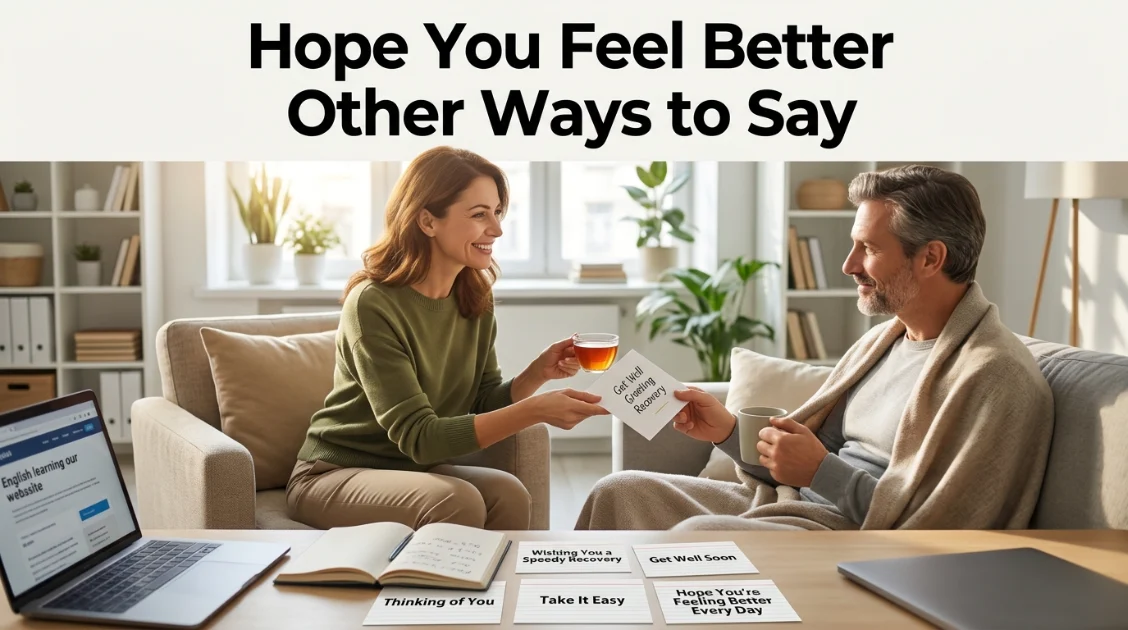
The best alternatives to “hope you feel better” include get well soon, wishing you a speedy recovery, take good care of yourself, I hope you recover quickly, and wishing you a smooth recovery. The best choice depends on your relationship with the person and the level of formality you need.
Knowing other ways to say hope you feel better can make your English sound warmer, more thoughtful, and appropriate for different situations. The phrase is commonly used when someone is sick, recovering from an illness, dealing with an injury, or going through a difficult health situation. However, repeating the same expression can sometimes make your messages sound predictable or less personal.
Learning alternatives to hope you feel better gives you more flexibility when communicating with friends, colleagues, family members, or professional contacts. You can choose a caring phrase for a personal message, a respectful expression for a coworker, or a more formal sentence for a written note. Just as learners practice how to express excitement in English, understanding supportive expressions helps build stronger everyday communication skills and emotional vocabulary.
Quick Categories
Formal alternatives to “hope you feel better”
- Wishing you a speedy recovery
- I wish you a smooth recovery
- Wishing you continued improvement
- I hope you make a full recovery
Pro Tip: Use respectful recovery phrases in formal emails, professional notes, and messages to someone you do not know closely.
Casual alternatives
- Get well soon
- Take care
- Hope you’re feeling better soon
- Rest up and feel better
Pro Tip: Casual expressions work best with friends, family members, and people you know well.
Professional alternatives
- Wishing you a quick recovery
- I hope you recover soon
- Please take care of yourself
- Wishing you good health
Pro Tip: Keep professional messages brief, sincere, and respectful without asking for unnecessary medical details.
Informal expressions
- Feel better soon
- Take it easy
- Get some rest
- Hope you’re back on your feet soon
Pro Tip: Informal expressions in English can sound warm and natural, but avoid overly casual wording in sensitive professional situations.
“A thoughtful recovery message does more than express sympathy. It shows that you care.”
Common Mistakes
1. Using “get well soon” for every situation
Mistake: “Get well soon” to someone experiencing a long-term recovery.
Better: “I’m wishing you continued strength and recovery.”
Why: “Get well soon” can sound too brief when someone is facing a serious or lengthy recovery.
2. Making the message too casual
Mistake: “Hope you get better ASAP!”
Better: “Wishing you a smooth and speedy recovery.”
Why: Casual wording may not be appropriate when communicating with a manager, client, or professional contact.
3. Asking for unnecessary medical details
Mistake: “What exactly happened? Tell me everything.”
Better: “I hope you’re taking care of yourself and getting plenty of rest.”
Why: A supportive message should respect the person’s privacy.
4. Using “feel better” when someone has already recovered
Mistake: “I hope you feel better” to someone who is already back at work.
Better: “I’m glad to hear you’re feeling better.”
Why: The original phrase is usually used during illness or recovery, not after recovery is complete.
5. Sending an overly long message
Mistake: Writing several paragraphs about someone’s illness.
Better: “Thinking of you and wishing you a quick recovery.”
Why: A short, sincere message is often more appropriate.
What Does “Hope You Feel Better” Mean?
“Hope you feel better” is a supportive expression used to show concern for someone who is sick, injured, uncomfortable, or emotionally unwell.
It is a shortened form of “I hope you feel better.” In informal communication, dropping “I” is common and natural.
Example: “I heard you’re not feeling well. Hope you feel better soon.”
When to Use “Hope You Feel Better”
You can use this expression in several situations:
- When someone is sick: It shows concern and kindness.
- After an injury: It communicates support during recovery.
- In text messages: The shorter form sounds natural and friendly.
- With coworkers: It can be appropriate when the relationship is familiar.
- With friends and family: It creates a warm and caring tone.
- In social messages: It works well as a brief supportive response.
Spoken vs. Written: The phrase works naturally in both spoken and written English.
Formal vs. Informal: It is friendly and polite, but more formal alternatives may be better for professional communication.
Is It Professional or Polite to Say “Hope You Feel Better”?
Polite? ✔️ Yes
Professional? ✔️ Yes, with some context
“Hope you feel better” is polite and acceptable in many workplace situations, especially when speaking with a colleague. However, “Wishing you a speedy recovery” can sound more polished in a formal email or professional note.
Business-style example: “I’m sorry to hear that you’re unwell. Wishing you a speedy recovery and good health.”
Pros and Cons of Using “Hope You Feel Better”
Pros
- Simple and natural: The phrase is easy to understand and use.
- Friendly tone: It communicates genuine concern.
- Common usage: Native speakers frequently use it in everyday communication.
- Easy to personalize: You can add “soon,” “rest,” or another supportive phrase.
Cons
- Can sound generic: The phrase may feel repetitive when used frequently.
- Less formal: Some professional situations call for more polished wording.
- Limited emotional range: It does not always express deep sympathy.
- Not suitable for every situation: Serious circumstances may require a more thoughtful message.
“The right supportive phrase can make a short message feel genuinely personal.”
Other Ways to Say “Hope You Feel Better” With Examples
These alternatives will help you sound more fluent, confident, and natural in different situations.
Use them according to tone, context, and audience to express sympathy, encouragement, care, or support.
1. Phrase: Get Well Soon
Meaning: A simple wish for someone’s recovery.
Explanation: This is one of the most common alternatives for someone who is sick or recovering.
Example Sentence: “I heard you’re feeling unwell. Get well soon!”
Best Use: Friendly messages
Worst Use: Formal reports
Tone: Warm, friendly, caring
Context Variability: Casual: “Get well soon!” Professional: “Wishing you a speedy recovery.” Spoken: “Get well soon.”
2. Phrase: Wishing You a Speedy Recovery
Meaning: A wish that someone recovers quickly.
Explanation: This is a polished expression suitable for both personal and professional communication.
Example Sentence: “Wishing you a speedy recovery after your surgery.”
Best Use: Professional messages
Worst Use: Casual jokes
Tone: Formal, warm, thoughtful
Context Variability: Casual: “Hope you recover soon.” Professional: “Wishing you a speedy recovery.” Spoken: “I’m wishing you a speedy recovery.”
3. Phrase: I Hope You Recover Quickly
Meaning: A direct wish for a quick recovery.
Explanation: This phrase is clear, polite, and appropriate for many situations.
Example Sentence: “I hope you recover quickly and get plenty of rest.”
Best Use: Supportive messages
Worst Use: Light conversation
Tone: Caring, polite, sincere
Context Variability: Casual: “Hope you get better soon.” Professional: “I hope you recover quickly.” Spoken: “I hope you recover quickly.”
4. Phrase: Wishing You a Smooth Recovery
Meaning: A wish that someone’s recovery goes well.
Explanation: This phrase focuses on an easy and successful recovery rather than speed alone.
Example Sentence: “Wishing you a smooth recovery and plenty of rest.”
Best Use: Recovery messages
Worst Use: Casual greetings
Tone: Thoughtful, formal, warm
Context Variability: Casual: “Hope your recovery goes well.” Professional: “Wishing you a smooth recovery.” Spoken: “I’m wishing you a smooth recovery.”
5. Phrase: Feel Better Soon
Meaning: A wish that someone feels healthier soon.
Explanation: This is a natural and friendly expression used frequently in everyday English.
Example Sentence: “Take some time to rest and feel better soon.”
Best Use: Casual messages
Worst Use: Formal letters
Tone: Friendly, warm, caring
Context Variability: Casual: “Feel better soon!” Professional: “Wishing you a quick recovery.” Spoken: “Feel better soon.”
6. Phrase: Take Good Care of Yourself
Meaning: A caring suggestion to prioritize one’s health.
Explanation: This phrase expresses concern without directly mentioning illness.
Example Sentence: “Take good care of yourself and get plenty of rest.”
Best Use: Personal messages
Worst Use: Formal notices
Tone: Caring, warm, supportive
Context Variability: Casual: “Take care of yourself.” Professional: “Please take good care of yourself.” Spoken: “Take good care of yourself.”
7. Phrase: I Hope You’re Feeling Better Soon
Meaning: A wish that someone’s condition improves soon.
Explanation: This is a warm alternative that sounds natural in conversation and messages.
Example Sentence: “I hope you’re feeling better soon. Let me know if you need anything.”
Best Use: Friendly communication
Worst Use: Formal documents
Tone: Warm, caring, conversational
Context Variability: Casual: “Hope you’re feeling better soon.” Professional: “I hope you’re feeling better soon.” Spoken: “I hope you’re feeling better soon.”
8. Phrase: Wishing You a Quick Recovery
Meaning: A wish for someone to recover quickly.
Explanation: This phrase is concise and works particularly well in professional communication.
Example Sentence: “Wishing you a quick recovery and a return to good health.”
Best Use: Professional notes
Worst Use: Casual jokes
Tone: Polite, formal, sincere
Context Variability: Casual: “Hope you recover soon.” Professional: “Wishing you a quick recovery.” Spoken: “Wishing you a quick recovery.”
9. Phrase: I Wish You a Full Recovery
Meaning: A wish that someone completely recovers.
Explanation: This phrase emphasizes complete recovery rather than simply feeling better temporarily.
Example Sentence: “I wish you a full recovery and continued strength.”
Best Use: Serious situations
Worst Use: Casual greetings
Tone: Formal, sincere, respectful
Context Variability: Casual: “Hope you get completely better.” Professional: “I wish you a full recovery.” Spoken: “I wish you a full recovery.”
10. Phrase: Wishing You Good Health
Meaning: A wish for continued or restored health.
Explanation: This is a broad and respectful expression that can be used beyond a single illness.
Example Sentence: “Wishing you good health and a smooth recovery.”
Best Use: Formal messages
Worst Use: Quick texts
Tone: Respectful, formal, warm
Context Variability: Casual: “Take care and stay healthy.” Professional: “Wishing you good health.” Spoken: “I’m wishing you good health.”
11. Phrase: I Hope You Recover Soon
Meaning: A direct wish for someone’s recovery.
Explanation: This phrase is simple, sincere, and suitable for many personal situations.
Example Sentence: “I hope you recover soon and feel like yourself again.”
Best Use: Personal messages
Worst Use: Formal reports
Tone: Caring, simple, sincere
Context Variability: Casual: “Hope you recover soon.” Professional: “I hope you recover soon.” Spoken: “I hope you recover soon.”
12. Phrase: Rest Up and Take Care
Meaning: A suggestion to rest and look after one’s health.
Explanation: This is a friendly alternative that sounds natural in informal communication.
Example Sentence: “Rest up and take care. I hope you feel stronger soon.”
Best Use: Friendly texts
Worst Use: Formal emails
Tone: Casual, warm, supportive
Context Variability: Casual: “Rest up and take care.” Professional: “Please take some time to rest.” Spoken: “Rest up and take care.”
13. Phrase: Take It Easy
Meaning: A suggestion to avoid stress or strenuous activity.
Explanation: This phrase is informal and often used when someone is recovering.
Example Sentence: “Take it easy for a few days and give yourself time to recover.”
Best Use: Casual conversations
Worst Use: Formal notices
Tone: Informal, friendly, relaxed
Context Variability: Casual: “Take it easy.” Professional: “Please take some time to recover.” Spoken: “Take it easy for a while.”
14. Phrase: I’m Thinking of You
Meaning: A way to show emotional support and concern.
Explanation: This phrase can be appropriate when someone is facing illness, injury, or a difficult period.
Example Sentence: “I’m thinking of you and hoping your recovery goes well.”
Best Use: Emotional support
Worst Use: Routine greetings
Tone: Warm, compassionate, sincere
Context Variability: Casual: “Thinking of you.” Professional: “You’re in my thoughts during your recovery.” Spoken: “I’m thinking of you.”
15. Phrase: Sending You Best Wishes for Your Recovery
Meaning: A sincere expression of support during recovery.
Explanation: This phrase is especially suitable for written cards and professional messages.
Example Sentence: “Sending you best wishes for your recovery and good health.”
Best Use: Written messages
Worst Use: Casual chat
Tone: Formal, caring, thoughtful
Context Variability: Casual: “Best wishes for your recovery.” Professional: “Sending you best wishes for your recovery.” Spoken: “I’m sending you my best wishes.”
16. Phrase: I Hope You’re Back on Your Feet Soon
Meaning: A wish that someone returns to normal health and activity.
Explanation: This idiomatic expression is friendly and commonly used after illness or injury.
Example Sentence: “I hope you’re back on your feet soon and feeling like yourself again.”
Best Use: Friendly conversations
Worst Use: Formal letters
Tone: Warm, conversational, encouraging
Context Variability: Casual: “Hope you’re back on your feet soon.” Professional: “I hope you make a smooth recovery.” Spoken: “I hope you’re back on your feet soon.”
17. Phrase: Wishing You Strength and Healing
Meaning: A wish for physical and emotional strength during recovery.
Explanation: This expression sounds thoughtful when someone is going through a difficult health situation.
Example Sentence: “Wishing you strength and healing during this difficult time.”
Best Use: Supportive messages
Worst Use: Casual texts
Tone: Compassionate, sincere, respectful
Context Variability: Casual: “Sending you strength.” Professional: “Wishing you strength and healing.” Spoken: “I’m wishing you strength and healing.”
18. Phrase: I’m Sorry You’re Not Feeling Well
Meaning: An expression of sympathy for someone’s illness.
Explanation: This phrase acknowledges the person’s discomfort before offering support.
Example Sentence: “I’m sorry you’re not feeling well. I hope you get plenty of rest.”
Best Use: Sympathy messages
Worst Use: Routine greetings
Tone: Caring, empathetic, polite
Context Variability: Casual: “Sorry you’re not feeling well.” Professional: “I’m sorry to hear you’re unwell.” Spoken: “I’m sorry you’re not feeling well.”
19. Phrase: I Hope Things Improve Soon
Meaning: A general wish for someone’s situation to become better.
Explanation: This phrase is useful when the problem may involve health or another difficult circumstance.
Example Sentence: “I hope things improve soon and that you get the rest you need.”
Best Use: Sensitive situations
Worst Use: Specific diagnosis
Tone: Gentle, neutral, supportive
Context Variability: Casual: “Hope things get better soon.” Professional: “I hope things improve soon.” Spoken: “I hope things improve soon.”
20. Phrase: Wishing You Continued Improvement
Meaning: A wish that someone’s condition keeps getting better.
Explanation: This phrase works particularly well when the person has already begun recovering.
Example Sentence: “Wishing you continued improvement and good health.”
Best Use: Recovery updates
Worst Use: Initial illness
Tone: Formal, respectful, positive
Context Variability: Casual: “Hope you keep feeling better.” Professional: “Wishing you continued improvement.” Spoken: “I’m wishing you continued improvement.”
21. Phrase: I Hope You Make a Full Recovery
Meaning: A wish that someone completely regains their health.
Explanation: This phrase is respectful and suitable for more serious situations.
Example Sentence: “I hope you make a full recovery and regain your strength soon.”
Best Use: Serious illness
Worst Use: Minor discomfort
Tone: Sincere, formal, compassionate
Context Variability: Casual: “Hope you get completely better.” Professional: “I hope you make a full recovery.” Spoken: “I hope you make a full recovery.”
22. Phrase: Please Take Care of Yourself
Meaning: A polite expression encouraging someone to prioritize their well-being.
Explanation: This phrase is useful when you want to show concern without discussing the illness.
Example Sentence: “Please take care of yourself and give yourself enough time to rest.”
Best Use: Professional messages
Worst Use: Casual jokes
Tone: Polite, caring, respectful
Context Variability: Casual: “Take care of yourself.” Professional: “Please take care of yourself.” Spoken: “Please take care of yourself.”
23. Phrase: Sending Positive Thoughts Your Way
Meaning: An expression of emotional support and encouragement.
Explanation: This phrase can comfort someone without making assumptions about their condition.
Example Sentence: “Sending positive thoughts your way as you recover.”
Best Use: Supportive notes
Worst Use: Formal reports
Tone: Warm, positive, compassionate
Context Variability: Casual: “Sending positive thoughts.” Professional: “I’m sending my best wishes.” Spoken: “I’m sending positive thoughts your way.”
24. Phrase: I’m Wishing You Better Health
Meaning: A wish for improved health.
Explanation: This phrase is polite and can be used in both personal and respectful communication.
Example Sentence: “I’m wishing you better health and a peaceful recovery.”
Best Use: Thoughtful messages
Worst Use: Casual greetings
Tone: Warm, respectful, sincere
Context Variability: Casual: “Hope you feel healthier soon.” Professional: “Wishing you better health.” Spoken: “I’m wishing you better health.”
25. Phrase: May You Feel Better Soon
Meaning: A gentle wish for someone’s health to improve.
Explanation: The use of “may” gives this expression a more formal and thoughtful tone.
Example Sentence: “May you feel better soon and regain your strength.”
Best Use: Written messages
Worst Use: Casual texting
Tone: Formal, gentle, thoughtful
Context Variability: Casual: “Hope you feel better soon.” Professional: “May you feel better soon.” Spoken: “I hope you feel better soon.”
26. Phrase: Here’s to a Speedy Recovery
Meaning: A positive wish for a quick recovery.
Explanation: This phrase has an upbeat tone and is best used when the situation is not extremely serious.
Example Sentence: “Here’s to a speedy recovery and brighter days ahead.”
Best Use: Friendly messages
Worst Use: Serious condolences
Tone: Positive, friendly, encouraging
Context Variability: Casual: “Here’s to feeling better soon.” Professional: “Wishing you a speedy recovery.” Spoken: “Here’s to a speedy recovery.”
27. Phrase: Sending You Healing Wishes
Meaning: A warm wish for someone’s recovery and well-being.
Explanation: This phrase is especially appropriate for thoughtful cards and supportive messages.
Example Sentence: “Sending you healing wishes and hoping each day brings more strength.”
Best Use: Supportive cards
Worst Use: Business notices
Tone: Warm, compassionate, thoughtful
Context Variability: Casual: “Sending healing wishes.” Professional: “Wishing you a smooth recovery.” Spoken: “I’m sending you healing wishes.”
28. Phrase: I Hope You Regain Your Strength Soon
Meaning: A wish that someone becomes stronger during recovery.
Explanation: This phrase focuses on restoring physical energy and well-being.
Example Sentence: “I hope you regain your strength soon and feel more comfortable each day.”
Best Use: Recovery messages
Worst Use: Minor illness
Tone: Caring, supportive, sincere
Context Variability: Casual: “Hope you feel stronger soon.” Professional: “I hope you regain your strength soon.” Spoken: “I hope you regain your strength soon.”
29. Phrase: Wishing You Better Days Ahead
Meaning: A hopeful wish for improvement in the future.
Explanation: This phrase is broader than health and can be used when someone is going through a challenging period.
Example Sentence: “Wishing you better days ahead and plenty of time to recover.”
Best Use: Emotional support
Worst Use: Medical diagnosis
Tone: Hopeful, warm, encouraging
Context Variability: Casual: “Better days are ahead.” Professional: “Wishing you better days ahead.” Spoken: “I’m wishing you better days ahead.”
30. Phrase: I’m Glad You’re Recovering
Meaning: An expression of happiness about someone’s improving health.
Explanation: This phrase is best used when the person has already shown signs of recovery.
Example Sentence: “I’m glad you’re recovering. Keep taking good care of yourself.”
Best Use: Recovery updates
Worst Use: Initial illness
Tone: Warm, positive, supportive
Context Variability: Casual: “Glad you’re feeling better.” Professional: “I’m glad to hear you’re recovering.” Spoken: “I’m glad you’re recovering.”
“Supportive English becomes more natural when you match your words to the person’s situation.”
Mini Quiz / Self-Check
1. Which phrase is most suitable for a formal professional email?
A. Take it easy
B. Get well soon!
C. Wishing you a speedy recovery
D. Hope you’re back on your feet
Answer: C. Wishing you a speedy recovery
2. Which expression is best for a close friend?
A. Wishing you continued improvement
B. Gastrointestinal recovery
C. Get well soon
D. I wish you a full recovery
Answer: C. Get well soon
3. Someone is already recovering. Which phrase is most appropriate?
A. I’m glad you’re recovering
B. What happened to you?
C. Get sick soon
D. You should explain your illness
Answer: A. I’m glad you’re recovering
4. Which phrase is especially respectful when you do not want to discuss someone’s medical details?
A. Tell me exactly what is wrong
B. Please take care of yourself
C. What symptoms do you have?
D. Why are you sick?
Answer: B. Please take care of yourself
Comparison Table: Top Alternatives
| Phrase | Tone | Best Use |
|---|---|---|
| Get well soon | Friendly, warm | Casual messages |
| Wishing you a speedy recovery | Formal, caring | Professional messages |
| I hope you recover quickly | Polite, sincere | Supportive messages |
| Wishing you a smooth recovery | Thoughtful, formal | Recovery notes |
| Feel better soon | Friendly, natural | Everyday speech |
| Take good care of yourself | Caring, supportive | Personal messages |
| Wishing you a quick recovery | Professional, polite | Workplace communication |
| I wish you a full recovery | Sincere, formal | Serious situations |
| Please take care of yourself | Respectful, caring | Professional messages |
| I’m glad you’re recovering | Positive, warm | Recovery updates |
FAQs
What are the best other ways to say hope you feel better?
Popular alternatives include get well soon, wishing you a speedy recovery, feel better soon, take care of yourself, and I hope you recover quickly.
What is a professional way to say hope you feel better?
Wishing you a speedy recovery and I hope you recover soon are polished choices for workplace communication and professional messages.
How can I say hope you feel better to a coworker?
You can say, “I’m sorry to hear you’re unwell. Wishing you a speedy recovery.” This sounds caring while maintaining professional boundaries.
What is a sweet way to say hope you feel better?
Try “Take good care of yourself,” “Sending you healing wishes,” or “I hope you’re feeling better soon.” These expressions sound warm and personal.
Is “get well soon” better than “hope you feel better”?
Both are natural. Get well soon is shorter and more familiar, while I hope you feel better sounds slightly more conversational and personal.
Conclusion
Learning other ways to say hope you feel better gives you more options for expressing kindness, sympathy, encouragement, and support. Whether you choose get well soon for a friend or wishing you a speedy recovery for a coworker, the key is to match your words with the relationship and situation.
Practice these phrases in everyday messages so they become natural parts of your English vocabulary. Paying attention to tone helps you communicate with greater confidence, empathy, and professionalism in both personal and workplace situations.
Read More Related Articles:
- Other Ways to Say Please | Make Every Request Sound More …
- Other Ways to Say Diarrhea | Polite, Professional & Clear …
- 30+ Other Ways to Say Showcase | Powerful Words That Steal …

Ethan Parker is a professional content writer at Replynst.com. He creates clear, engaging and well-researched articles focused on providing useful information, answering readers’ questions.