Quick Answer:
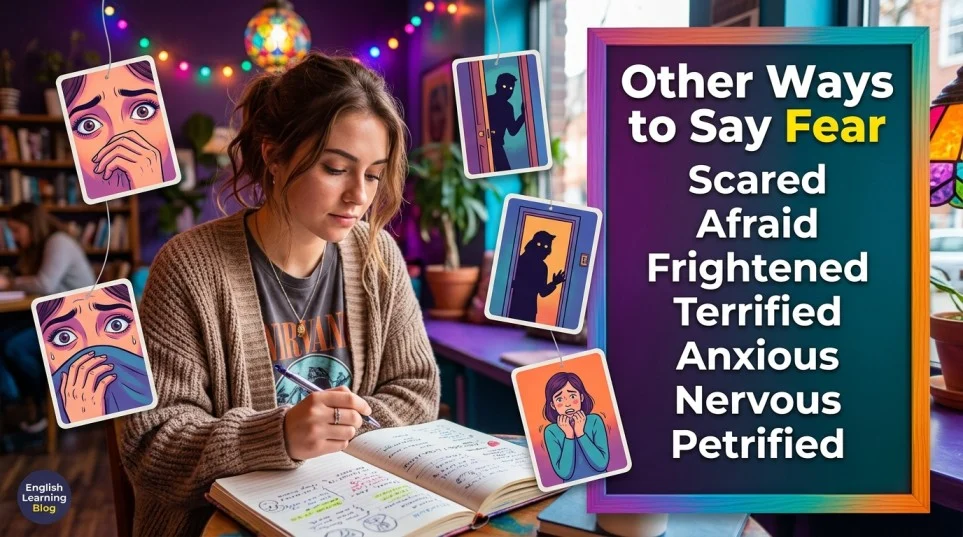
Other ways to say fear include fright, anxiety, dread, terror, apprehension, nervousness, and uneasiness. These alternatives help you express different levels of fear in everyday conversations, professional writing, storytelling, and emotional descriptions. Choosing the right phrase makes your English sound more natural, precise, and confident.
Fear is a common human emotion that people experience in uncertain, stressful, or dangerous situations. However, using the same word repeatedly can make your English sound less expressive, especially when describing emotions in conversations, essays, or professional writing. Learning other ways to say fear helps you communicate feelings with greater accuracy and confidence. From mild nervousness to intense terror, different expressions describe different emotional experiences. Understanding these distinctions also improves your vocabulary and helps you select appropriate words for different audiences.
Whether you are writing an academic essay, describing a personal experience, or speaking with someone about an uncomfortable situation, choosing the right alternative matters. This guide explores 30 useful expressions, their meanings, examples, and appropriate contexts to help you express emotions in English naturally.
Quick Categories
Formal alternatives to “Fear”
- Apprehension
- Anxiety
- Trepidation
- Uneasiness
Pro Tip: Use these expressions in academic writing, professional communication, and formal discussions when describing emotional concerns.
Casual alternatives
- Nervousness
- Worry
- Being scared
- Feeling uneasy
Pro Tip: Choose simple expressions when speaking with friends or explaining everyday emotional experiences.
Professional alternatives
- Concern
- Anxiety
- Apprehension
- Emotional distress
Pro Tip: Professional English often benefits from neutral expressions that communicate feelings without sounding overly dramatic.
Informal expressions
- Being frightened
- Feeling spooked
- Being terrified
- Having cold feet
Pro Tip: Informal expressions in English can make conversations more natural, but always consider your audience and situation.
“Strong English is not about using difficult words. It is about choosing the right expression for the emotion.”
Common Mistakes
1. Using “Fear” When You Mean “Worry”
Mistake: “I have fear about my upcoming examination.”
Correct: “I am worried about my upcoming examination.”
Why: Worry often describes concerns about possible future problems, while fear can describe a broader emotional response to danger or uncertainty.
2. Confusing “Nervousness” with “Terror”
Mistake: “I felt terror before my job interview.”
Better: “I felt nervous before my job interview.”
Why: Terror describes extreme fear, while nervousness usually refers to mild or moderate anxiety.
3. Using “Apprehension” in Casual Conversations
Mistake: “I have apprehension about watching that movie.”
Better: “I feel a little nervous about watching that movie.”
Why: Apprehension is more formal and may sound unnatural in everyday conversations.
4. Using “Panic” for Every Situation
Mistake: “I panicked when my teacher announced a test.”
Better: “I felt nervous when my teacher announced a test.”
Why: Panic suggests an intense emotional reaction, not ordinary nervousness.
5. Treating “Concern” and “Fear” as Exact Synonyms
Mistake: “I have concern of flying.”
Correct: “I am concerned about flying.”
Why: Concern usually expresses worry or interest about something, while fear describes a stronger emotional response.
What Does “Fear” Mean?
Fear is an emotional response to a perceived threat, danger, uncertainty, or something that may cause harm.
It is commonly used as both a noun and a verb.
As a noun: “She felt fear during the storm.”
As a verb: “He fears losing his job.”
Common grammatical patterns include:
- Fear of something
- Afraid of something
- Fear that something may happen
- Be frightened by something
When to Use “Fear”
The word fear is appropriate in several situations:
- Everyday conversations: When discussing something that makes you uncomfortable or frightened.
- Academic writing: When analyzing emotions, behavior, or psychological responses.
- Professional communication: When describing concerns about risks or uncertain outcomes.
- Storytelling: When creating emotional descriptions and building suspense.
- Personal experiences: When explaining feelings about challenges or difficult situations.
Spoken vs. Written: Fear works naturally in both spoken and written English.
Formal vs. Informal: The word is suitable for formal and informal situations, although alternatives may communicate more specific emotions.
Is It Professional or Polite to Say “Fear”?
Polite? Yes
Professional? Yes
Fear is a standard English word and is not considered impolite. However, in professional settings, words such as concern, apprehension, or uncertainty may communicate your feelings more appropriately.
Business-style example: “The team expressed concern about the potential risks associated with the upcoming project.”
Pros and Cons of Using “Fear”
Pros
- Simple and natural: Easy to understand and use.
- Friendly tone: Suitable for ordinary conversations.
- Common usage: Widely recognized by English speakers.
- Easy to understand: Clearly communicates an emotional response.
Cons
- Too general sometimes: Does not always explain the intensity of an emotion.
- Overused: Repeating it can make writing less engaging.
- Limited emotional range: Does not distinguish between mild worry and extreme terror.
- Not always precise: Some situations require more specific emotional vocabulary.
“A precise emotional word can transform an ordinary sentence into a powerful expression.”
Other Ways to Say Fear With Examples
These alternatives will help you sound more fluent, confident, and natural in different situations.
Use them according to tone, context, and audience to describe emotions, concerns, and reactions accurately.
1. Phrase: Fright
Meaning: A sudden feeling of fear or alarm.
Explanation: Fright is commonly used when something unexpected causes someone to feel scared.
Example Sentence: “The loud noise gave me a terrible fright.”
Best Use: Everyday storytelling
Worst Use: Formal analysis
Tone: Neutral, emotional, descriptive
Context Variability: Casual: “You gave me a fright.” Professional: “The unexpected incident caused considerable fright.” Spoken: “I got quite a fright.”
2. Phrase: Anxiety
Meaning: A feeling of worry, nervousness, or unease about something uncertain.
Explanation: Anxiety is useful when describing emotional discomfort about possible future situations.
Example Sentence: “She experienced anxiety before her important presentation.”
Best Use: Emotional descriptions
Worst Use: Lighthearted situations
Tone: Formal, emotional, thoughtful
Context Variability: Casual: “I feel anxious about tomorrow.” Professional: “The situation has caused considerable anxiety.” Spoken: “I have some anxiety about the meeting.”
3. Phrase: Dread
Meaning: A strong feeling of fear about something unpleasant that may happen.
Explanation: Dread is particularly useful when someone anticipates an uncomfortable or difficult experience.
Example Sentence: “He felt a sense of dread before opening the letter.”
Best Use: Storytelling
Worst Use: Minor concerns
Tone: Serious, intense, descriptive
Context Variability: Casual: “I dread going there.” Professional: “Employees expressed dread about the proposed changes.” Spoken: “I have a feeling of dread.”
4. Phrase: Terror
Meaning: An extremely intense feeling of fear.
Explanation: Terror describes situations where someone feels overwhelmingly frightened.
Example Sentence: “The sudden explosion filled everyone with terror.”
Best Use: Intense situations
Worst Use: Mild nervousness
Tone: Dramatic, powerful, intense
Context Variability: Casual: “I was absolutely terrified.” Professional: “The incident caused widespread terror.” Spoken: “I felt pure terror.”
5. Phrase: Apprehension
Meaning: Uneasiness or worry about something that may happen.
Explanation: This formal alternative is useful when describing uncertainty or concern about future events.
Example Sentence: “She approached the new opportunity with some apprehension.”
Best Use: Formal writing
Worst Use: Casual chatting
Tone: Formal, thoughtful, restrained
Context Variability: Casual: “I feel nervous about it.” Professional: “There is some apprehension regarding the proposal.” Spoken: “I have some apprehension about the decision.”
6. Phrase: Nervousness
Meaning: A feeling of worry or tension before an uncertain situation.
Explanation: Nervousness usually describes mild or moderate fear rather than extreme emotional distress.
Example Sentence: “His nervousness disappeared once the interview began.”
Best Use: Everyday situations
Worst Use: Extreme danger
Tone: Natural, gentle, relatable
Context Variability: Casual: “I am feeling nervous.” Professional: “The presentation caused some nervousness.” Spoken: “I have a little nervousness before speaking.”
7. Phrase: Uneasiness
Meaning: A feeling of discomfort, uncertainty, or mild fear.
Explanation: This word is suitable when something feels wrong but the reason is not completely clear.
Example Sentence: “She felt uneasiness when she noticed the strange behavior.”
Best Use: Descriptive writing
Worst Use: Extreme terror
Tone: Subtle, thoughtful, neutral
Context Variability: Casual: “Something feels off.” Professional: “The situation created a sense of uneasiness.” Spoken: “I feel a little uneasy.”
8. Phrase: Worry
Meaning: A feeling of concern about something that might go wrong.
Explanation: Worry is one of the most natural alternatives when describing everyday concerns.
Example Sentence: “Her main worry was whether she would pass the examination.”
Best Use: Everyday conversations
Worst Use: Extreme danger
Tone: Simple, natural, friendly
Context Variability: Casual: “I am worried about tomorrow.” Professional: “There are concerns regarding the deadline.” Spoken: “I have been worrying about the results.”
9. Phrase: Alarm
Meaning: A sudden feeling of fear or concern caused by something unexpected.
Explanation: Alarm is appropriate when an event creates immediate worry or a sense of danger.
Example Sentence: “The warning announcement caused considerable alarm among passengers.”
Best Use: Unexpected situations
Worst Use: Minor nervousness
Tone: Urgent, serious, direct
Context Variability: Casual: “That really alarmed me.” Professional: “The findings raised significant alarm.” Spoken: “I was alarmed by what happened.”
10. Phrase: Panic
Meaning: A sudden, overwhelming feeling of fear that may make it difficult to think clearly.
Explanation: Panic describes an intense reaction to an immediate or perceived threat.
Example Sentence: “She started to panic when she realized she had lost her passport.”
Best Use: Emergency situations
Worst Use: Ordinary concerns
Tone: Intense, urgent, emotional
Context Variability: Casual: “I panicked when I saw it.” Professional: “The unexpected announcement caused panic.” Spoken: “I started to panic.”
11. Phrase: Concern
Meaning: A feeling of worry about something important or potentially problematic.
Explanation: Concern is a professional and polite alternative when discussing risks or uncertainty.
Example Sentence: “The manager expressed concern about the project’s progress.”
Best Use: Workplace communication
Worst Use: Extreme terror
Tone: Professional, neutral, polite
Context Variability: Casual: “I am concerned about it.” Professional: “We have concerns about the proposed changes.” Spoken: “I have some concerns.”
12. Phrase: Trepidation
Meaning: A feeling of nervousness or fear about doing something uncertain.
Explanation: Trepidation is a sophisticated alternative that works particularly well in formal writing.
Example Sentence: “She accepted the challenging assignment with some trepidation.”
Best Use: Academic writing
Worst Use: Casual conversation
Tone: Formal, sophisticated, restrained
Context Variability: Casual: “I feel nervous about starting.” Professional: “The team approached the transition with trepidation.” Spoken: “I have some trepidation about this.”
13. Phrase: Distress
Meaning: Severe emotional discomfort or suffering.
Explanation: Distress can describe fear alongside sadness, worry, or emotional pain.
Example Sentence: “The unexpected news caused considerable distress.”
Best Use: Emotional descriptions
Worst Use: Mild nervousness
Tone: Serious, emotional, formal
Context Variability: Casual: “I was really upset.” Professional: “The situation caused emotional distress.” Spoken: “I felt a great deal of distress.”
14. Phrase: Feeling Scared
Meaning: Experiencing fear because of something threatening or unpleasant.
Explanation: This simple expression is one of the most common ways to communicate fear naturally.
Example Sentence: “I was feeling scared before entering the unfamiliar building.”
Best Use: Everyday speech
Worst Use: Academic analysis
Tone: Simple, direct, conversational
Context Variability: Casual: “I am scared.” Professional: “I felt apprehensive about the situation.” Spoken: “I was feeling really scared.”
15. Phrase: Being Frightened
Meaning: Experiencing fear because of something or someone.
Explanation: Being frightened is a natural expression that works in both spoken and written English.
Example Sentence: “The child was frightened by the sudden thunderstorm.”
Best Use: Everyday descriptions
Worst Use: Technical reports
Tone: Natural, descriptive, gentle
Context Variability: Casual: “I was frightened.” Professional: “The unexpected event caused significant concern.” Spoken: “I got frightened when I heard that noise.”
16. Phrase: Horror
Meaning: An intense feeling of fear, shock, or disgust.
Explanation: Horror is often used when something is extremely disturbing or frightening.
Example Sentence: “She watched in horror as the accident unfolded.”
Best Use: Dramatic storytelling
Worst Use: Minor worries
Tone: Dramatic, intense, emotional
Context Variability: Casual: “I was horrified.” Professional: “The incident caused widespread horror.” Spoken: “I looked on in horror.”
17. Phrase: Trepidation and Uncertainty
Meaning: A combination of nervousness and doubt about an unknown situation.
Explanation: This expression is useful when fear comes from not knowing what will happen next.
Example Sentence: “He faced the career change with trepidation and uncertainty.”
Best Use: Reflective writing
Worst Use: Simple conversation
Tone: Thoughtful, formal, descriptive
Context Variability: Casual: “I feel nervous because I do not know what will happen.” Professional: “The transition has created trepidation and uncertainty.” Spoken: “I feel uncertain and a little nervous.”
18. Phrase: Apprehensiveness
Meaning: The state of feeling worried or uneasy about something.
Explanation: This noun is a formal alternative that emphasizes a person’s emotional state.
Example Sentence: “Her apprehensiveness was noticeable before the announcement.”
Best Use: Formal descriptions
Worst Use: Everyday small talk
Tone: Formal, descriptive, sophisticated
Context Variability: Casual: “She seemed nervous.” Professional: “Her apprehensiveness was evident during the discussion.” Spoken: “I noticed some apprehensiveness.”
19. Phrase: Trepidant Feelings
Meaning: Feelings associated with nervousness or apprehension.
Explanation: This expression is less common than trepidation, so “feelings of trepidation” is generally more natural in standard English.
Example Sentence: “She experienced feelings of trepidation before her first public speech.”
Best Use: Literary descriptions
Worst Use: Everyday conversation
Tone: Formal, literary, descriptive
Context Variability: Casual: “I felt nervous.” Professional: “The employee expressed feelings of trepidation.” Spoken: “I felt a little apprehensive.”
20. Phrase: Being Alarmed
Meaning: Feeling sudden fear or concern because of a possible danger.
Explanation: This phrase is suitable when something unexpected makes someone immediately worried.
Example Sentence: “Residents were alarmed by the unusual sounds coming from the building.”
Best Use: Unexpected events
Worst Use: Minor concerns
Tone: Serious, urgent, direct
Context Variability: Casual: “That scared me.” Professional: “Staff members were alarmed by the safety issue.” Spoken: “I was alarmed when I heard the news.”
21. Phrase: Insecurity
Meaning: A feeling of uncertainty or lack of confidence about oneself or a situation.
Explanation: Insecurity is more closely related to self-doubt than direct fear, but it can describe an underlying emotional concern.
Example Sentence: “Her insecurity about public speaking made her hesitant.”
Best Use: Personal reflection
Worst Use: Immediate danger
Tone: Personal, thoughtful, emotional
Context Variability: Casual: “I lack confidence.” Professional: “The employee expressed insecurity about the new responsibilities.” Spoken: “I feel insecure about speaking publicly.”
22. Phrase: Misgiving
Meaning: A feeling of doubt or concern about whether something is right.
Explanation: Misgiving is useful when describing hesitation caused by uncertainty or possible negative outcomes.
Example Sentence: “He had serious misgivings about accepting the offer.”
Best Use: Decision-making
Worst Use: Physical danger
Tone: Formal, thoughtful, cautious
Context Variability: Casual: “I have doubts about it.” Professional: “We have misgivings about the proposed strategy.” Spoken: “I have some misgivings about this decision.”
23. Phrase: Feeling Intimidated
Meaning: Feeling frightened or less confident because someone or something seems powerful or threatening.
Explanation: This expression is useful when fear is connected to pressure, authority, or an unfamiliar environment.
Example Sentence: “She felt intimidated during her first meeting with senior executives.”
Best Use: Social situations
Worst Use: Physical emergencies
Tone: Personal, conversational, descriptive
Context Variability: Casual: “I felt nervous around him.” Professional: “The employee felt intimidated during the discussion.” Spoken: “I felt intimidated by the situation.”
24. Phrase: Feeling Spooked
Meaning: Feeling suddenly frightened or unsettled.
Explanation: This informal expression is commonly used when something unexpected creates a brief feeling of fear.
Example Sentence: “The strange noise in the hallway really spooked me.”
Best Use: Informal conversations
Worst Use: Formal writing
Tone: Casual, playful, expressive
Context Variability: Casual: “That sound spooked me.” Professional: “The incident caused concern.” Spoken: “I got spooked when I heard that.”
25. Phrase: Being Terrified
Meaning: Experiencing an extremely strong feeling of fear.
Explanation: Being terrified communicates a higher level of fear than simply being scared.
Example Sentence: “He was terrified when he realized he was alone in the forest.”
Best Use: Emotional storytelling
Worst Use: Mild concerns
Tone: Intense, dramatic, emotional
Context Variability: Casual: “I was terrified.” Professional: “The individual experienced extreme fear.” Spoken: “I was absolutely terrified.”
26. Phrase: Feeling Daunted
Meaning: Feeling discouraged or worried because something appears difficult or challenging.
Explanation: Daunted is particularly useful when describing fear connected to demanding tasks or unfamiliar responsibilities.
Example Sentence: “She felt daunted by the amount of work required for the project.”
Best Use: Professional situations
Worst Use: Immediate threats
Tone: Thoughtful, formal, restrained
Context Variability: Casual: “The task feels overwhelming.” Professional: “The team felt daunted by the project requirements.” Spoken: “I feel a little daunted by this challenge.”
27. Phrase: Having Cold Feet
Meaning: Suddenly feeling nervous or uncertain about doing something.
Explanation: This idiom is often used when someone becomes hesitant before an important decision or event.
Example Sentence: “He had cold feet before his wedding.”
Best Use: Casual conversations
Worst Use: Formal reports
Tone: Informal, idiomatic, conversational
Context Variability: Casual: “I am getting cold feet.” Professional: “I am reconsidering the decision.” Spoken: “I think I am getting cold feet.”
28. Phrase: Fearfulness
Meaning: The condition or quality of being easily frightened or anxious.
Explanation: Fearfulness is a descriptive noun that can be used in formal and psychological discussions.
Example Sentence: “Her fearfulness prevented her from exploring unfamiliar places.”
Best Use: Descriptive writing
Worst Use: Everyday speech
Tone: Formal, descriptive, thoughtful
Context Variability: Casual: “She gets scared easily.” Professional: “Fearfulness affected the individual’s behavior.” Spoken: “I have noticed some fearfulness.”
29. Phrase: A Sense of Foreboding
Meaning: A strong feeling that something unpleasant or dangerous may happen.
Explanation: This expression is especially effective in storytelling and descriptions of uncertain situations.
Example Sentence: “A strange sense of foreboding filled the room before the announcement.”
Best Use: Creative writing
Worst Use: Routine communication
Tone: Dramatic, literary, mysterious
Context Variability: Casual: “I have a bad feeling about this.” Professional: “There is concern about the potential outcome.” Spoken: “I have a sense of foreboding.”
30. Phrase: Disturbance
Meaning: A feeling of emotional discomfort or disruption.
Explanation: Disturbance is not an exact synonym for fear, but it can describe an unsettling emotional reaction to something troubling.
Example Sentence: “The disturbing news created emotional unease among the employees.”
Best Use: Formal descriptions
Worst Use: Extreme terror
Tone: Formal, neutral, descriptive
Context Variability: Casual: “That news upset me.” Professional: “The incident caused considerable emotional disturbance.” Spoken: “I felt disturbed by what happened.”
“Fear has many shades. Learning the difference between worry, anxiety, dread, and terror makes your vocabulary more expressive.”
Mini Quiz / Self-Check
1. Which phrase is most suitable for formal writing about nervousness before an important decision?
A. Feeling spooked B. Trepidation C. Having cold feet D. Getting scared
Answer: B. Trepidation
2. Which expression describes extreme fear?
A. Concern B. Uneasiness C. Terror D. Nervousness
Answer: C. Terror
3. Which phrase is best for a casual conversation about suddenly feeling nervous before an important event?
A. Having cold feet B. Apprehensiveness C. Emotional distress D. Foreboding
Answer: A. Having cold feet
4. Which alternative is most appropriate for a professional discussion about possible project risks?
A. The runs B. Feeling spooked C. Concern D. Having cold feet
Answer: C. Concern
Comparison Table: Top Alternatives
| Phrase | Tone | Best Use |
|---|---|---|
| Anxiety | Formal, emotional | Emotional descriptions |
| Apprehension | Formal, thoughtful | Professional writing |
| Dread | Intense, descriptive | Storytelling |
| Terror | Dramatic, powerful | Extreme fear |
| Nervousness | Natural, gentle | Everyday conversations |
| Uneasiness | Neutral, subtle | Uncertain situations |
| Concern | Professional, polite | Workplace communication |
| Trepidation | Sophisticated, formal | Academic writing |
| Panic | Intense, urgent | Emergency situations |
| Feeling scared | Simple, conversational | Everyday speech |
FAQs
1. What are the best other ways to say fear?
Some useful alternatives include anxiety, apprehension, dread, terror, nervousness, uneasiness, and trepidation. Each phrase communicates a slightly different level or type of emotional discomfort.
2. What is a professional way to say fear?
Professional alternatives include concern, apprehension, anxiety, and uneasiness. These expressions are useful in workplace conversations, reports, and formal communication.
3. What is a stronger word for fear?
Terror, horror, and dread are stronger expressions of fear. Terror generally describes an overwhelming emotional reaction, while dread focuses on anticipating something unpleasant.
4. What is a polite way to express fear?
You can use phrases such as “I feel uneasy,” “I have some concerns,” or “I am apprehensive about this situation.” These expressions communicate discomfort without sounding overly dramatic.
5. What is the difference between fear, anxiety, and apprehension?
Fear usually describes an emotional response to a perceived threat. Anxiety involves worry or uneasiness, often about uncertain future events, while apprehension specifically describes concern about something that may happen.
Conclusion
Learning other ways to say fear allows you to express emotions with greater accuracy and confidence. From simple words like nervousness and worry to sophisticated expressions like trepidation and apprehension, each alternative helps communicate a different emotional experience. Understanding these distinctions also improves your spoken and written English.
Practice using these expressions in everyday conversations, essays, and professional messages. Pay attention to their meanings, emotional intensity, and appropriate contexts. With regular practice, you can develop a richer vocabulary and communicate your feelings more naturally in English.
Read More Related Articles:
- Other Ways to Say Especially | 30+ Fresh Alternatives for …
- Other Ways to Say Problem Solver | Smart, Professional …
- Ways to Say Bye in Other Languages | Global Goodbye Guide …

Emma Richardson is a professional content writer at Replynst.com. She creates clear, engaging and well-researched content designed to answer readers’ questions while following modern SEO best practices. Her focus is on helpful, reader-friendly articles that deliver genuine value.