Quick Answer:
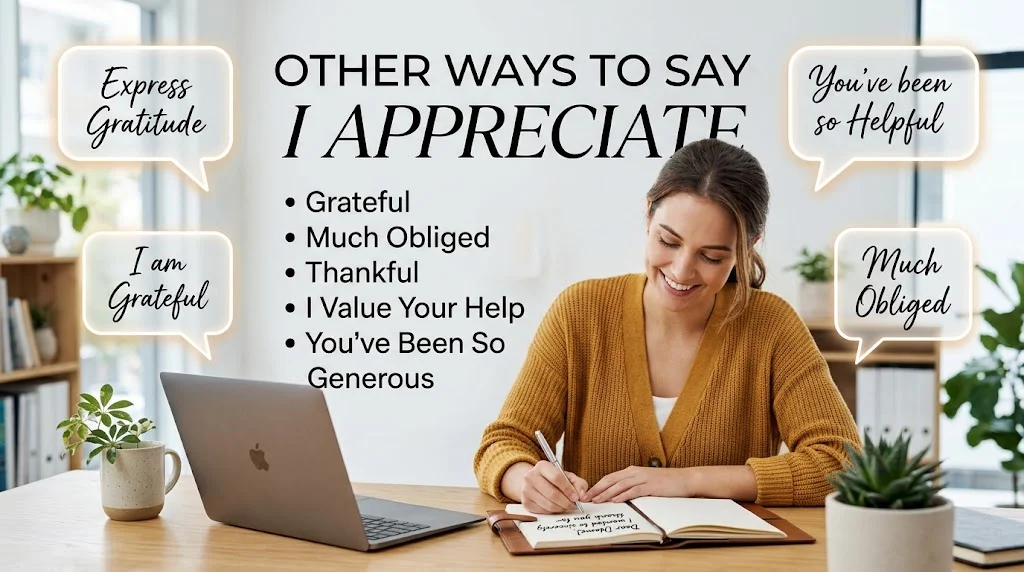
Looking for other ways to say i appreciate? The best alternatives include I am grateful, I am thankful, I value it, I am very grateful, and I truly appreciate it. The right phrase depends on your relationship, purpose, and level of formality.
“I appreciate” is a simple and useful phrase for showing gratitude, recognition, or approval. You can use it when someone helps you, gives you something, supports your work, or makes an effort for you. It works well in everyday conversations, emails, messages, and professional communication.
However, using the same phrase again and again can make your English sound repetitive. Learning alternatives to i appreciate gives you more ways to show gratitude with the right level of warmth and formality. A small change in wording can make your message sound more thoughtful and personal.
These expressions can also help you express excitement in English when someone does something especially helpful or meaningful. Whether you are writing to a coworker, thanking a friend, replying to a customer, or speaking with a teacher, choosing the right phrase helps you sound natural, confident, and respectful.
Quick Categories
Formal alternatives to “I appreciate”
- I am deeply grateful.
- I sincerely appreciate it.
- I am truly thankful.
- I am most grateful for your support.
These phrases work well when you want to show serious or respectful gratitude.
Pro Tip: Use formal gratitude when writing to senior colleagues, clients, teachers, or people you do not know well.
Casual alternatives
- Thanks so much.
- I really appreciate it.
- Thanks, that means a lot.
- I am really thankful.
These options sound warm and natural in everyday conversations.
Pro Tip: Match casual expressions with the relationship. A warm phrase usually works best with friends, family, and familiar coworkers.
Professional alternatives
- Thank you for your support.
- I value your help.
- Your assistance is greatly appreciated.
- Thank you for taking the time.
These expressions are useful in workplace emails, meetings, customer communication, and professional messages.
Pro Tip: In business writing, mention what you are thankful for when possible. Specific gratitude sounds more sincere.
Informal expressions
- Thanks a lot.
- You have been a great help.
- I cannot thank you enough.
- That means so much to me.
These informal expressions in English are useful when you want your gratitude to sound personal and warm.
Pro Tip: Avoid very emotional expressions in formal business messages unless the situation genuinely calls for them.
“Good English is not only about knowing more words. It is about choosing the right words for the situation.”
Common Mistakes When Saying “I Appreciate”
1. Using “I appreciate” without an object
“I appreciate” usually needs something after it when you mean gratitude.
Incorrect: I appreciate.
Better: I appreciate your help.
2. Saying “I appreciate you help”
The noun needs a possessive form.
Incorrect: I appreciate you help.
Correct: I appreciate your help.
3. Confusing “appreciate” with “appreciated”
Use “appreciate” when you are expressing current gratitude.
Incorrect: I appreciate what you did yesterday and it is appreciated.
Better: I appreciated what you did yesterday.
4. Using it for every situation
Repeating the same phrase can make your communication sound mechanical.
Example: I appreciate your email. I appreciate your help. I appreciate your time.
Better: Thank you for your email. I value your help, and I am grateful for your time.
5. Using a very casual phrase in a formal setting
Some expressions sound too personal for professional writing.
Too casual: You are awesome. Thanks a million!
Better: Thank you very much for your assistance.
What Does “I Appreciate” Mean?
“I appreciate” is commonly used to show gratitude for someone’s action, help, kindness, effort, or support. It can also mean that you recognize the value or importance of something.
The word appreciate is normally followed by a noun, pronoun, or gerund phrase.
Examples:
• I appreciate your help.
• I appreciate everything you have done.
• I appreciate you taking the time to meet with me.
In grammar, appreciate + noun and appreciate + gerund are common patterns.
“A thoughtful thank you can turn a simple message into a memorable one.”
When to Use “I Appreciate”
You can use the phrase in many situations, including:
• When someone helps you with a task
• When someone gives you useful advice
• When a coworker supports your project
• When a friend does something kind
• When a customer provides helpful feedback
• When a teacher gives you guidance
• When someone takes time to assist you
Spoken English
“I appreciate it” sounds natural in conversation.
Example: “Thanks for helping me with the report. I really appreciate it.”
Written English
The phrase also works in emails and messages.
Example: “I appreciate your quick response to my request.”
Formal situations
For formal communication, choose a more polished version such as:
I sincerely appreciate your assistance.
Informal situations
With friends or people you know well, you can say:
Thanks so much. I really appreciate it.
Is “I Appreciate” Professional or Polite to Say?
“I appreciate” is definitely polite. It communicates gratitude and respect. However, professionalism depends on the complete wording and the situation.
In a workplace email, “I appreciate your help” is perfectly acceptable. In very formal correspondence, “I sincerely appreciate your assistance” may sound more appropriate.
Polite? ✔ Yes
Professional? ✔ Yes, when used appropriately
Business example:
“I sincerely appreciate your assistance with this matter. Your support helped us complete the project on time.”
Pros and Cons of Using “I Appreciate”
Pros
• Simple and natural
• Friendly tone
• Common usage
• Easy to understand
Cons
• Can become repetitive
• May sound too informal in some formal situations
• Has limited emotional range
• May feel less personal when overused
Other Ways to Say “I Appreciate” With Examples
These alternatives will help you sound more fluent, confident, and natural in different situations.
Use them according to tone, context, and audience to express excitement, admiration, or approval.
1. Phrase: I am grateful
Meaning: You feel thankful for something someone has done.
Explanation: This is a natural alternative that clearly expresses gratitude.
Example Sentence: I am grateful for all the support you gave me.
Best Use: Personal gratitude
Worst Use: Casual requests
Tone: Warm, sincere, respectful
Context Variability: Casual: I am grateful for your help. Professional: I am grateful for your continued support. Spoken: I am really grateful.
2. Phrase: I am thankful
Meaning: You feel thankful for someone’s help or kindness.
Explanation: It is simple and widely understood.
Example Sentence: I am thankful for your guidance during the project.
Best Use: Everyday gratitude
Worst Use: Very formal letters
Tone: Warm, sincere, natural
Context Variability: Casual: I am thankful for your help. Professional: I am thankful for your guidance. Spoken: I am so thankful.
3. Phrase: I really appreciate it
Meaning: You want to strongly express your gratitude.
Explanation: Adding “really” makes the original phrase warmer.
Example Sentence: Thanks for staying late. I really appreciate it.
Best Use: Friendly thanks
Worst Use: Formal reports
Tone: Warm, friendly, sincere
Context Variability: Casual: I really appreciate it. Professional: I really appreciate your support. Spoken: I really appreciate that.
4. Phrase: I sincerely appreciate it
Meaning: You are expressing genuine and serious gratitude.
Explanation: “Sincerely” gives the phrase a more formal tone.
Example Sentence: I sincerely appreciate your assistance with this matter.
Best Use: Formal emails
Worst Use: Casual chats
Tone: Formal, sincere, respectful
Context Variability: Casual: Usually unnecessary. Professional: I sincerely appreciate your assistance. Spoken: I sincerely appreciate your help.
5. Phrase: I truly appreciate it
Meaning: You genuinely feel thankful.
Explanation: “Truly” emphasizes that your gratitude is honest.
Example Sentence: I truly appreciate everything you have done for me.
Best Use: Deep gratitude
Worst Use: Routine replies
Tone: Sincere, warm, heartfelt
Context Variability: Casual: I truly appreciate it. Professional: I truly appreciate your support. Spoken: I truly appreciate that.
6. Phrase: I value your help
Meaning: You recognize the importance of someone’s assistance.
Explanation: This phrase is especially useful in professional settings.
Example Sentence: I value your help and expertise on this project.
Best Use: Workplace communication
Worst Use: Casual favors
Tone: Professional, respectful, appreciative
Context Variability: Casual: I value your advice. Professional: I value your continued support. Spoken: I really value your help.
7. Phrase: Thank you for your help
Meaning: You directly thank someone for assisting you.
Explanation: It is one of the safest and most natural choices.
Example Sentence: Thank you for your help with the presentation.
Best Use: Everyday thanks
Worst Use: Repeated emails
Tone: Polite, clear, friendly
Context Variability: Casual: Thanks for your help. Professional: Thank you for your assistance. Spoken: Thank you for helping me.
8. Phrase: Thank you for your support
Meaning: You are grateful for someone’s encouragement or assistance.
Explanation: It works especially well when someone has supported you over time.
Example Sentence: Thank you for your support throughout this project.
Best Use: Professional thanks
Worst Use: Tiny favors
Tone: Professional, warm, respectful
Context Variability: Casual: Thanks for supporting me. Professional: Thank you for your continued support. Spoken: Thanks for all your support.
9. Phrase: Your help means a lot to me
Meaning: Someone’s assistance is personally important to you.
Explanation: This phrase adds emotional warmth to your gratitude.
Example Sentence: Your help means a lot to me during this busy week.
Best Use: Personal gratitude
Worst Use: Formal reports
Tone: Warm, personal, sincere
Context Variability: Casual: Your help means a lot. Professional: Your support means a great deal to our team. Spoken: It means a lot to me.
10. Phrase: That means a lot
Meaning: You are saying that someone’s action is important to you.
Explanation: It is short, natural, and friendly.
Example Sentence: You remembered my presentation. That means a lot.
Best Use: Personal thanks
Worst Use: Formal letters
Tone: Warm, personal, genuine
Context Variability: Casual: That means a lot. Professional: Your support means a lot to our team. Spoken: It really means a lot.
11. Phrase: I am much obliged
Meaning: You are expressing formal thanks.
Explanation: This is a traditional expression that can sound more formal than modern everyday English.
Example Sentence: I am much obliged for your assistance.
Best Use: Formal contexts
Worst Use: Casual conversations
Tone: Formal, traditional, polite
Context Variability: Casual: Can sound unusual. Professional: Suitable in selected formal contexts. Spoken: Formal sounding.
12. Phrase: I cannot thank you enough
Meaning: You feel extremely grateful.
Explanation: It emphasizes strong appreciation for meaningful help.
Example Sentence: I cannot thank you enough for helping me through the process.
Best Use: Strong gratitude
Worst Use: Routine favors
Tone: Emotional, warm, sincere
Context Variability: Casual: I cannot thank you enough. Professional: I cannot thank you enough for your support. Spoken: I really cannot thank you enough.
13. Phrase: I am deeply grateful
Meaning: You feel very strong gratitude.
Explanation: “Deeply” shows that the gratitude is especially meaningful.
Example Sentence: I am deeply grateful for your kindness.
Best Use: Serious gratitude
Worst Use: Small favors
Tone: Formal, heartfelt, sincere
Context Variability: Casual: Can sound serious. Professional: I am deeply grateful for your assistance. Spoken: I am deeply grateful.
14. Phrase: I am very grateful
Meaning: You feel a strong sense of thanks.
Explanation: It is simple while still sounding sincere.
Example Sentence: I am very grateful for the opportunity.
Best Use: Sincere thanks
Worst Use: Repeated routine use
Tone: Warm, sincere, respectful
Context Variability: Casual: I am very grateful. Professional: I am very grateful for this opportunity. Spoken: I am very grateful.
15. Phrase: Your assistance is appreciated
Meaning: Someone’s help is recognized and valued.
Explanation: This is a formal expression often used in workplace communication.
Example Sentence: Your assistance is greatly appreciated.
Best Use: Business writing
Worst Use: Friendly chats
Tone: Formal, professional, polite
Context Variability: Casual: Sounds formal. Professional: Your assistance is appreciated. Spoken: Less common than “I appreciate your help.”
16. Phrase: Thank you for taking the time
Meaning: You are grateful that someone spent time helping you.
Explanation: It shows respect for another person’s time and effort.
Example Sentence: Thank you for taking the time to review my application.
Best Use: Professional emails
Worst Use: Tiny favors
Tone: Polite, professional, thoughtful
Context Variability: Casual: Thanks for taking the time. Professional: Thank you for taking the time to meet with us. Spoken: Thanks for taking the time.
17. Phrase: I am thankful for your kindness
Meaning: You are grateful for someone’s kind behavior.
Explanation: This expression focuses on the person’s kindness rather than only their action.
Example Sentence: I am thankful for your kindness during a difficult time.
Best Use: Personal messages
Worst Use: Routine business
Tone: Warm, sincere, heartfelt
Context Variability: Casual: Very natural. Professional: Appropriate for personal workplace messages. Spoken: I am thankful for your kindness.
18. Phrase: I value your support
Meaning: You consider someone’s support important.
Explanation: It is a strong choice for professional communication.
Example Sentence: I value your support and feedback throughout this process.
Best Use: Workplace messages
Worst Use: Casual favors
Tone: Professional, respectful, confident
Context Variability: Casual: I value your support. Professional: We value your continued support. Spoken: I really value your support.
19. Phrase: Thank you kindly
Meaning: You are offering a polite expression of thanks.
Explanation: It sounds courteous and can be used in certain formal or traditional contexts.
Example Sentence: Thank you kindly for your assistance.
Best Use: Polite requests
Worst Use: Casual slang
Tone: Polite, courteous, traditional
Context Variability: Casual: Can sound formal. Professional: Thank you kindly for your response. Spoken: Thank you kindly.
20. Phrase: You have been a great help
Meaning: Someone has helped you significantly.
Explanation: It directly recognizes the value of their assistance.
Example Sentence: You have been a great help during the preparation process.
Best Use: Personal thanks
Worst Use: Formal reports
Tone: Warm, appreciative, natural
Context Variability: Casual: You have been a great help. Professional: Your assistance has been a great help. Spoken: You have been a huge help.
21. Phrase: I am grateful for your time
Meaning: You appreciate someone spending time with you.
Explanation: It is particularly useful after meetings, interviews, or consultations.
Example Sentence: I am grateful for your time and thoughtful feedback.
Best Use: Professional communication
Worst Use: Quick favors
Tone: Polite, professional, sincere
Context Variability: Casual: Thanks for your time. Professional: I am grateful for your time and consideration. Spoken: I appreciate your time.
22. Phrase: I value your contribution
Meaning: You recognize the importance of someone’s work or input.
Explanation: This is an excellent workplace phrase.
Example Sentence: I value your contribution to the team’s success.
Best Use: Team communication
Worst Use: Personal favors
Tone: Professional, respectful, positive
Context Variability: Casual: Your input really helps. Professional: I value your contribution. Spoken: We really value your contribution.
23. Phrase: Your support is invaluable
Meaning: Someone’s support is extremely useful or important.
Explanation: It communicates strong appreciation in a formal way.
Example Sentence: Your support has been invaluable to the success of this project.
Best Use: Formal thanks
Worst Use: Small favors
Tone: Formal, sincere, respectful
Context Variability: Casual: Can sound too formal. Professional: Your support has been invaluable. Spoken: Your support has been incredibly valuable.
24. Phrase: I am thankful for your guidance
Meaning: You are grateful for someone’s advice or direction.
Explanation: It is useful when a teacher, manager, mentor, or colleague helps you learn.
Example Sentence: I am thankful for your guidance throughout my training.
Best Use: Mentorship contexts
Worst Use: Simple favors
Tone: Respectful, sincere, professional
Context Variability: Casual: Thanks for guiding me. Professional: I am thankful for your guidance. Spoken: I really appreciate your guidance.
25. Phrase: I am grateful for the opportunity
Meaning: You appreciate being given a chance.
Explanation: This phrase is common in interviews, applications, and professional settings.
Example Sentence: I am grateful for the opportunity to discuss this position with you.
Best Use: Career communication
Worst Use: Casual invitations
Tone: Professional, respectful, sincere
Context Variability: Casual: Thanks for the opportunity. Professional: I am grateful for the opportunity. Spoken: I am very grateful for this opportunity.
26. Phrase: Your effort is appreciated
Meaning: You recognize someone’s hard work.
Explanation: This expression focuses on effort rather than only the final result.
Example Sentence: Your effort is greatly appreciated by everyone on the team.
Best Use: Workplace praise
Worst Use: Casual friendship
Tone: Professional, positive, respectful
Context Variability: Casual: I really appreciate your effort. Professional: Your effort is greatly appreciated. Spoken: We really appreciate your effort.
27. Phrase: I am thankful for your consideration
Meaning: You are grateful that someone carefully considered your request or situation.
Explanation: This phrase is common in formal letters and professional emails.
Example Sentence: I am thankful for your consideration of my request.
Best Use: Formal requests
Worst Use: Friendly chats
Tone: Formal, polite, respectful
Context Variability: Casual: Thanks for considering it. Professional: Thank you for your consideration. Spoken: I appreciate your consideration.
28. Phrase: I am grateful for everything
Meaning: You are expressing broad and sincere gratitude.
Explanation: It is useful when many actions or forms of support have helped you.
Example Sentence: I am grateful for everything you have done for me.
Best Use: Deep gratitude
Worst Use: Routine business
Tone: Warm, emotional, sincere
Context Variability: Casual: I am grateful for everything. Professional: I am grateful for everything your team has done. Spoken: I am so grateful for everything.
29. Phrase: Thank you for going the extra mile
Meaning: You are thanking someone for making an unusual extra effort.
Explanation: This is a useful professional reaction phrase when someone does more than expected.
Example Sentence: Thank you for going the extra mile to make sure the client was satisfied.
Best Use: Workplace praise
Worst Use: Formal academic writing
Tone: Positive, appreciative, professional
Context Variability: Casual: Thanks for going the extra mile. Professional: Thank you for going the extra mile. Spoken: I really appreciate you going the extra mile.
30. Phrase: I am truly thankful for your support
Meaning: You are expressing strong and genuine gratitude.
Explanation: This combines a warm expression of thanks with a clear reason for the gratitude.
Example Sentence: I am truly thankful for your support during this important project.
Best Use: Meaningful gratitude
Worst Use: Routine replies
Tone: Warm, sincere, respectful
Context Variability: Casual: I am truly thankful for your support. Professional: I am truly thankful for your continued support. Spoken: I am truly thankful for everything.
“Fluent English gives you choices. Strong communication means knowing which choice fits the moment.”
How to Choose the Right Alternative
The best alternative depends on who you are speaking to, what they did, and how formal the situation is.
For a friend, “That means a lot” sounds natural and personal.
For a coworker, “Thank you for your support” sounds polite and professional.
For a manager, teacher, client, or formal contact, “I sincerely appreciate your assistance” may be more suitable.
For strong personal gratitude, “I am deeply grateful” or “I cannot thank you enough” can communicate more emotion.
For workplace praise, “Thank you for going the extra mile” or “I value your contribution” can sound more specific and meaningful.
See Also
- See also: Other Ways to Say “Highlights” in an Essay
- See also: Professional English Guide for Clear Workplace Communication
Mini Quiz and Self Check
1. Which phrase is most suitable for a formal business email?
A. Thanks a lot
B. That means so much
C. I sincerely appreciate your assistance
D. You are awesome
Answer: C
2. Your friend helps you prepare for an important interview. Which sounds natural?
A. Your assistance is hereby acknowledged.
B. That means a lot to me.
C. Your contribution is invaluable to the organization.
D. Your assistance is appreciated.
Answer: B
3. You want to praise a coworker who worked extra hours to finish a project. What is the best choice?
A. Thank you for going the extra mile.
B. Thanks a bunch.
C. That is cool.
D. Thanks for everything, buddy.
Answer: A
4. Which sentence is grammatically correct?
A. I appreciate you help.
B. I appreciate your helping.
C. I appreciate your help.
D. I appreciate to help.
Answer: C
Comparison Table: Top Alternatives
| Phrase | Tone | Best Use |
|---|---|---|
| I am grateful | Warm and sincere | Personal gratitude |
| I am thankful | Friendly and sincere | Everyday thanks |
| I really appreciate it | Warm and natural | Spoken English |
| I sincerely appreciate it | Formal and respectful | Business emails |
| I truly appreciate it | Sincere and warm | Meaningful thanks |
| I value your help | Professional and respectful | Workplace communication |
| Thank you for your support | Polite and professional | Work relationships |
| Your help means a lot to me | Personal and warm | Emotional gratitude |
| I cannot thank you enough | Strong and heartfelt | Deep gratitude |
| Thank you for going the extra mile | Positive and professional | Workplace praise |
Frequently Asked Questions
What are the best other ways to say i appreciate?
Some of the best choices are “I am grateful,” “I am thankful,” “I sincerely appreciate it,” “I value your help,” and “Thank you for your support.” Choose based on the situation and level of formality.
What is a professional way to say i appreciate?
For professional communication, try “I sincerely appreciate your assistance,” “I value your support,” or “Thank you for taking the time.” These sound polished without being overly complicated.
What is a casual way to say i appreciate?
You can say “Thanks so much,” “That means a lot,” “I really appreciate it,” or “You have been a great help.” These sound natural in friendly conversations.
Is “I appreciate it” polite?
Yes. “I appreciate it” is polite and commonly used to show gratitude. It can work in both casual and professional situations when the context is appropriate.
How can I avoid repeating “I appreciate” in English?
Use different expressions based on the situation. Try “I am grateful,” “I value your support,” “Thank you for your help,” or “That means a lot to me” to make your English more varied.
Conclusion
Learning different ways to express gratitude can make your English sound more natural, flexible, and confident. Instead of repeating one phrase, you can choose an expression that matches the person, situation, and emotion.
Practice a few alternatives each day and use them in real conversations, emails, and messages. Most importantly, pay attention to tone. The strongest English is not simply correct English. It is English that fits the situation.
Which alternative do you use most often? Share your favorite phrase and try using one new expression today.
Read More Related Articles:
- 30+ What Are Other Ways to Say “No”? | Speak Your Mind …
- 30+ Other Ways to Say Highlights in an Essay – Replynst.com
- 30+ Other Ways to Say Happy Birthday Funny | Hilarious Wishes …

Emma Richardson is a professional content writer at Replynst.com. She creates clear, engaging and well-researched content designed to answer readers’ questions while following modern SEO best practices. Her focus is on helpful, reader-friendly articles that deliver genuine value.