Quick Answer:
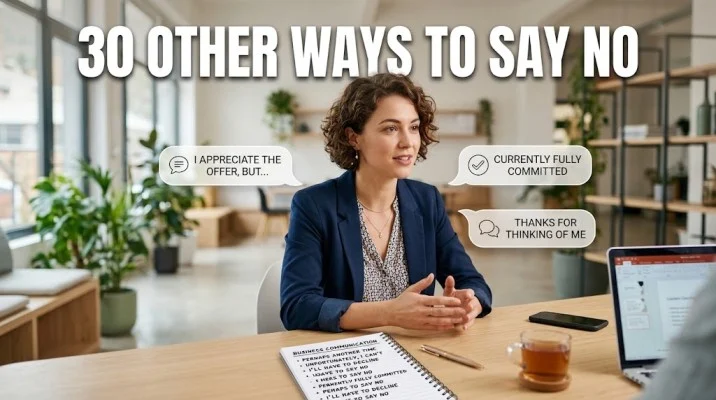
There are many other ways to say “no” depending on your tone and situation. Some of the best alternatives are No, thank you, I’m afraid not, I’d rather not, Unfortunately, I can’t, and That won’t work for me.
The word no is one of the most common and useful words in English. We use it to refuse requests, disagree with ideas, reject invitations, set boundaries, or show that something is not possible. However, using the same word repeatedly can sometimes sound too direct, cold, or unprofessional.
Learning other ways to say “no” helps you communicate with more confidence and control. You can choose formal alternatives for work, polite phrases for social situations, and casual expressions when speaking with friends. The right words can protect relationships while still making your answer clear.
Just as vocabulary helps people express excitement in English, it also helps them express disagreement, refusal, and personal boundaries appropriately. Understanding different ways to say no will make your spoken and written English sound more natural, professional, and fluent.
Quick Categories
Formal Alternatives to “No”
- I’m afraid not
- Unfortunately, that is not possible
- I must decline
- I’m unable to agree
Pro Tips Box: Use formal alternatives when speaking to clients, managers, customers, or people you do not know well.
Casual Alternatives
- Not really
- No, thanks
- I don’t think so
- I’d rather not
Pro Tips Box: Casual alternatives work well with friends and family, but always consider your tone.
Professional Alternatives
- Unfortunately, I’m unable to
- I must respectfully decline
- That won’t be possible
- I’m not in a position to
Pro Tips Box: Professional reaction phrases should be clear and polite without giving unnecessary explanations.
Informal Expressions
- Nope
- Nah
- Not a chance
- I’m good, thanks
These informal expressions in English are useful in relaxed conversations but are usually unsuitable for formal workplace communication.
Pro Tips Box: Avoid slang or very casual expressions when writing professional emails.
“The best refusal is clear enough to understand and polite enough to respect the other person.”
Common Mistakes When Using “No”
1. Saying Only “No” in a Sensitive Situation
A simple no can sound too direct.
Example: Instead of No, say: I’m sorry, but I can’t help this time.
2. Giving Too Many Excuses
Long explanations can make your refusal unclear.
Example: Unfortunately, I won’t be available.
3. Using Casual Language at Work
Words like nah may sound unprofessional.
Example: I’m afraid that won’t be possible.
4. Apologizing Too Much
You can be polite without repeatedly saying sorry.
Example: Thank you for asking, but I’ll have to decline.
5. Saying Yes When You Mean No
Agreeing just to avoid discomfort can create problems later.
Example: I appreciate the offer, but I’m unable to commit right now.
“Confidence means being honest about your limits without being disrespectful.”
What Does “No” Mean?
No is a word used to give a negative answer, refuse something, disagree, or show that something is not true or possible.
It can function as a response word.
Example:
No, I don’t agree with that decision.
In many situations, other ways to say “no” can make your response sound softer, more formal, or more professional.
When to Use “No”
You can use no when you want to:
- Refuse an invitation
- Reject an offer
- Disagree with someone
- Answer a negative question
- Set a personal boundary
- Decline a request
- Say that something is impossible
- Reject a suggestion
Spoken vs Written
Spoken English: No is common and natural, especially in direct conversations.
Written English: A softer alternative may be better in professional emails and formal communication.
Formal vs Informal
Formal: Use phrases such as I must decline or Unfortunately, I’m unable to.
Informal: Use phrases such as Nope, Not really, or Nah with the right audience.
Is It Professional or Polite to Say “No”?
The word no itself is not impolite. However, a direct no can sometimes sound abrupt, especially in business communication.
Politeness depends on your tone and the words around it.
Polite? ✔️ Yes, when used respectfully
Professional? ❌ No, not by itself in most formal situations
Business-style example:
Thank you for the opportunity, but unfortunately, I’m unable to accept the proposal at this time.
Using professional alternatives helps you refuse clearly while maintaining a respectful relationship.
“In professional English, a polite refusal is often stronger than a vague agreement.”
Pros and Cons of Using “No”
Pros
- Simple and natural
- Friendly tone
- Common usage
- Easy to understand
Cons
- Can sound too informal for work
- May feel overused
- Has limited emotional range
- Not always suitable for formal writing
Other Ways to Say “No” With Examples
These alternatives will help you sound more fluent, confident, and natural in different situations.
Use them according to tone, context, and audience when refusing requests, rejecting ideas, setting boundaries, or showing disagreement.
1. Phrase: No, Thank You
- Meaning: A polite refusal.
- Explanation: It is friendly and simple.
- Example Sentence: No, thank you. I don’t need any help right now.
- Best Use: Polite refusal
- Worst Use: Serious conflict
- Tone: Polite, friendly, clear
- Context Variability: Casual, professional, spoken
2. Phrase: I’m Afraid Not
- Meaning: A polite negative answer.
- Explanation: It softens a direct refusal.
- Example Sentence: I’m afraid not. The office is closed today.
- Best Use: Polite responses
- Worst Use: Casual jokes
- Tone: Polite, formal, gentle
- Context Variability: Professional, spoken, written
3. Phrase: Unfortunately, I Can’t
- Meaning: You are unable to do something.
- Explanation: It is useful for polite refusals.
- Example Sentence: Unfortunately, I can’t attend the meeting tomorrow.
- Best Use: Professional refusal
- Worst Use: Close friends
- Tone: Professional, polite, clear
- Context Variability: Professional, spoken, written
4. Phrase: I’d Rather Not
- Meaning: You prefer not to do something.
- Explanation: It is useful for setting personal boundaries.
- Example Sentence: I’d rather not discuss that topic.
- Best Use: Personal boundaries
- Worst Use: Formal reports
- Tone: Polite, calm, direct
- Context Variability: Casual, spoken, professional
5. Phrase: I Don’t Think So
- Meaning: You probably disagree or believe something is not true.
- Explanation: It sounds softer than a direct no.
- Example Sentence: I don’t think so. We should check the schedule first.
- Best Use: Gentle disagreement
- Worst Use: Formal letters
- Tone: Natural, soft, casual
- Context Variability: Spoken, casual, professional
6. Phrase: Not Really
- Meaning: Not completely or not exactly.
- Explanation: It gives a softer negative response.
- Example Sentence: Do you like spicy food? Not really.
- Best Use: Casual questions
- Worst Use: Business refusals
- Tone: Casual, natural, soft
- Context Variability: Casual, spoken
7. Phrase: I Must Decline
- Meaning: You are formally refusing something.
- Explanation: It is appropriate for serious or professional situations.
- Example Sentence: Thank you for the invitation, but I must decline.
- Best Use: Formal invitations
- Worst Use: Friendly chats
- Tone: Formal, respectful, professional
- Context Variability: Professional, written
8. Phrase: I’ll Have to Pass
- Meaning: You are choosing not to participate.
- Explanation: It is polite and conversational.
- Example Sentence: Thanks for asking, but I’ll have to pass this time.
- Best Use: Casual invitations
- Worst Use: Formal contracts
- Tone: Friendly, casual, polite
- Context Variability: Casual, spoken
9. Phrase: That Won’t Work for Me
- Meaning: Something is not suitable or possible for you.
- Explanation: It clearly communicates a boundary.
- Example Sentence: Monday morning won’t work for me.
- Best Use: Scheduling discussions
- Worst Use: Serious rejection
- Tone: Professional, direct, polite
- Context Variability: Professional, casual, spoken
10. Phrase: I’m Unable To
- Meaning: You cannot do something.
- Explanation: It is a professional alternative to saying no.
- Example Sentence: I’m unable to approve the request at this time.
- Best Use: Business communication
- Worst Use: Casual friends
- Tone: Formal, professional, clear
- Context Variability: Professional, written
11. Phrase: Not at the Moment
- Meaning: Not now, but possibly later.
- Explanation: It avoids giving a permanent no.
- Example Sentence: I can’t talk right now, not at the moment.
- Best Use: Temporary refusal
- Worst Use: Final decisions
- Tone: Neutral, polite, natural
- Context Variability: Casual, spoken, professional
12. Phrase: I Can’t Commit to That
- Meaning: You cannot promise to do something.
- Explanation: It is useful when discussing responsibilities.
- Example Sentence: I can’t commit to that project right now.
- Best Use: Work commitments
- Worst Use: Simple questions
- Tone: Professional, honest, clear
- Context Variability: Professional, spoken
13. Phrase: I’ll Pass
- Meaning: You choose not to accept.
- Explanation: It is short and natural in casual English.
- Example Sentence: Everyone is ordering dessert, but I’ll pass.
- Best Use: Casual situations
- Worst Use: Formal emails
- Tone: Casual, friendly, relaxed
- Context Variability: Casual, spoken
14. Phrase: I’m Good, Thanks
- Meaning: You politely say that you do not want something.
- Explanation: It is common in everyday English.
- Example Sentence: Would you like more coffee? I’m good, thanks.
- Best Use: Everyday offers
- Worst Use: Formal meetings
- Tone: Casual, friendly, polite
- Context Variability: Casual, spoken
15. Phrase: That’s Not Possible
- Meaning: Something cannot happen.
- Explanation: It is direct but can remain professional.
- Example Sentence: Unfortunately, changing the deadline is not possible.
- Best Use: Business limitations
- Worst Use: Sensitive refusals
- Tone: Direct, professional, clear
- Context Variability: Professional, written
16. Phrase: I Have to Say No
- Meaning: You must refuse something.
- Explanation: It sounds honest and clear.
- Example Sentence: I understand your request, but I have to say no.
- Best Use: Clear boundaries
- Worst Use: Formal reports
- Tone: Direct, respectful, firm
- Context Variability: Spoken, professional
17. Phrase: I Can’t Agree
- Meaning: You do not share the same opinion.
- Explanation: It is useful for disagreement.
- Example Sentence: I’m sorry, but I can’t agree with that approach.
- Best Use: Professional disagreement
- Worst Use: Casual offers
- Tone: Professional, respectful, firm
- Context Variability: Professional, spoken, written
18. Phrase: I Don’t Agree
- Meaning: You have a different opinion.
- Explanation: It is direct and clear.
- Example Sentence: I don’t agree that this is the best solution.
- Best Use: Discussions
- Worst Use: Sensitive situations
- Tone: Direct, neutral, clear
- Context Variability: Casual, professional, spoken
19. Phrase: I’m Not Comfortable With That
- Meaning: You do not feel comfortable accepting something.
- Explanation: It is useful for setting boundaries politely.
- Example Sentence: I’m not comfortable with sharing that information.
- Best Use: Personal boundaries
- Worst Use: Simple offers
- Tone: Calm, polite, firm
- Context Variability: Casual, professional, spoken
20. Phrase: I’ll Have to Decline
- Meaning: You are politely refusing.
- Explanation: It is suitable for professional communication.
- Example Sentence: Thank you for the offer, but I’ll have to decline.
- Best Use: Professional offers
- Worst Use: Casual jokes
- Tone: Professional, polite, formal
- Context Variability: Professional, written
21. Phrase: Not This Time
- Meaning: You are refusing now but may accept later.
- Explanation: It sounds friendly and temporary.
- Example Sentence: Thanks for inviting me, but not this time.
- Best Use: Friendly invitations
- Worst Use: Formal rejection
- Tone: Friendly, casual, soft
- Context Variability: Casual, spoken
22. Phrase: I’m Not Interested
- Meaning: You do not want something.
- Explanation: It clearly rejects an offer or opportunity.
- Example Sentence: Thank you, but I’m not interested in changing my plan.
- Best Use: Declining offers
- Worst Use: Sensitive conversations
- Tone: Direct, neutral, firm
- Context Variability: Casual, professional, spoken
23. Phrase: That’s Not for Me
- Meaning: Something does not suit your preferences.
- Explanation: It is a natural way to reject something without criticism.
- Example Sentence: Camping is fun for some people, but it’s not for me.
- Best Use: Personal preferences
- Worst Use: Business refusals
- Tone: Casual, friendly, natural
- Context Variability: Casual, spoken
24. Phrase: I Don’t Believe So
- Meaning: You think the answer is no.
- Explanation: It is a slightly more formal alternative to I don’t think so.
- Example Sentence: Is the manager available today? I don’t believe so.
- Best Use: Polite answers
- Worst Use: Very casual chats
- Tone: Polite, formal, neutral
- Context Variability: Professional, spoken
25. Phrase: I’m Not in a Position To
- Meaning: Your situation prevents you from doing something.
- Explanation: It is useful in professional situations.
- Example Sentence: I’m not in a position to approve that request.
- Best Use: Workplace communication
- Worst Use: Casual friends
- Tone: Professional, careful, polite
- Context Variability: Professional, written
26. Phrase: I Can’t Make It
- Meaning: You cannot attend or arrive somewhere.
- Explanation: It is common for declining plans.
- Example Sentence: I’m sorry, but I can’t make it to dinner tonight.
- Best Use: Social plans
- Worst Use: Formal documents
- Tone: Friendly, natural, polite
- Context Variability: Casual, spoken
27. Phrase: Nope
- Meaning: An informal version of no.
- Explanation: It should only be used in relaxed conversations.
- Example Sentence: Nope, I haven’t seen that movie.
- Best Use: Close friends
- Worst Use: Professional emails
- Tone: Informal, casual, relaxed
- Context Variability: Casual, spoken
28. Phrase: Nah
- Meaning: A very casual alternative to no.
- Explanation: It is common in informal spoken English.
- Example Sentence: Nah, I’m staying home tonight.
- Best Use: Casual conversations
- Worst Use: Workplace communication
- Tone: Very casual, relaxed
- Context Variability: Casual, spoken
29. Phrase: Not a Chance
- Meaning: A strong refusal.
- Explanation: It shows that you strongly reject an idea.
- Example Sentence: Would I share your private information? Not a chance.
- Best Use: Strong refusal
- Worst Use: Formal business emails
- Tone: Strong, informal, firm
- Context Variability: Casual, spoken
30. Phrase: I Respectfully Decline
- Meaning: A very polite formal refusal.
- Explanation: It is useful when you want to sound respectful and professional.
- Example Sentence: Thank you for the opportunity, but I respectfully decline.
- Best Use: Formal communication
- Worst Use: Casual friends
- Tone: Formal, respectful, professional
- Context Variability: Professional, written
“You do not need to sound harsh to be firm. The right phrase can protect both your boundaries and your relationships.”
Comparison Table: Top Alternatives
| Phrase | Tone | Best Use |
|---|---|---|
| No, thank you | Polite, friendly | Everyday refusal |
| I’m afraid not | Polite, formal | Professional answers |
| Unfortunately, I can’t | Professional, polite | Business refusal |
| I’d rather not | Calm, direct | Personal boundaries |
| I must decline | Formal, respectful | Formal invitations |
| That won’t work for me | Direct, polite | Scheduling |
| I’m unable to | Professional, formal | Workplace communication |
| I’ll have to pass | Friendly, casual | Social invitations |
| I can’t agree | Respectful, firm | Professional disagreement |
| I respectfully decline | Formal, professional | Official refusal |
Mini Quiz and Self Check
1. Which phrase is best for declining a professional invitation?
A. Nah
B. Nope
C. I respectfully decline
D. Not a chance
Answer: C. I respectfully decline
2. Which phrase is best for setting a personal boundary?
A. I’m not comfortable with that
B. Nope
C. Nah
D. Not really
Answer: A. I’m not comfortable with that
3. Which phrase is most casual?
A. I must decline
B. Unfortunately, I’m unable to
C. Nah
D. I respectfully decline
Answer: C. Nah
4. Your manager asks if you can take another project, but you already have too much work. What is the best response?
A. Nope
B. I’m not in a position to take on another project right now.
C. Not a chance
D. Nah
Answer: B. I’m not in a position to take on another project right now.
See Also
See also: Other Ways to Say Thank You for more useful vocabulary alternatives in everyday English.
- See also: Our Professional English Communication Guide for stronger workplace phrases, emails, and professional reaction phrases.
Frequently Asked Questions
What are the most polite other ways to say “no”?
Some polite alternatives include No, thank you, I’m afraid not, Unfortunately, I can’t, and I respectfully decline.
How do you say no professionally?
You can say Unfortunately, I’m unable to, I must decline, or That won’t be possible at this time.
What is a softer way to say no?
Try I don’t think so, I’d rather not, or I’m afraid not to make your answer sound less direct.
Is saying “no” rude in English?
No. Saying no is not rude when your tone is respectful. Adding polite language can make the refusal sound warmer.
What are informal expressions in English for saying no?
Common informal expressions include Nope, Nah, I’ll pass, Not really, and I’m good, thanks.
Conclusion
Learning other ways to say “no” helps you communicate more naturally in different situations. A casual conversation, a professional email, and a personal boundary may all require different language.
Practice these alternatives regularly and pay attention to tone, context, and audience. The best way to say no is not always the shortest phrase. A clear, respectful response can make your English sound confident, polite, and professional.
The more alternatives you learn, the easier it becomes to express disagreement and refusal without sounding rude. Choose your words carefully, practice them in real conversations, and build confidence one phrase at a time.
Read More Related Articles:
- 30+ Other Ways to Say Says in an Essay | Better Words to Make …
- 30+ Other Ways to Say Happy Birthday Funny – Replynst.com
- 30+ Other Ways to Say “Please Advise” | Smarter, Polite …

Ethan Parker is a professional content writer at Replynst.com. He creates clear, engaging and well-researched articles focused on providing useful information, answering readers’ questions.