Quick Answer:
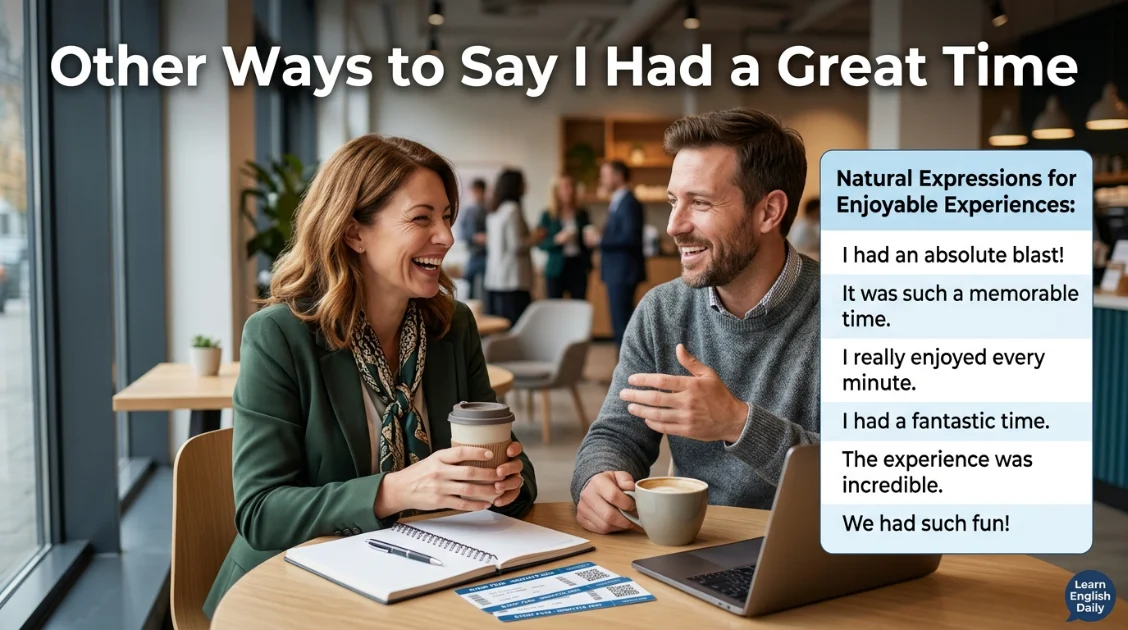
The best alternatives to I had a great time include I really enjoyed myself, I had a wonderful time, I had an amazing time, I thoroughly enjoyed it, and I had a fantastic time. Choose the phrase based on your relationship with the listener and the level of enthusiasm you want to express.
Knowing other ways to say I had a great time helps you sound more natural, expressive, and confident in English. While the phrase is friendly and widely used, repeating it can make your conversations and writing sound predictable. Learning alternatives gives you more flexibility when talking about trips, events, dinners, parties, meetings, or memorable experiences.
These alternatives to I had a great time can also help English learners understand differences in tone and context. Some expressions sound casual and friendly, while others work better in professional or polished conversations. Just as you learn to express excitement in English, choosing the right phrase can make your reactions feel more genuine, engaging, and appropriate.
Quick Categories
Formal alternatives to “I Had a Great Time”
- I thoroughly enjoyed myself
- I greatly enjoyed the experience
- I found it very enjoyable
- I had a wonderful experience
Pro Tip: Use polished expressions when writing thank-you messages, professional correspondence, or formal reflections.
Casual alternatives
- I had an awesome time
- I really enjoyed myself
- I had so much fun
- It was a blast
Pro Tip: Casual phrases work best with friends, family, and people you know well.
Professional alternatives
- I thoroughly enjoyed the event
- It was a very enjoyable experience
- I appreciated the experience
- I found the event very rewarding
Pro Tip: Professional English usually sounds more confident when you describe the experience specifically rather than using overly excited language.
Informal expressions
- I had a blast
- I had loads of fun
- It was so much fun
- I loved every minute of it
Pro Tip: Informal expressions in English are useful for enthusiastic conversations, but avoid them in formal reports and business writing.
“The right alternative can turn a simple reaction into a more memorable expression.”
Common Mistakes
1. Saying “I had a good time” when you want to show strong enthusiasm
Mistake: “The concert was incredible, and I had a good time.”
Better: “The concert was incredible, and I had an amazing time.”
Why: “Good” is positive but does not communicate as much enthusiasm as “amazing” or “fantastic.”
2. Using “I enjoyed” without an object
Mistake: “I enjoyed yesterday.”
Better: “I enjoyed the event yesterday.”
Why: In most contexts, “enjoy” needs an object or reflexive construction.
3. Using highly informal expressions professionally
Mistake: “The conference was a blast!”
Better: “I thoroughly enjoyed the conference.”
Why: “A blast” is friendly and informal, but it may sound too casual in professional communication.
4. Repeating “great” too often
Mistake: “I had a great time at the great event with great people.”
Better: “I had a wonderful time at the event and really enjoyed meeting everyone.”
Why: Using varied vocabulary makes your English sound more polished.
5. Confusing “I had a great time” with “I had a great day”
Mistake: “The entire vacation was wonderful. I had a great day.”
Better: “The entire vacation was wonderful. I had a great time.”
Why: “Great day” usually focuses on a particular day, while “great time” focuses on enjoyment or an experience.
What Does “I Had a Great Time” Mean?
I had a great time means that you enjoyed an experience, activity, event, or period of time very much.
The phrase uses the past tense had because it normally describes an experience that has already happened.
Example: “I had a great time at the wedding.”
The phrase can describe anything from a short social gathering to a long vacation.
When to Use “I Had a Great Time”
You can use this phrase in many everyday and professional situations:
- After a party: “I had a great time at your party.”
- After a trip: “We had a great time in Paris.”
- After dinner: “I had a great time tonight.”
- After an event: “I had a great time at the conference.”
- After meeting someone: “I had a great time talking with you.”
Spoken vs. Written: The phrase is natural in both spoken and written English.
Formal vs. Informal: It is generally neutral and friendly, although more polished alternatives may be preferable in formal writing.
Is “I Had a Great Time” Professional or Polite?
Polite? ✔️ Yes
Professional? ✔️ Yes
The phrase is polite and acceptable in many professional situations. However, alternatives such as I thoroughly enjoyed the event can sound more polished in formal business communication.
Business-style example: “I thoroughly enjoyed the conference and appreciated the opportunity to connect with industry professionals.”
For casual situations, “I had a great time” is completely natural.
Pros and Cons of Using “I Had a Great Time”
Pros
- Simple and natural: It is easy for English learners and native speakers to use.
- Friendly tone: It creates a positive and warm impression.
- Common usage: People use it frequently in everyday conversations.
- Easy to understand: The meaning is immediately clear.
Cons
- Can become repetitive: Using the same phrase repeatedly can make your speech less varied.
- Limited emotional range: It does not always show how strongly you enjoyed something.
- May sound generic: It does not explain what made the experience special.
- Less expressive: More specific alternatives can make your reaction more memorable.
“Fluent English is not only about knowing more words. It is about choosing the right words for the moment.”
Other Ways to Say “I Had a Great Time” With Examples
These alternatives will help you sound more fluent, confident, and natural in different situations.
Use them according to tone, context, and audience to express enjoyment, appreciation, or enthusiasm naturally.
1. Phrase: I Had a Wonderful Time
Meaning: You enjoyed the experience very much.
Explanation: This is a warm and polished alternative that works in many situations.
Example Sentence: “I had a wonderful time at your dinner party.”
Best Use: Social occasions
Worst Use: Serious situations
Tone: Warm, positive, polite
Context Variability: Casual: “I had a wonderful time.” Professional: “I had a wonderful time at the event.” Spoken: “I had a wonderful time yesterday.”
2. Phrase: I Had an Amazing Time
Meaning: You enjoyed something extremely much.
Explanation: This phrase communicates stronger enthusiasm than “I had a great time.”
Example Sentence: “I had an amazing time on our trip to Italy.”
Best Use: Memorable experiences
Worst Use: Formal reports
Tone: Enthusiastic, friendly, positive
Context Variability: Casual: “I had an amazing time.” Professional: “I had an amazing experience at the conference.” Spoken: “We had an amazing time.”
3. Phrase: I Had a Fantastic Time
Meaning: You enjoyed yourself exceptionally well.
Explanation: “Fantastic” adds strong positive emotion while remaining widely appropriate.
Example Sentence: “I had a fantastic time at the concert last night.”
Best Use: Social events
Worst Use: Sensitive situations
Tone: Enthusiastic, cheerful, positive
Context Variability: Casual: “I had a fantastic time.” Professional: “I had a fantastic experience at the seminar.” Spoken: “We had a fantastic time.”
4. Phrase: I Really Enjoyed Myself
Meaning: You enjoyed the experience a lot.
Explanation: This natural expression is useful in everyday conversations.
Example Sentence: “I really enjoyed myself at the birthday celebration.”
Best Use: Casual conversations
Worst Use: Formal reports
Tone: Natural, friendly, relaxed
Context Variability: Casual: “I really enjoyed myself.” Professional: “I really enjoyed the event.” Spoken: “I really enjoyed myself last night.”
5. Phrase: I Thoroughly Enjoyed It
Meaning: You enjoyed something completely.
Explanation: This is a polished alternative that works especially well in professional or formal situations.
Example Sentence: “I thoroughly enjoyed the presentation and learned a great deal.”
Best Use: Professional settings
Worst Use: Very casual chat
Tone: Polished, positive, professional
Context Variability: Casual: “I really enjoyed it.” Professional: “I thoroughly enjoyed the presentation.” Spoken: “I thoroughly enjoyed the event.”
6. Phrase: I Had So Much Fun
Meaning: You enjoyed yourself a lot.
Explanation: This is a very natural phrase for enthusiastic casual conversations.
Example Sentence: “I had so much fun at the beach with my friends.”
Best Use: Casual occasions
Worst Use: Formal writing
Tone: Cheerful, casual, enthusiastic
Context Variability: Casual: “I had so much fun.” Professional: “I really enjoyed the event.” Spoken: “We had so much fun.”
7. Phrase: I Had an Awesome Time
Meaning: You enjoyed the experience greatly.
Explanation: “Awesome” creates a highly enthusiastic and informal tone.
Example Sentence: “I had an awesome time at the festival.”
Best Use: Friendly conversations
Worst Use: Formal emails
Tone: Informal, energetic, enthusiastic
Context Variability: Casual: “I had an awesome time.” Professional: “I had an excellent experience.” Spoken: “We had an awesome time.”
8. Phrase: It Was a Wonderful Experience
Meaning: The experience was highly enjoyable or meaningful.
Explanation: This phrase sounds polished and can be used in professional or personal situations.
Example Sentence: “Working with the team was a wonderful experience.”
Best Use: Reflective writing
Worst Use: Quick casual replies
Tone: Polished, warm, thoughtful
Context Variability: Casual: “It was wonderful.” Professional: “It was a wonderful experience.” Spoken: “It was a wonderful experience.”
9. Phrase: I Really Enjoyed the Experience
Meaning: You found the experience very enjoyable.
Explanation: This phrase is clear and professional while still sounding positive.
Example Sentence: “I really enjoyed the experience and would gladly participate again.”
Best Use: Professional feedback
Worst Use: Informal jokes
Tone: Positive, professional, sincere
Context Variability: Casual: “I really enjoyed it.” Professional: “I really enjoyed the experience.” Spoken: “I really enjoyed the whole experience.”
10. Phrase: I Had a Fantastic Experience
Meaning: You had an exceptionally positive experience.
Explanation: This is a strong alternative for events, trips, services, or professional opportunities.
Example Sentence: “I had a fantastic experience working with your team.”
Best Use: Professional feedback
Worst Use: Serious complaints
Tone: Positive, polished, enthusiastic
Context Variability: Casual: “It was fantastic.” Professional: “I had a fantastic experience.” Spoken: “I had a fantastic experience there.”
11. Phrase: I Had a Blast
Meaning: You had a lot of fun.
Explanation: This is a popular informal expression for an exciting and enjoyable experience.
Example Sentence: “I had a blast at the concert.”
Best Use: Friendly conversations
Worst Use: Formal emails
Tone: Informal, energetic, playful
Context Variability: Casual: “I had a blast.” Professional: “I really enjoyed the event.” Spoken: “We had a blast.”
12. Phrase: I Loved Every Minute of It
Meaning: You enjoyed the entire experience.
Explanation: This expressive phrase shows strong enthusiasm and appreciation.
Example Sentence: “I loved every minute of the trip.”
Best Use: Memorable events
Worst Use: Formal reports
Tone: Warm, enthusiastic, expressive
Context Variability: Casual: “I loved every minute of it.” Professional: “I thoroughly enjoyed the experience.” Spoken: “I loved every minute.”
13. Phrase: I Had a Lovely Time
Meaning: You enjoyed yourself in a pleasant and comfortable way.
Explanation: This phrase sounds warm, polite, and especially natural in social situations.
Example Sentence: “I had a lovely time at your home.”
Best Use: Social occasions
Worst Use: Highly formal reports
Tone: Warm, polite, pleasant
Context Variability: Casual: “I had a lovely time.” Professional: “I had a very pleasant experience.” Spoken: “I had a lovely time.”
14. Phrase: I Had a Great Experience
Meaning: You experienced something very positive.
Explanation: This phrase is versatile and works for personal, educational, and professional situations.
Example Sentence: “I had a great experience working with the new team.”
Best Use: General feedback
Worst Use: Strong emotional reactions
Tone: Neutral, positive, professional
Context Variability: Casual: “It was a great experience.” Professional: “I had a great experience working with the team.” Spoken: “I had a great experience.”
15. Phrase: I Really Had Fun
Meaning: You genuinely enjoyed yourself.
Explanation: This simple phrase sounds natural in relaxed conversations.
Example Sentence: “I really had fun during our weekend trip.”
Best Use: Casual speech
Worst Use: Formal writing
Tone: Casual, friendly, cheerful
Context Variability: Casual: “I really had fun.” Professional: “I really enjoyed the event.” Spoken: “I really had fun.”
16. Phrase: I Had an Enjoyable Time
Meaning: You found the experience pleasant and enjoyable.
Explanation: This phrase is understandable but slightly less common than “I had a great time.”
Example Sentence: “I had an enjoyable time at the workshop.”
Best Use: Formal writing
Worst Use: Casual chat
Tone: Formal, polite, neutral
Context Variability: Casual: “I had a great time.” Professional: “I had an enjoyable time at the workshop.” Spoken: “I found it very enjoyable.”
17. Phrase: I Had a Pleasant Time
Meaning: You enjoyed an experience in a calm or comfortable way.
Explanation: This phrase is polite and suitable when you want a restrained positive tone.
Example Sentence: “I had a pleasant time speaking with the guests.”
Best Use: Formal situations
Worst Use: Exciting events
Tone: Polite, calm, formal
Context Variability: Casual: “I had a nice time.” Professional: “I had a pleasant time at the event.” Spoken: “I had a pleasant time.”
18. Phrase: I Had a Memorable Time
Meaning: The experience was special enough to remember.
Explanation: This phrase emphasizes lasting memories rather than simple enjoyment.
Example Sentence: “I had a memorable time visiting the city.”
Best Use: Travel experiences
Worst Use: Routine activities
Tone: Reflective, warm, positive
Context Variability: Casual: “It was memorable.” Professional: “It was a memorable experience.” Spoken: “I had a memorable time there.”
19. Phrase: I Had an Unforgettable Experience
Meaning: The experience was extremely memorable.
Explanation: This strong expression is useful when something made a lasting impression.
Example Sentence: “I had an unforgettable experience during my first visit to London.”
Best Use: Special occasions
Worst Use: Ordinary events
Tone: Strong, emotional, positive
Context Variability: Casual: “It was unforgettable.” Professional: “I had an unforgettable experience.” Spoken: “It was an unforgettable experience.”
20. Phrase: I Enjoyed Every Moment
Meaning: You enjoyed the entire experience.
Explanation: This expression communicates genuine enthusiasm without sounding overly informal.
Example Sentence: “I enjoyed every moment of the workshop.”
Best Use: Positive feedback
Worst Use: Negative experiences
Tone: Warm, positive, sincere
Context Variability: Casual: “I enjoyed every moment.” Professional: “I enjoyed every moment of the conference.” Spoken: “I really enjoyed every moment.”
21. Phrase: I Had a Wonderful Experience
Meaning: You found an experience highly enjoyable or meaningful.
Explanation: This is a polished expression suitable for personal and professional contexts.
Example Sentence: “I had a wonderful experience volunteering with the organization.”
Best Use: Professional feedback
Worst Use: Casual jokes
Tone: Warm, polished, sincere
Context Variability: Casual: “It was wonderful.” Professional: “I had a wonderful experience.” Spoken: “I had a wonderful experience there.”
22. Phrase: I Found It Very Enjoyable
Meaning: You thought something was pleasant and enjoyable.
Explanation: This is a restrained and professional way to express satisfaction.
Example Sentence: “I found the training session very enjoyable.”
Best Use: Formal feedback
Worst Use: Excited conversations
Tone: Formal, measured, positive
Context Variability: Casual: “I really liked it.” Professional: “I found the session very enjoyable.” Spoken: “I found it very enjoyable.”
23. Phrase: I Had a Really Good Time
Meaning: You enjoyed the experience.
Explanation: This is a simple variation that sounds natural and conversational.
Example Sentence: “I had a really good time at the family gathering.”
Best Use: Everyday speech
Worst Use: Formal reports
Tone: Casual, friendly, natural
Context Variability: Casual: “I had a really good time.” Professional: “I had a very positive experience.” Spoken: “I had a really good time.”
24. Phrase: It Was a Great Experience
Meaning: The experience was highly positive.
Explanation: This phrase is concise and useful when responding to an event, opportunity, or activity.
Example Sentence: “The training program was a great experience.”
Best Use: General feedback
Worst Use: Highly emotional moments
Tone: Positive, neutral, professional
Context Variability: Casual: “It was great.” Professional: “It was a great experience.” Spoken: “It was a really great experience.”
25. Phrase: I Had a Truly Enjoyable Experience
Meaning: You genuinely found the experience enjoyable.
Explanation: Adding “truly” makes the expression more sincere and emphatic.
Example Sentence: “I had a truly enjoyable experience working with the team.”
Best Use: Professional writing
Worst Use: Quick casual replies
Tone: Formal, sincere, polished
Context Variability: Casual: “I really enjoyed it.” Professional: “I had a truly enjoyable experience.” Spoken: “I had a truly enjoyable experience.”
26. Phrase: I Had a Rewarding Experience
Meaning: The experience gave you satisfaction, value, or personal benefit.
Explanation: This is especially useful when an experience was meaningful rather than simply fun.
Example Sentence: “I had a rewarding experience volunteering at the community center.”
Best Use: Professional settings
Worst Use: Party conversations
Tone: Thoughtful, professional, positive
Context Variability: Casual: “It was really meaningful.” Professional: “I had a rewarding experience.” Spoken: “It was a rewarding experience.”
27. Phrase: I Had a Delightful Time
Meaning: You enjoyed yourself greatly in a pleasant way.
Explanation: “Delightful” sounds polished and can add warmth to personal or written communication.
Example Sentence: “I had a delightful time at the garden party.”
Best Use: Polite writing
Worst Use: Casual slang
Tone: Elegant, warm, positive
Context Variability: Casual: “I had a lovely time.” Professional: “I had a delightful experience.” Spoken: “I had a delightful time.”
28. Phrase: I Had an Incredible Time
Meaning: You enjoyed yourself extremely much.
Explanation: This phrase expresses strong enthusiasm and works well for memorable experiences.
Example Sentence: “I had an incredible time exploring the city.”
Best Use: Exciting experiences
Worst Use: Formal reports
Tone: Enthusiastic, energetic, positive
Context Variability: Casual: “I had an incredible time.” Professional: “I had an excellent experience.” Spoken: “We had an incredible time.”
29. Phrase: I Had an Excellent Experience
Meaning: You experienced something very positive and satisfactory.
Explanation: This is a professional alternative that works particularly well in feedback.
Example Sentence: “I had an excellent experience with your customer service team.”
Best Use: Professional feedback
Worst Use: Casual parties
Tone: Professional, positive, polished
Context Variability: Casual: “It was excellent.” Professional: “I had an excellent experience.” Spoken: “I had an excellent experience with them.”
30. Phrase: I Had a Truly Great Time
Meaning: You genuinely enjoyed yourself.
Explanation: Adding “truly” gives the familiar expression more emphasis and sincerity.
Example Sentence: “I had a truly great time meeting everyone at the event.”
Best Use: Personal messages
Worst Use: Formal reports
Tone: Warm, sincere, enthusiastic
Context Variability: Casual: “I had a truly great time.” Professional: “I had a very positive experience.” Spoken: “I had a truly great time.”
“When you vary your expressions of enjoyment, your English becomes more natural, precise, and engaging.”
Mini Quiz / Self-Check
1. Which phrase is most appropriate for a professional email after a conference?
A. I had a blast.
B. I had so much fun.
C. I thoroughly enjoyed the conference.
D. It was totally awesome.
Answer: C. I thoroughly enjoyed the conference.
2. Which phrase is most natural when talking to a close friend?
A. I found it very enjoyable.
B. I had a blast.
C. I had a rewarding experience.
D. I greatly appreciated the occasion.
Answer: B. I had a blast.
3. Which phrase emphasizes that an experience created lasting memories?
A. I had a memorable time.
B. I had a good time.
C. I had some fun.
D. It was okay.
Answer: A. I had a memorable time.
4. Which sentence sounds most polished?
A. I had a blast at the conference.
B. I had loads of fun at the conference.
C. I thoroughly enjoyed the conference.
D. The conference was super fun.
Answer: C. I thoroughly enjoyed the conference.
Comparison Table: Top Alternatives
| Phrase | Tone | Best Use |
|---|---|---|
| I had a wonderful time | Warm, polite | Social occasions |
| I had an amazing time | Enthusiastic, friendly | Memorable experiences |
| I had a fantastic time | Energetic, positive | Social events |
| I really enjoyed myself | Natural, friendly | Casual conversations |
| I thoroughly enjoyed it | Professional, polished | Work events |
| I had so much fun | Casual, cheerful | Friends and family |
| I had an awesome time | Informal, energetic | Friendly conversations |
| It was a wonderful experience | Polished, warm | Formal feedback |
| I had a blast | Informal, playful | Casual conversations |
| I had an unforgettable experience | Strong, emotional | Special occasions |
FAQs
What are the best other ways to say I had a great time?
Some of the best alternatives are I had a wonderful time, I really enjoyed myself, I had an amazing time, I thoroughly enjoyed it, and I had a fantastic time.
How can I say I had a great time professionally?
Use polished phrases such as I thoroughly enjoyed the event, I had an excellent experience, or I found the experience very rewarding.
What is a casual way to say I had a great time?
You can say I had a blast, I had so much fun, I had an awesome time, or I loved every minute of it.
Is “I had a great time” grammatically correct?
Yes. It is a grammatically correct and very common past tense expression used to describe an enjoyable experience.
What is a stronger way to say I had a great time?
For stronger enthusiasm, try I had an incredible time, I had an amazing time, I loved every minute of it, or I had an unforgettable experience.
Conclusion
Learning other ways to say I had a great time gives you more vocabulary for expressing enjoyment, appreciation, and enthusiasm. Instead of repeating one familiar phrase, you can choose an expression that matches the event, audience, and level of emotion.
Practice these alternatives in conversations, emails, reviews, and social messages. Paying attention to tone will help you sound more natural and confident. Whether you are talking about a vacation, celebration, meeting, or memorable event, the right phrase can make your English much more expressive.
Read More Related Articles:
- Other Ways to Say Survived By in an Obituary – Replynst.com
- 30+ Other Ways to Say Hope This Email Finds You Well
- Other Ways to Say It Means a Lot | Meaningful Expressions …

Logan Hayes is a content writer at Replynst.com. He specializes in turning complex topics into simple, engaging and useful articles. His work combines careful research, clear writing to create content readers can trust.