Quick Answer:
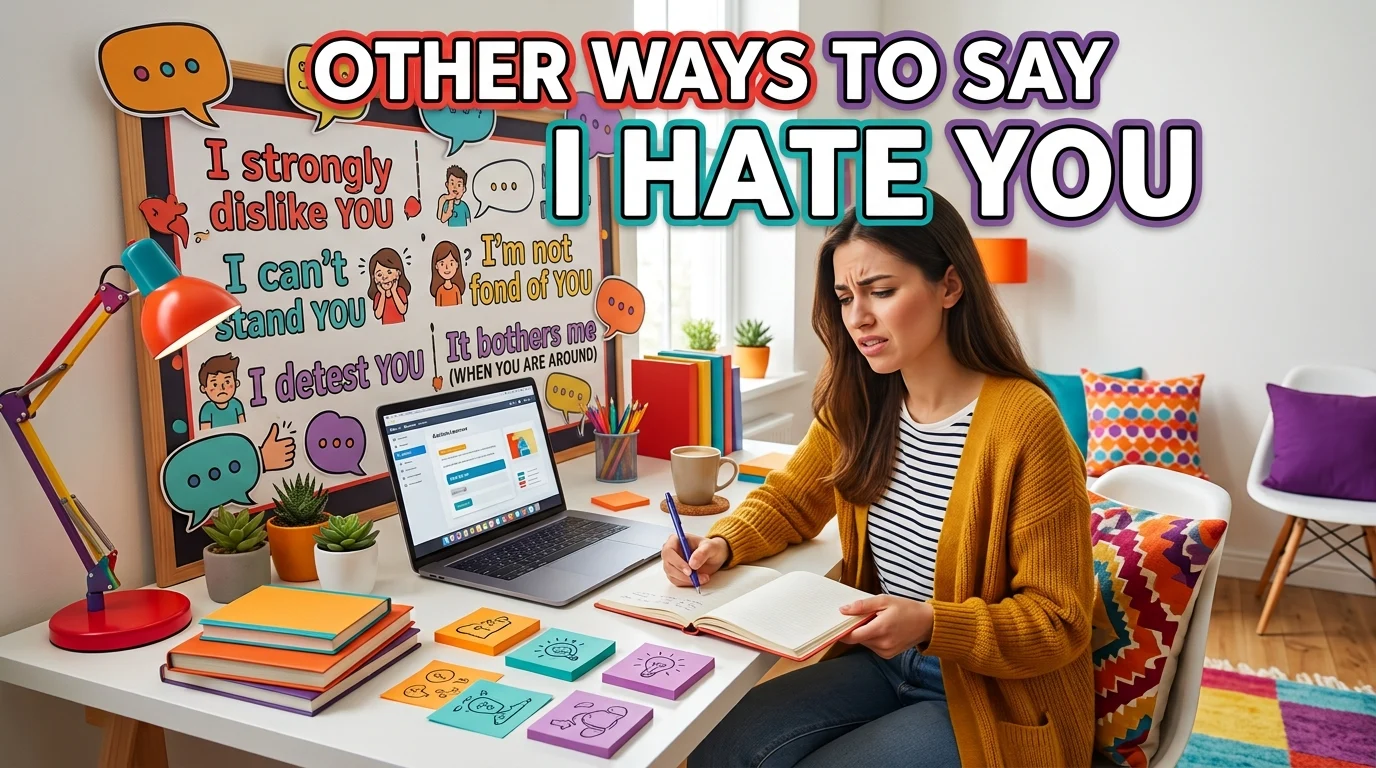
Other ways to say I hate you include I can’t stand you, I strongly dislike you, I have had enough of you, I resent you, and I want nothing to do with you. These alternatives help you express anger, disappointment, frustration, or emotional distance without repeating the same phrase.
Knowing other ways to say I hate you can help you express strong emotions more naturally and confidently in English. Although this phrase is direct and powerful, it may sound harsh in personal conversations, arguments, or emotional situations. Choosing a suitable alternative allows you to communicate your feelings without always using the same words.
Whether you want to express anger, disappointment, resentment, or frustration, different phrases can help you convey your message more accurately. Some alternatives sound formal and controlled, while others are emotional, casual, or direct. Learning these expressions improves your vocabulary and helps you understand informal expressions in English. This guide explores 30 alternatives with meanings, examples, and practical usage tips to help you choose the right words for every situation.
Quick Categories
Formal alternatives to “I Hate You”
- I strongly dislike you.
- I have lost respect for you.
- I find your behavior unacceptable.
- I have serious reservations about you.
Pro Tip: Use respectful and controlled language when expressing disagreement in professional or serious conversations.
Casual alternatives
- I can’t stand you.
- I’m not fond of you.
- You’re getting on my nerves.
- I don’t like being around you.
Pro Tip: Casual expressions are useful with friends and familiar people, but consider the emotional impact before using them.
Professional alternatives
- I find it difficult to work with you.
- I disagree with your approach.
- I have concerns about our relationship.
- I don’t appreciate your behavior.
Pro Tip: Focus on specific actions rather than personal attacks when communicating dissatisfaction at work.
Informal expressions
- I’m done with you.
- I’ve had enough of you.
- Get out of my life.
- I want nothing to do with you.
Pro Tip: Informal expressions can communicate strong emotions, but some may permanently damage personal relationships.
“Strong emotions deserve clear words, but clear words do not always need to be hurtful.”
Common Mistakes
1. Using “I hate you” for every negative feeling
Mistake: “I hate you because you forgot my birthday.”
Better: “I’m really disappointed that you forgot my birthday.”
Why: Disappointment and hatred communicate different emotional levels.
2. Confusing dislike with anger
Mistake: “I hate you because I’m angry right now.”
Better: “I’m upset with you right now.”
Why: Being temporarily angry does not necessarily mean you dislike someone permanently.
3. Using formal expressions in casual conversations
Mistake: “I have serious reservations about you, bro.”
Better: “I’m not really comfortable around you.”
Why: Formal phrases may sound unnatural in relaxed conversations.
4. Using aggressive expressions in professional communication
Mistake: “I can’t stand working with you.”
Better: “I find our working relationship challenging.”
Why: Professional communication should focus on behavior and workplace concerns.
5. Using “I don’t care about you” when expressing dislike
Mistake: “I don’t care about you because I hate you.”
Better: “I don’t want to continue this relationship.”
Why: Not caring and actively disliking someone are different feelings.
What Does “I Hate You” Mean?
“I hate you” is a direct expression used to communicate intense dislike, anger, resentment, or emotional rejection toward another person.
Grammatically, it follows the simple present tense structure:
Subject + Verb + Object
- I = Subject
- Hate = Verb
- You = Object
The word “hate” is a strong verb that expresses an intense negative feeling.
Example Sentence: “I hate you for betraying my trust.”
Depending on the situation, this phrase may communicate temporary anger or a deeper emotional feeling.
When to Use “I Hate You”
You may encounter this phrase in different situations:
- Personal arguments: When someone expresses intense anger during a disagreement.
- Emotional conversations: When discussing hurt feelings or damaged relationships.
- Fictional dialogue: When writing dramatic conversations between characters.
- Casual expressions: When close friends use exaggerated language jokingly.
- Relationship discussions: When communicating serious dissatisfaction or emotional distance.
Spoken vs. Written:
- Spoken: Common in arguments, emotional conversations, and informal dialogue.
- Written: Can appear in texts, messages, stories, or personal letters.
Formal vs. Informal:
- Formal: Usually better to use controlled expressions such as “I strongly disagree with your behavior.”
- Informal: Expressions like “I can’t stand you” are more conversational and direct.
Is It Professional or Polite to Say “I Hate You”?
Polite? ❌ No Professional? ❌ No
“I hate you” is generally considered too personal and aggressive for professional communication. It attacks the individual rather than addressing a particular behavior or problem.
In workplace situations, choose language that communicates dissatisfaction without creating unnecessary conflict.
Business-style example:
“I am uncomfortable with how this situation has been handled, and I would appreciate a more constructive approach moving forward.”
Pros and Cons of Using “I Hate You”
Pros
- Simple and natural: Easy to understand and communicate.
- Friendly tone: Can sound playful between close friends in certain contexts.
- Common usage: Widely recognized in everyday English and entertainment.
- Easy to understand: Clearly communicates an intense negative emotion.
Cons
- Too informal for work: Not appropriate for most professional situations.
- Overused: Repeating it can make communication sound less thoughtful.
- Limited emotional range: Does not clearly distinguish anger, disappointment, or resentment.
- Not suitable for formal writing: Can sound aggressive and emotionally excessive.
“Choosing the right expression helps you communicate your feelings without losing control of your message.”
Other Ways to Say “I Hate You” With Examples
These alternatives will help you sound more fluent, confident, and natural in different situations.
Use them according to tone, context, and audience to express anger, disappointment, resentment, or emotional distance.
1. Phrase: I Can’t Stand You
Meaning: You strongly dislike someone’s presence or behavior.
Explanation: This is a common conversational expression used to communicate intense irritation or dislike.
Example Sentence: “I can’t stand you when you constantly criticize everything I do.”
Best Use: Casual arguments
Worst Use: Formal meetings
Tone: Direct, emotional, informal
Context Variability: Casual: “I can’t stand you sometimes.” Professional: “I find your behavior difficult to work with.” Spoken: “Honestly, I can’t stand you.”
2. Phrase: I Strongly Dislike You
Meaning: You have a powerful negative feeling toward someone.
Explanation: This is a more controlled and formal alternative to expressing hatred.
Example Sentence: “I strongly dislike the way you treat other people.”
Best Use: Serious conversations
Worst Use: Playful chats
Tone: Formal, direct, serious
Context Variability: Casual: “I really don’t like you.” Professional: “I strongly disagree with your conduct.” Spoken: “I strongly dislike you.”
3. Phrase: I Want Nothing to Do With You
Meaning: You do not want any further involvement with someone.
Explanation: This expression communicates emotional distance and a desire to end contact.
Example Sentence: “After what happened, I want nothing to do with you.”
Best Use: Setting boundaries
Worst Use: Friendly conversations
Tone: Firm, emotional, direct
Context Variability: Casual: “I don’t want anything to do with you.” Professional: “I prefer to limit further interaction.” Spoken: “I want nothing to do with you.”
4. Phrase: I’m Done With You
Meaning: You no longer want to continue a relationship or interaction.
Explanation: This phrase is often used when someone feels exhausted, frustrated, or disappointed.
Example Sentence: “I’ve given you enough chances, and now I’m done with you.”
Best Use: Personal conflicts
Worst Use: Professional emails
Tone: Emotional, firm, informal
Context Variability: Casual: “I’m done with you.” Professional: “I would prefer to end this discussion.” Spoken: “I’m completely done with you.”
5. Phrase: I Have Had Enough of You
Meaning: You are tired of someone’s behavior or repeated actions.
Explanation: This expression communicates frustration after repeated unpleasant experiences.
Example Sentence: “I have had enough of you constantly breaking your promises.”
Best Use: Repeated conflicts
Worst Use: Formal introductions
Tone: Frustrated, direct, emotional
Context Variability: Casual: “I’ve had enough of you.” Professional: “I have concerns about these repeated actions.” Spoken: “I’ve had enough of this.”
6. Phrase: I Resent You
Meaning: You feel bitterness or anger toward someone because of something they did.
Explanation: This expression focuses on lasting negative feelings caused by a particular experience.
Example Sentence: “I resent you for making me feel responsible for your mistakes.”
Best Use: Emotional discussions
Worst Use: Casual greetings
Tone: Serious, emotional, reflective
Context Variability: Casual: “I’m still upset with you.” Professional: “I have unresolved concerns about your actions.” Spoken: “I resent what you did.”
7. Phrase: I Don’t Like You
Meaning: You have an unfavorable opinion or feeling about someone.
Explanation: This is a simple and less intense alternative to expressing hatred.
Example Sentence: “I don’t like you because you never respect my opinions.”
Best Use: Direct conversations
Worst Use: Sensitive negotiations
Tone: Simple, direct, honest
Context Variability: Casual: “I don’t really like you.” Professional: “I find our interactions challenging.” Spoken: “I just don’t like you.”
8. Phrase: I Have Lost Respect for You
Meaning: You no longer admire or value someone’s behavior or character.
Explanation: This phrase communicates disappointment and a decline in personal respect.
Example Sentence: “I have lost respect for you after seeing how you treated your colleagues.”
Best Use: Serious discussions
Worst Use: Lighthearted chats
Tone: Serious, disappointed, formal
Context Variability: Casual: “I don’t respect you anymore.” Professional: “Your actions have affected my confidence in our working relationship.” Spoken: “I’ve lost respect for you.”
9. Phrase: You’re Getting on My Nerves
Meaning: Someone’s behavior is making you increasingly irritated.
Explanation: This informal expression is commonly used when someone’s actions become annoying.
Example Sentence: “You’re getting on my nerves by interrupting me every few seconds.”
Best Use: Casual conversations
Worst Use: Formal reports
Tone: Irritated, informal, conversational
Context Variability: Casual: “You’re getting on my nerves.” Professional: “The repeated interruptions are becoming disruptive.” Spoken: “You’re really getting on my nerves.”
10. Phrase: I Can’t Deal With You Anymore
Meaning: You feel unable or unwilling to continue interacting with someone.
Explanation: This phrase expresses emotional exhaustion or frustration.
Example Sentence: “I can’t deal with you anymore when you refuse to listen.”
Best Use: Personal disagreements
Worst Use: Professional introductions
Tone: Frustrated, emotional, direct
Context Variability: Casual: “I can’t deal with you.” Professional: “I am finding this interaction difficult to manage.” Spoken: “I can’t deal with this anymore.”
11. Phrase: I Don’t Want You in My Life
Meaning: You do not want someone to remain part of your personal life.
Explanation: This expression communicates a strong desire to create permanent emotional distance.
Example Sentence: “After everything that happened, I don’t want you in my life anymore.”
Best Use: Relationship boundaries
Worst Use: Casual disagreements
Tone: Firm, emotional, serious
Context Variability: Casual: “I don’t want you around anymore.” Professional: “I prefer to maintain professional distance.” Spoken: “I don’t want you in my life.”
12. Phrase: I Find You Unpleasant
Meaning: You consider someone’s behavior or personality disagreeable.
Explanation: This is a more formal and restrained way to express personal dislike.
Example Sentence: “I find your attitude unpleasant and difficult to tolerate.”
Best Use: Formal discussions
Worst Use: Friendly banter
Tone: Formal, restrained, direct
Context Variability: Casual: “I don’t enjoy being around you.” Professional: “I find this behavior inappropriate.” Spoken: “I find you unpleasant.”
13. Phrase: You Disappoint Me
Meaning: Someone’s actions have failed to meet your expectations.
Explanation: This phrase communicates emotional dissatisfaction without directly attacking the person.
Example Sentence: “You disappoint me every time you fail to keep your word.”
Best Use: Serious conversations
Worst Use: Playful teasing
Tone: Disappointed, serious, emotional
Context Variability: Casual: “I’m disappointed in you.” Professional: “Your actions did not meet expectations.” Spoken: “You really disappoint me.”
14. Phrase: I Don’t Appreciate Your Behavior
Meaning: You disapprove of how someone is acting.
Explanation: This is a polite but firm way to communicate dissatisfaction.
Example Sentence: “I don’t appreciate your behavior when you speak disrespectfully.”
Best Use: Professional boundaries
Worst Use: Romantic compliments
Tone: Polite, firm, professional
Context Variability: Casual: “I don’t like how you’re acting.” Professional: “I don’t appreciate this behavior.” Spoken: “I really don’t appreciate that.”
15. Phrase: Stay Away From Me
Meaning: You want someone to maintain physical or emotional distance.
Explanation: This direct expression is often used when someone needs space or feels uncomfortable.
Example Sentence: “Please stay away from me until we have both calmed down.”
Best Use: Setting boundaries
Worst Use: Friendly invitations
Tone: Firm, direct, serious
Context Variability: Casual: “Give me some space.” Professional: “I would prefer some distance.” Spoken: “Stay away from me.”
16. Phrase: Get Out of My Life
Meaning: You want someone to stop being part of your personal life.
Explanation: This is an intense expression commonly used during emotional conflicts.
Example Sentence: “If you cannot respect my boundaries, get out of my life.”
Best Use: Relationship conflicts
Worst Use: Workplace communication
Tone: Aggressive, emotional, forceful
Context Variability: Casual: “Leave me alone.” Professional: “I would like to end our personal communication.” Spoken: “Get out of my life.”
17. Phrase: I Have No Respect for You
Meaning: You do not admire or value someone.
Explanation: This expression is stronger than simply saying you disagree with someone.
Example Sentence: “I have no respect for you after what you did to your family.”
Best Use: Serious confrontations
Worst Use: Casual conversations
Tone: Harsh, direct, serious
Context Variability: Casual: “I don’t respect you.” Professional: “Your actions have undermined my confidence.” Spoken: “I have no respect for you.”
18. Phrase: I Am Tired of Your Attitude
Meaning: You are frustrated with someone’s repeated negative behavior.
Explanation: This expression focuses on a person’s attitude rather than their entire identity.
Example Sentence: “I am tired of your attitude whenever someone offers advice.”
Best Use: Personal conflicts
Worst Use: Formal presentations
Tone: Frustrated, direct, conversational
Context Variability: Casual: “I’m tired of your attitude.” Professional: “Your approach is making collaboration difficult.” Spoken: “I’m really tired of your attitude.”
19. Phrase: I Find It Difficult to Be Around You
Meaning: You feel uncomfortable or unhappy when spending time with someone.
Explanation: This is a softer way to communicate personal dislike without sounding openly hostile.
Example Sentence: “I find it difficult to be around you when every conversation becomes an argument.”
Best Use: Relationship discussions
Worst Use: Casual jokes
Tone: Honest, restrained, thoughtful
Context Variability: Casual: “I don’t feel comfortable around you.” Professional: “I find our interactions challenging.” Spoken: “It’s difficult for me to be around you.”
20. Phrase: I Am Through With You
Meaning: You have decided to end your involvement with someone.
Explanation: This expression communicates finality and emotional separation.
Example Sentence: “I am through with you after all the broken promises.”
Best Use: Relationship endings
Worst Use: Professional emails
Tone: Firm, emotional, final
Context Variability: Casual: “I’m done with you.” Professional: “I would like to conclude our involvement.” Spoken: “I’m through with you.”
21. Phrase: I Cannot Tolerate You
Meaning: You find someone’s presence or behavior extremely difficult to accept.
Explanation: This is a strong expression that communicates serious irritation or dislike.
Example Sentence: “I cannot tolerate you constantly disrespecting other people.”
Best Use: Serious disagreements
Worst Use: Friendly conversations
Tone: Strong, formal, direct
Context Variability: Casual: “I can’t stand you.” Professional: “I cannot accept this behavior.” Spoken: “I cannot tolerate you anymore.”
22. Phrase: You Make Me Miserable
Meaning: Someone’s actions or presence cause you significant unhappiness.
Explanation: This phrase focuses on the emotional effect of someone’s behavior.
Example Sentence: “You make me miserable whenever you turn a simple discussion into an argument.”
Best Use: Emotional discussions
Worst Use: Business meetings
Tone: Emotional, serious, personal
Context Variability: Casual: “You make me unhappy.” Professional: “This situation is affecting my well-being.” Spoken: “You make me miserable.”
23. Phrase: I Have Nothing Good to Say About You
Meaning: You have a strongly negative opinion of someone.
Explanation: This expression communicates disappointment or criticism without directly using the word hate.
Example Sentence: “After your actions, I have nothing good to say about you.”
Best Use: Emotional disagreements
Worst Use: Professional feedback
Tone: Critical, sarcastic, direct
Context Variability: Casual: “I don’t have anything nice to say.” Professional: “I have serious concerns about your conduct.” Spoken: “I have nothing good to say about you.”
24. Phrase: I Wish I Had Never Met You
Meaning: You regret meeting or becoming involved with someone.
Explanation: This is an emotionally intense phrase that expresses deep disappointment or resentment.
Example Sentence: “After everything you’ve done, I wish I had never met you.”
Best Use: Emotional conflicts
Worst Use: Professional settings
Tone: Regretful, harsh, emotional
Context Variability: Casual: “I regret meeting you.” Professional: “I regret our previous arrangement.” Spoken: “I wish I had never met you.”
25. Phrase: You Mean Nothing to Me
Meaning: You no longer consider someone emotionally important.
Explanation: This phrase expresses emotional detachment and can sound extremely hurtful.
Example Sentence: “After breaking my trust repeatedly, you mean nothing to me.”
Best Use: Dramatic dialogue
Worst Use: Respectful discussions
Tone: Cold, harsh, emotional
Context Variability: Casual: “I don’t care about you anymore.” Professional: “I no longer wish to maintain this relationship.” Spoken: “You mean nothing to me.”
26. Phrase: I Am Sick of You
Meaning: You are extremely tired or annoyed by someone’s behavior.
Explanation: This informal expression is often used when frustration has continued for a long time.
Example Sentence: “I am sick of you making excuses for everything.”
Best Use: Casual arguments
Worst Use: Formal communication
Tone: Irritated, informal, strong
Context Variability: Casual: “I’m sick of you.” Professional: “I am frustrated by these repeated issues.” Spoken: “I’m really sick of this behavior.”
27. Phrase: I Feel Nothing for You
Meaning: You no longer experience emotional attachment toward someone.
Explanation: This phrase communicates emotional distance rather than active anger or hatred.
Example Sentence: “I feel nothing for you after everything we have been through.”
Best Use: Relationship discussions
Worst Use: Casual disagreements
Tone: Cold, emotional, serious
Context Variability: Casual: “I don’t have feelings for you anymore.” Professional: “I prefer to maintain emotional distance.” Spoken: “I feel nothing for you.”
28. Phrase: I Have No Interest in You
Meaning: You do not want a personal or romantic connection with someone.
Explanation: This is a direct but relatively controlled way to communicate a lack of interest.
Example Sentence: “I have no interest in continuing this relationship.”
Best Use: Setting boundaries
Worst Use: Friendly encouragement
Tone: Direct, restrained, neutral
Context Variability: Casual: “I’m not interested in you.” Professional: “I have no interest in pursuing this arrangement.” Spoken: “I have no interest in you.”
29. Phrase: You Are the Last Person I Want to See
Meaning: You strongly prefer not to encounter someone.
Explanation: This expression communicates irritation, emotional distance, or unwillingness to interact.
Example Sentence: “After our argument, you are the last person I want to see.”
Best Use: Emotional conversations
Worst Use: Professional introductions
Tone: Harsh, emotional, direct
Context Variability: Casual: “I don’t want to see you right now.” Professional: “I would prefer not to meet at this time.” Spoken: “You’re the last person I want to see.”
30. Phrase: I Want You Out of My Life
Meaning: You want to end your personal connection with someone.
Explanation: This is a strong alternative that communicates a clear decision to separate emotionally.
Example Sentence: “I have made my decision, and I want you out of my life.”
Best Use: Ending relationships
Worst Use: Workplace discussions
Tone: Firm, emotional, final
Context Variability: Casual: “I don’t want you around anymore.” Professional: “I would like to discontinue our personal association.” Spoken: “I want you out of my life.”
“You can express anger, disappointment, or rejection without using the same words every time.”
Mini Quiz / Self-Check
1. Which phrase is most appropriate for expressing professional dissatisfaction?
A. I hate you. B. I can’t stand you. C. I don’t appreciate your behavior. D. Get out of my life.
Answer: C. I don’t appreciate your behavior.
2. Which expression communicates temporary irritation?
A. You’re getting on my nerves. B. I wish I had never met you. C. You mean nothing to me. D. I want you out of my life.
Answer: A. You’re getting on my nerves.
3. Which phrase communicates a desire to end personal contact?
A. I strongly dislike your attitude. B. I want nothing to do with you. C. You’re disappointing me. D. I’m not fond of your behavior.
Answer: B. I want nothing to do with you.
4. Which phrase communicates disappointment rather than direct hatred?
A. Get out of my life. B. I cannot tolerate you. C. You disappoint me. D. I am sick of you.
Answer: C. You disappoint me.
Comparison Table: Top Alternatives
| Phrase | Tone | Best Use |
|---|---|---|
| I can’t stand you | Direct, informal | Casual arguments |
| I strongly dislike you | Formal, serious | Serious conversations |
| I want nothing to do with you | Firm, emotional | Setting boundaries |
| I’m done with you | Emotional, direct | Personal conflicts |
| I have had enough of you | Frustrated, direct | Repeated disagreements |
| I resent you | Serious, emotional | Discussing past hurt |
| I don’t appreciate your behavior | Professional, firm | Workplace communication |
| You’re getting on my nerves | Informal, irritated | Casual conversations |
| I have lost respect for you | Serious, formal | Personal disagreements |
| I don’t want you in my life | Emotional, firm | Ending relationships |
FAQs
What are the best other ways to say I hate you?
Some natural alternatives include “I can’t stand you,” “I strongly dislike you,” “I’m done with you,” and “I want nothing to do with you.” Each expression communicates a different level of dislike or frustration.
How can I say I hate you without being rude?
You can use softer expressions such as “I’m disappointed in you,” “I don’t feel comfortable around you,” or “I don’t appreciate your behavior.” These phrases communicate negative feelings more respectfully.
What is a polite way to express hatred in English?
Instead of expressing hatred directly, say “I strongly disagree with your actions” or “I find your behavior unacceptable.” These alternatives focus on specific behavior rather than attacking someone’s personality.
What is a professional way to say I hate you?
In professional settings, use phrases such as “I find our working relationship challenging” or “I have concerns about your approach.” These expressions communicate dissatisfaction without personal hostility.
What is the difference between I hate you and I can’t stand you?
“I hate you” expresses intense dislike, while “I can’t stand you” usually communicates strong irritation or difficulty tolerating someone’s presence. The second expression is more conversational.
Conclusion
Learning other ways to say I hate you helps you communicate strong emotions with greater accuracy and confidence. Whether you choose “I can’t stand you,” “I resent you,” or “I have lost respect for you,” each phrase carries a different meaning and emotional intensity. Understanding these differences makes your English more natural and expressive.
Practice these alternatives in everyday conversations, writing exercises, and realistic situations. Pay attention to tone, audience, and context before choosing an expression. Remember that effective communication is not only about knowing more words but also about understanding when and how to use them appropriately.
Discover More Post:
- 30+ Other Ways to Say Good to Hear | Natural, Professional …
- Other Ways to Say Have Fun | 30+ Fresh Phrases for Every …
- Other Ways to Say Especially | 30+ Fresh Alternatives for …

Logan Hayes is a content writer at Replynst.com. He specializes in turning complex topics into simple, engaging and useful articles. His work combines careful research, clear writing to create content readers can trust.