Quick Answer:
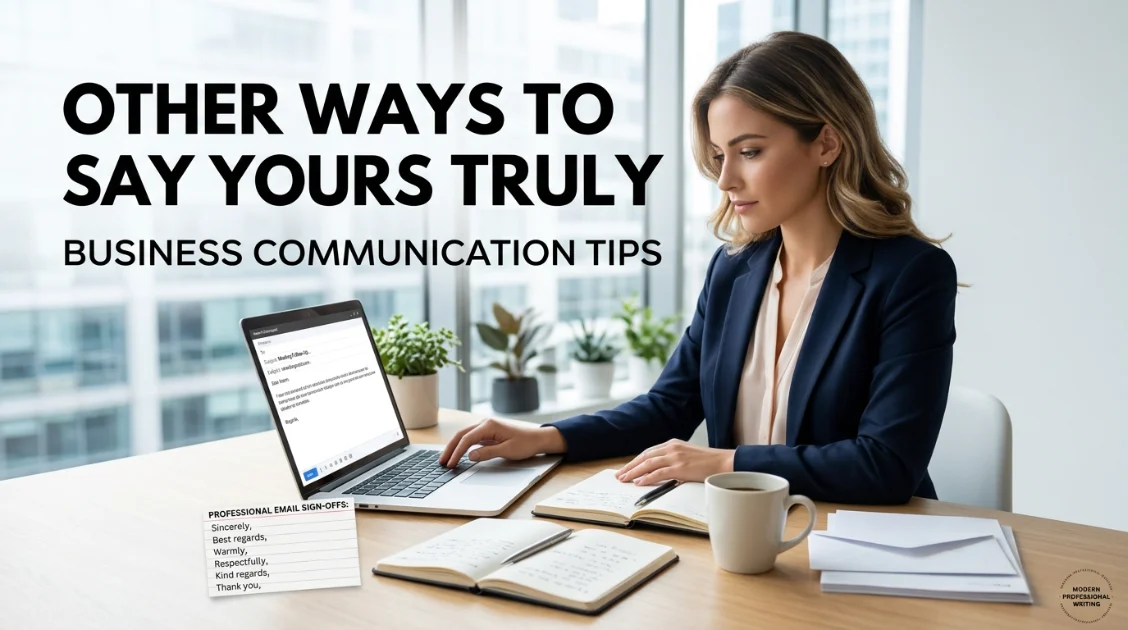
The best other ways to say yours truly include sincerely, kind regards, best regards, respectfully, and faithfully. The right closing depends on your relationship with the reader, the formality of your message, and whether you are writing a professional, personal, or friendly note.
Knowing other ways to say yours truly can help you choose a closing that sounds natural, polished, and appropriate. While “yours truly” is a traditional sign-off, it may feel formal or old-fashioned in some modern emails and letters.
Learning alternatives to yours truly gives English learners more flexibility when writing professional emails, personal letters, applications, and formal messages. The right closing can communicate respect, warmth, gratitude, or professionalism without sounding repetitive.
In this guide, you will discover 30 useful alternatives with meanings, examples, tones, and practical contexts. Just as learners study ways to express excitement in English, understanding professional sign-offs can make everyday communication more confident and effective.
Quick Categories
Formal alternatives to “yours truly”
- Sincerely
- Yours sincerely
- Respectfully
- Yours faithfully
Pro Tip: Use traditional formal closings when writing official letters, applications, or messages to someone you do not know well.
Casual alternatives
- Best
- Take care
- All the best
- Cheers
Pro Tip: Casual closings work best when you already have a friendly relationship with the recipient.
Professional alternatives
- Kind regards
- Best regards
- Warm regards
- With appreciation
Pro Tip: Choose professional reaction phrases and sign-offs that match the tone of the entire email.
Informal expressions
- Thanks
- Talk soon
- See you soon
- Have a great day
Pro Tip: Informal expressions in English are appropriate for friendly messages but may sound too relaxed in formal correspondence.
“A strong email does not only need the right words at the beginning. It also needs the right closing.”
Common Mistakes
1. Using “yours truly” in every email
Mistake: “Yours truly” appears at the end of every professional email.
Better: Choose a closing such as “Kind regards” or “Best regards” depending on the relationship.
Why: Repeating one sign-off can make your communication sound rigid or outdated.
2. Using “Yours faithfully” incorrectly
Mistake: “Yours faithfully” is used after addressing someone by their first name.
Better: Use “Yours faithfully” traditionally when the recipient’s name is unknown.
Why: Traditional letter-writing conventions distinguish between known and unknown recipients.
3. Using “Cheers” in a highly formal letter
Mistake: “Cheers” is used in a formal job application.
Better: Use “Sincerely” or “Kind regards.”
Why: “Cheers” is friendly and informal rather than traditionally formal.
4. Adding multiple closings
Mistake: “Best regards, sincerely, John.”
Better: Choose one appropriate closing.
Why: One clear sign-off looks more polished and professional.
5. Using an overly casual closing with a new client
Mistake: “Talk soon!” is used in the first message to an important business contact.
Better: “Kind regards” is usually more neutral.
Why: A new professional relationship generally calls for a respectful and measured tone.
What Does “Yours Truly” Mean?
Yours truly is a traditional complimentary closing used at the end of a letter or email. It communicates politeness and sincerity toward the recipient.
It can also be used as a humorous or informal way to refer to oneself, but its most familiar use is as a letter sign-off.
Example: “Yours truly, Sarah”
When to Use “Yours Truly”
You can use “yours truly” in several situations:
- Formal letters: Especially in traditional correspondence.
- Personal letters: When a warm but somewhat traditional tone is appropriate.
- Professional communication: When a formal style is desired.
- Applications: Although modern alternatives may sound more natural.
- Friendly writing: When used playfully or traditionally.
Spoken vs. Written: “Yours truly” is primarily a written expression.
Formal vs. Informal: It can sound formal or traditional, depending on context.
Is It Professional or Polite to Say “Yours Truly”?
Polite? ✔️ Yes
Professional? ✔️ Yes, but context matters
“Yours truly” is polite and grammatically acceptable. However, in modern workplace emails, alternatives such as Kind regards, Best regards, or Sincerely may sound more natural.
Business-style example: “Thank you for considering my application. Yours truly, Michael.”
For modern business emails, a concise professional closing is often preferable.
Pros and Cons of Using “Yours Truly”
Pros
- Simple and natural: It is easy to understand.
- Friendly tone: It can create a personal feeling.
- Common usage: Many English speakers recognize it immediately.
- Easy to remember: It is a familiar traditional sign-off.
Cons
- Can sound old-fashioned: Modern emails often use different closings.
- Less flexible: It does not communicate as many shades of tone.
- Not ideal for every workplace: Some industries prefer modern email conventions.
- May sound overly formal: It can feel distant in casual communication.
“The best sign-off is the one that matches your relationship with the reader.”
Other Ways to Say “Yours Truly” With Examples
These alternatives will help you sound more fluent, confident, and natural in different situations.
Use them according to tone, context, and audience to create polished written communication and professional email closings.
1. Phrase: Sincerely
Meaning: A respectful and genuine closing.
Explanation: “Sincerely” is one of the most common formal alternatives to “yours truly.”
Example Sentence: “Thank you for reviewing my application. Sincerely, James.”
Best Use: Formal letters
Worst Use: Casual chats
Tone: Formal, respectful, professional
Context Variability: Casual: “Best.” Professional: “Sincerely.” Written: “Sincerely, James.”
2. Phrase: Yours Sincerely
Meaning: A traditional formal letter closing.
Explanation: This expression communicates respect and goodwill toward the recipient.
Example Sentence: “I look forward to your response. Yours sincerely, Emma.”
Best Use: Formal correspondence
Worst Use: Text messages
Tone: Formal, traditional, respectful
Context Variability: Casual: “Best.” Professional: “Yours sincerely.” Written: “Yours sincerely, Emma.”
3. Phrase: Kind Regards
Meaning: A polite and professional closing.
Explanation: It is widely used in modern business emails.
Example Sentence: “Thank you for your assistance. Kind regards, Daniel.”
Best Use: Business emails
Worst Use: Very casual chats
Tone: Polite, professional, warm
Context Variability: Casual: “Best.” Professional: “Kind regards.” Written: “Kind regards, Daniel.”
4. Phrase: Best Regards
Meaning: A friendly but professional closing.
Explanation: This sign-off is suitable for many workplace emails and professional relationships.
Example Sentence: “I appreciate your time. Best regards, Olivia.”
Best Use: Professional emails
Worst Use: Intimate letters
Tone: Professional, friendly, neutral
Context Variability: Casual: “Best.” Professional: “Best regards.” Written: “Best regards, Olivia.”
5. Phrase: Respectfully
Meaning: A closing that shows respect toward the recipient.
Explanation: It is especially suitable for formal or official communication.
Example Sentence: “Thank you for your consideration. Respectfully, Robert.”
Best Use: Official letters
Worst Use: Friendly emails
Tone: Formal, respectful, serious
Context Variability: Casual: “Take care.” Professional: “Respectfully.” Written: “Respectfully, Robert.”
6. Phrase: Yours Faithfully
Meaning: A traditional formal letter closing.
Explanation: It is traditionally used when the recipient’s name is not known.
Example Sentence: “I look forward to hearing from you. Yours faithfully, Maria.”
Best Use: Formal letters
Worst Use: Casual messages
Tone: Formal, traditional, respectful
Context Variability: Casual: “Best.” Professional: “Yours faithfully.” Written: “Yours faithfully, Maria.”
7. Phrase: All the Best
Meaning: A warm wish for the recipient’s well-being.
Explanation: This closing is friendly enough for everyday professional communication.
Example Sentence: “Thank you again for your help. All the best, David.”
Best Use: Friendly emails
Worst Use: Legal documents
Tone: Warm, friendly, professional
Context Variability: Casual: “All the best.” Professional: “All the best.” Written: “All the best, David.”
8. Phrase: Best
Meaning: A short form of a friendly professional closing.
Explanation: It is concise and commonly used in modern emails.
Example Sentence: “Thanks for your response. Best, Sarah.”
Best Use: Modern emails
Worst Use: Formal applications
Tone: Concise, friendly, professional
Context Variability: Casual: “Best.” Professional: “Best.” Written: “Best, Sarah.”
9. Phrase: Warm Regards
Meaning: A closing that communicates friendliness and goodwill.
Explanation: It adds more warmth than “Best regards.”
Example Sentence: “Thank you for your continued support. Warm regards, Lisa.”
Best Use: Relationship emails
Worst Use: Legal notices
Tone: Warm, polite, professional
Context Variability: Casual: “Take care.” Professional: “Warm regards.” Written: “Warm regards, Lisa.”
10. Phrase: With Appreciation
Meaning: A closing that expresses gratitude.
Explanation: It is particularly useful when thanking someone for assistance or support.
Example Sentence: “Thank you for your valuable feedback. With appreciation, Mark.”
Best Use: Thank-you emails
Worst Use: Casual texts
Tone: Grateful, professional, warm
Context Variability: Casual: “Thanks.” Professional: “With appreciation.” Written: “With appreciation, Mark.”
11. Phrase: With Gratitude
Meaning: A sincere expression of thanks.
Explanation: This closing works well when the recipient has provided meaningful help.
Example Sentence: “Thank you for everything you have done. With gratitude, Anna.”
Best Use: Thank-you letters
Worst Use: Routine emails
Tone: Sincere, warm, respectful
Context Variability: Casual: “Thanks.” Professional: “With gratitude.” Written: “With gratitude, Anna.”
12. Phrase: With Respect
Meaning: A closing that emphasizes respect.
Explanation: It can be used in formal or serious correspondence.
Example Sentence: “Thank you for considering my request. With respect, John.”
Best Use: Formal correspondence
Worst Use: Friendly chat
Tone: Formal, respectful, serious
Context Variability: Casual: “Best.” Professional: “With respect.” Written: “With respect, John.”
13. Phrase: Cordially
Meaning: In a friendly and polite manner.
Explanation: “Cordially” is a traditional closing that gives correspondence a formal tone.
Example Sentence: “I appreciate your consideration. Cordially, Helen.”
Best Use: Formal letters
Worst Use: Text messages
Tone: Formal, courteous, traditional
Context Variability: Casual: “Best.” Professional: “Cordially.” Written: “Cordially, Helen.”
14. Phrase: Respectfully Yours
Meaning: A traditional closing expressing respect.
Explanation: It is more formal and less common in everyday modern emails.
Example Sentence: “Thank you for your attention to this matter. Respectfully yours, David.”
Best Use: Official letters
Worst Use: Casual emails
Tone: Formal, respectful, traditional
Context Variability: Casual: “Best.” Professional: “Respectfully yours.” Written: “Respectfully yours, David.”
15. Phrase: With Best Wishes
Meaning: A warm expression of goodwill.
Explanation: This closing works well for personal and professional messages.
Example Sentence: “I wish you success in your new position. With best wishes, Emma.”
Best Use: Goodwill messages
Worst Use: Legal notices
Tone: Warm, polite, positive
Context Variability: Casual: “Best wishes.” Professional: “With best wishes.” Written: “With best wishes, Emma.”
16. Phrase: Best Wishes
Meaning: A friendly expression of goodwill.
Explanation: It is appropriate for congratulations, departures, and personal correspondence.
Example Sentence: “Congratulations on your new role. Best wishes, Alex.”
Best Use: Personal emails
Worst Use: Formal complaints
Tone: Warm, friendly, positive
Context Variability: Casual: “Best wishes.” Professional: “Best wishes.” Written: “Best wishes, Alex.”
17. Phrase: Take Care
Meaning: A friendly wish for someone’s well-being.
Explanation: It is more informal than “yours truly” and works best with people you know.
Example Sentence: “It was great hearing from you. Take care, Sam.”
Best Use: Friendly emails
Worst Use: Official letters
Tone: Casual, warm, friendly
Context Variability: Casual: “Take care.” Professional: “Kind regards.” Spoken: “Take care.”
18. Phrase: Cheers
Meaning: A friendly informal closing.
Explanation: “Cheers” is especially common in casual communication and some workplace cultures.
Example Sentence: “Thanks for sending the document. Cheers, Tom.”
Best Use: Casual emails
Worst Use: Formal applications
Tone: Informal, friendly, conversational
Context Variability: Casual: “Cheers.” Professional: “Best regards.” Spoken: “Cheers.”
19. Phrase: Thanks
Meaning: A simple expression of gratitude.
Explanation: It is useful when the main purpose of the message involves requesting or acknowledging help.
Example Sentence: “Thanks for your quick response.”
Best Use: Short emails
Worst Use: Formal letters
Tone: Friendly, concise, casual
Context Variability: Casual: “Thanks.” Professional: “Thank you.” Written: “Thanks.”
20. Phrase: Many Thanks
Meaning: A stronger expression of gratitude.
Explanation: This closing sounds warmer than simply writing “Thanks.”
Example Sentence: “Many thanks for your assistance with this project.”
Best Use: Professional emails
Worst Use: Legal notices
Tone: Grateful, polite, professional
Context Variability: Casual: “Thanks.” Professional: “Many thanks.” Written: “Many thanks, Sarah.”
21. Phrase: Thank You
Meaning: A direct expression of appreciation.
Explanation: It can work as a complete email closing when gratitude is central to the message.
Example Sentence: “Thank you for taking the time to meet with me.”
Best Use: Thank-you emails
Worst Use: Formal applications
Tone: Polite, simple, grateful
Context Variability: Casual: “Thanks.” Professional: “Thank you.” Written: “Thank you, Michael.”
22. Phrase: Talk Soon
Meaning: A friendly indication that you expect future communication.
Explanation: This closing is appropriate when you have an ongoing relationship with the recipient.
Example Sentence: “I will send the updated file tomorrow. Talk soon!”
Best Use: Friendly emails
Worst Use: Formal letters
Tone: Casual, warm, conversational
Context Variability: Casual: “Talk soon.” Professional: “Speak soon.” Spoken: “Talk soon.”
23. Phrase: Speak Soon
Meaning: A friendly promise or expectation of future communication.
Explanation: It works well when you expect another conversation or meeting.
Example Sentence: “I look forward to our meeting next week. Speak soon.”
Best Use: Friendly business
Worst Use: Formal applications
Tone: Friendly, professional, warm
Context Variability: Casual: “Speak soon.” Professional: “I look forward to speaking with you.” Spoken: “Speak soon.”
24. Phrase: Have a Great Day
Meaning: A friendly wish for the recipient’s day.
Explanation: This is common in customer service and everyday professional communication.
Example Sentence: “Thank you for contacting us. Have a great day.”
Best Use: Customer emails
Worst Use: Formal letters
Tone: Friendly, positive, polite
Context Variability: Casual: “Have a great day.” Professional: “Have a great day.” Spoken: “Have a great day.”
25. Phrase: Looking Forward
Meaning: An indication that you anticipate future communication or an event.
Explanation: It is often used before a future meeting, response, or collaboration.
Example Sentence: “Looking forward to working with you.”
Best Use: Business emails
Worst Use: Formal complaints
Tone: Positive, professional, friendly
Context Variability: Casual: “Looking forward.” Professional: “I look forward to working with you.” Written: “Looking forward, James.”
26. Phrase: With Thanks
Meaning: A concise expression of gratitude.
Explanation: It is suitable for professional correspondence when you want to acknowledge someone’s assistance.
Example Sentence: “With thanks for your continued support, Olivia.”
Best Use: Professional emails
Worst Use: Casual texts
Tone: Polite, grateful, professional
Context Variability: Casual: “Thanks.” Professional: “With thanks.” Written: “With thanks, Olivia.”
27. Phrase: Yours
Meaning: A shortened traditional closing.
Explanation: It can sound formal and is less common in modern everyday emails.
Example Sentence: “I hope to hear from you soon. Yours, Daniel.”
Best Use: Traditional letters
Worst Use: Casual messages
Tone: Formal, traditional, concise
Context Variability: Casual: “Best.” Professional: “Yours.” Written: “Yours, Daniel.”
28. Phrase: Faithfully
Meaning: A formal closing expressing loyalty or sincerity.
Explanation: It is associated with traditional formal correspondence.
Example Sentence: “Thank you for your consideration. Faithfully, Robert.”
Best Use: Formal letters
Worst Use: Casual emails
Tone: Formal, traditional, respectful
Context Variability: Casual: “Best.” Professional: “Yours faithfully.” Written: “Faithfully, Robert.”
29. Phrase: In Appreciation
Meaning: A closing that communicates gratitude and recognition.
Explanation: It is appropriate when acknowledging someone’s contribution or support.
Example Sentence: “Thank you for your guidance throughout the project. In appreciation, Laura.”
Best Use: Appreciation messages
Worst Use: Routine emails
Tone: Grateful, formal, warm
Context Variability: Casual: “Thanks.” Professional: “In appreciation.” Written: “In appreciation, Laura.”
30. Phrase: Until Next Time
Meaning: A friendly closing suggesting future contact.
Explanation: It works best in personal or relaxed correspondence.
Example Sentence: “It was wonderful catching up with you. Until next time, Nina.”
Best Use: Friendly letters
Worst Use: Formal applications
Tone: Warm, casual, friendly
Context Variability: Casual: “Until next time.” Professional: “Speak soon.” Spoken: “Until next time.”
“Modern English gives you many ways to close a message. Choose the sign-off that matches your relationship and purpose.”
Mini Quiz / Self-Check
1. Which closing is most appropriate for a formal job application?
A. Cheers
B. Take care
C. Sincerely
D. Talk soon
Answer: C. Sincerely
2. Which phrase is best for a friendly professional email?
A. Best regards
B. Respectfully yours
C. Yours faithfully
D. Faithfully
Answer: A. Best regards
3. Which closing is most informal?
A. Respectfully
B. Cheers
C. Yours sincerely
D. With respect
Answer: B. Cheers
4. Which closing is best when expressing gratitude?
A. With appreciation
B. Until next time
C. Yours
D. Cordially
Answer: A. With appreciation
Comparison Table: Top Alternatives
| Phrase | Tone | Best Use |
|---|---|---|
| Sincerely | Formal, respectful | Applications |
| Kind regards | Professional, warm | Business emails |
| Best regards | Professional, friendly | Workplace emails |
| Respectfully | Formal, serious | Official letters |
| Yours faithfully | Traditional, formal | Formal correspondence |
| All the best | Warm, friendly | Professional relationships |
| Best | Concise, professional | Modern emails |
| Warm regards | Warm, polite | Relationship emails |
| With appreciation | Grateful, professional | Thank-you messages |
| Cheers | Informal, friendly | Casual emails |
FAQs
What are the best other ways to say yours truly?
Popular alternatives include Sincerely, Kind regards, Best regards, Respectfully, All the best, and Warm regards.
What is a professional alternative to yours truly?
Sincerely, Kind regards, and Best regards are widely suitable for professional emails and formal correspondence.
Is “yours truly” formal or informal?
“Yours truly” is generally formal or traditional. It can also be used humorously in informal contexts.
Can I use “kind regards” instead of “yours truly”?
Yes. Kind regards is a natural modern alternative, especially in professional emails and workplace communication.
Is “cheers” a good alternative to yours truly?
“Cheers” is a casual alternative. It works well in friendly messages but is usually too informal for highly formal correspondence.
Conclusion
Learning other ways to say yours truly gives you greater control over tone, professionalism, and clarity. Traditional choices such as Sincerely and Yours faithfully work well in formal writing, while Best, Kind regards, and All the best are common in modern communication.
Practice using different sign-offs based on the recipient and purpose of your message. Understanding tone will help you write emails and letters that sound confident, natural, and appropriate in every situation.
Read More Related Articles:
- Other Ways to Say It Means a Lot | Meaningful Expressions …
- 30+ What Are Other Ways to Say According to? Smart …
- Other Ways to Say No Thank You | 30+ Polite Alternatives for …

Emma Richardson is a professional content writer at Replynst.com. She creates clear, engaging and well-researched content designed to answer readers’ questions while following modern SEO best practices. Her focus is on helpful, reader-friendly articles that deliver genuine value.