Quick Answer:
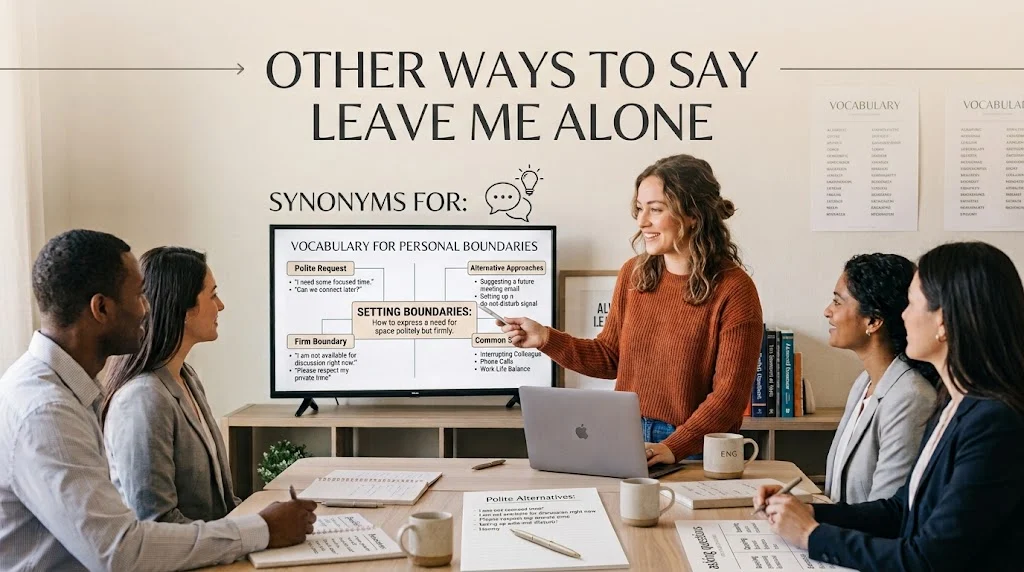
The best alternatives to leave me alone include I need some space, please give me some privacy, I would like some time alone, please do not disturb me, and I need a moment to myself. The right phrase depends on how direct, polite, or professional you want to sound.
Knowing other ways to say leave me alone helps you express your feelings without sounding rude. The phrase can show that you need privacy, quiet, or time to yourself. However, its tone changes with your words, voice, and relationship with the listener.
You can use alternatives to leave me alone when speaking with friends, family, classmates, or coworkers. Some phrases sound gentle, while others are more direct. Learning these differences improves your fluency and helps you express excitement in English, frustration, or personal boundaries with confidence.
Quick Categories
Formal alternatives to “leave me alone”
- Please give me some privacy
- I would appreciate some time alone
- Please allow me some personal space
- I need a moment to myself
Pro Tip: Use polite, complete sentences when you want to protect your privacy without sounding aggressive.
Casual alternatives
- I need some space
- I want some time alone
- Can I have a little privacy?
- I just need a moment
Pro Tip: A calm voice can make a direct request sound friendly and natural.
Professional alternatives
- I need some uninterrupted time
- Could we continue this conversation later?
- I need to focus on this task
- I would like some time to work independently
Pro Tip: In professional English, explain the work related reason when possible instead of sounding dismissive.
Informal expressions
- Give me a break
- Back off
- Get off my back
- I need some me time
Pro Tip: Informal expressions in English can sound strong, so use them only when the relationship and situation make them appropriate.
“You can set a boundary clearly without making the other person feel unwanted.”
Common Mistakes
1. Using “leave me alone” without considering your tone
Mistake: “Leave me alone!” said to a friend who is trying to help.
Better: “I need a little space right now.”
Why: The original phrase can sound angry, even when you only need quiet.
2. Using “back off” in a professional setting
Mistake: “Back off. I am working.”
Better: “Could I have some uninterrupted time to finish this task?”
Why: “Back off” is direct and can sound confrontational.
3. Saying “I need privacy” when you mean emotional support
Mistake: “I need privacy” when you actually want someone to stop asking questions.
Better: “I am not ready to talk about it yet.”
Why: The second sentence explains your emotional boundary more clearly.
4. Using “get away from me” for a small request
Mistake: “Get away from me. I need to study.”
Better: “Could you give me a little quiet time?”
Why: “Get away from me” sounds much stronger than a normal request for space.
5. Using “I want to be alone” when you need a short break
Mistake: “I want to be alone forever.”
Better: “I just need some time alone.”
Why: The second sentence makes it clear that your request is temporary.
What Does “Leave Me Alone” Mean?
Leave me alone means to stop talking to, touching, following, or disturbing someone. It can also mean allowing someone to spend time without company.
The phrase is usually an imperative sentence. It begins with the verb leave, followed by me, and ends with alone.
Example: “Please leave me alone for a few minutes.”
When to Use “Leave Me Alone”
You can use the phrase in several common situations:
- When you need privacy: You want someone to stop interrupting you.
- When you feel upset: You need time to calm down.
- When you are busy: You want to focus on a task.
- When someone is bothering you: You want them to stop.
- When you need emotional space: You are not ready to talk.
Spoken vs. Written: The phrase is common in spoken English. In writing, it may sound harsh without a polite explanation.
Formal vs. Informal: It is natural in everyday English, but softer alternatives are usually better for professional communication.
Is It Professional or Polite to Say “Leave Me Alone”?
Polite? ✔️ Yes, depending on tone
Professional? ❌ No, in most cases
The phrase is not automatically rude, but it can sound dismissive or angry. In professional English, it is usually better to explain what you need.
Business style example: “I need some uninterrupted time to complete this report. Could we continue our conversation later?”
The best choice depends on whether you want to sound firm, gentle, or formal.
Pros and Cons of Using “Leave Me Alone”
Pros
- Simple and natural: Most English speakers understand it immediately.
- Friendly tone: It can sound gentle when said calmly.
- Common usage: It is widely used in everyday conversations.
- Easy to understand: It clearly communicates a request for space.
Cons
- Too informal for work: It may sound dismissive in professional settings.
- Overused: Repeating it can make conversations feel tense.
- Limited emotional range: It does not explain why you need space.
- Not suitable for formal writing: More polite wording is often better.
“A clear boundary becomes more effective when your words match your real intention.”
Other Ways to Say “Leave Me Alone” With Examples
These alternatives will help you sound more fluent, confident, and natural in different situations.
Use them according to tone, context, and audience to express your feelings, protect your privacy, or communicate a professional boundary.
1. Phrase: I Need Some Space
Meaning: You need time away from someone.
Explanation: This is one of the most natural and polite alternatives for everyday conversations.
Example Sentence: “I have had a difficult day, and I need some space.”
Best Use: Emotional conversations
Worst Use: Formal reports
Tone: Gentle, direct, natural
Context Variability: Casual: “I need some space.” Professional: “I need some uninterrupted time.” Spoken: “I just need some space right now.”
2. Phrase: Please Give Me Some Privacy
Meaning: You want someone to respect your personal space.
Explanation: This phrase is polite and clear when you want to be left alone.
Example Sentence: “Please give me some privacy while I make this phone call.”
Best Use: Polite requests
Worst Use: Casual jokes
Tone: Polite, clear, respectful
Context Variability: Casual: “Can I have some privacy?” Professional: “I would appreciate some privacy.” Spoken: “Please give me some privacy.”
3. Phrase: I Would Like Some Time Alone
Meaning: You want to spend time without other people.
Explanation: This is a gentle phrase that works well when you want to sound calm and respectful.
Example Sentence: “I would like some time alone to think about what happened.”
Best Use: Personal conversations
Worst Use: Urgent situations
Tone: Gentle, formal, respectful
Context Variability: Casual: “I want some time alone.” Professional: “I would appreciate some time to work independently.” Spoken: “I would like some time alone.”
4. Phrase: I Need a Moment to Myself
Meaning: You need a short period of quiet or privacy.
Explanation: This phrase is useful when you need a break without sounding angry.
Example Sentence: “I need a moment to myself before we continue.”
Best Use: Short breaks
Worst Use: Long term boundaries
Tone: Gentle, natural, calm
Context Variability: Casual: “I need a moment.” Professional: “I need a brief break.” Spoken: “I just need a moment to myself.”
5. Phrase: Please Do Not Disturb Me
Meaning: You want someone to stop interrupting you.
Explanation: This is a direct but polite request, especially when you need to focus.
Example Sentence: “Please do not disturb me while I finish this assignment.”
Best Use: Focused work
Worst Use: Friendly greetings
Tone: Formal, direct, polite
Context Variability: Casual: “Please do not bother me right now.” Professional: “Please do not disturb me while I am working.” Spoken: “Please do not disturb me.”
6. Phrase: I Need Some Uninterrupted Time
Meaning: You need time without interruptions.
Explanation: This phrase is especially useful in professional communication.
Example Sentence: “I need some uninterrupted time to prepare for the presentation.”
Best Use: Workplace communication
Worst Use: Casual arguments
Tone: Professional, clear, respectful
Context Variability: Casual: “I need some quiet time.” Professional: “I need some uninterrupted time.” Spoken: “I need some uninterrupted time to finish this.”
7. Phrase: Could We Continue This Conversation Later?
Meaning: You want to pause the conversation.
Explanation: This is a polite way to ask someone to stop talking for now.
Example Sentence: “Could we continue this conversation later? I need to finish my work.”
Best Use: Professional conversations
Worst Use: Urgent warnings
Tone: Polite, formal, diplomatic
Context Variability: Casual: “Can we talk later?” Professional: “Could we continue this conversation later?” Spoken: “Could we continue this later?”
8. Phrase: I Need to Focus on This Task
Meaning: You need to concentrate on your work.
Explanation: This phrase gives a clear reason for asking someone not to interrupt you.
Example Sentence: “I need to focus on this task, so could we talk after lunch?”
Best Use: Workplace messages
Worst Use: Emotional arguments
Tone: Professional, direct, polite
Context Variability: Casual: “I need to focus.” Professional: “I need to focus on this task.” Spoken: “I need to focus on this right now.”
9. Phrase: I Would Like Some Time to Work Independently
Meaning: You want to work without help or interruptions.
Explanation: This is a formal phrase that is useful in professional settings.
Example Sentence: “I would like some time to work independently before we review the project.”
Best Use: Professional English
Worst Use: Casual family talk
Tone: Formal, professional, respectful
Context Variability: Casual: “I want to work alone.” Professional: “I would like some time to work independently.” Spoken: “I would like some time to work independently.”
10. Phrase: I Just Need Some Quiet Time
Meaning: You need a peaceful period without noise or conversation.
Explanation: This is a natural phrase for everyday situations.
Example Sentence: “I just need some quiet time after a busy day.”
Best Use: Everyday speech
Worst Use: Formal reports
Tone: Gentle, casual, friendly
Context Variability: Casual: “I need some quiet time.” Professional: “I need some uninterrupted time.” Spoken: “I just need some quiet time.”
11. Phrase: Can I Have a Little Privacy?
Meaning: You are asking someone to give you personal space.
Explanation: This question sounds polite and natural in many situations.
Example Sentence: “Can I have a little privacy while I get ready?”
Best Use: Casual requests
Worst Use: Formal reports
Tone: Casual, polite, friendly
Context Variability: Casual: “Can I have some privacy?” Professional: “Could I have some privacy?” Spoken: “Can I have a little privacy?”
12. Phrase: I Am Not Ready to Talk About It Yet
Meaning: You do not want to discuss something at the moment.
Explanation: This phrase is useful when you need emotional space rather than physical distance.
Example Sentence: “I am not ready to talk about it yet, but I will explain later.”
Best Use: Emotional conversations
Worst Use: Routine requests
Tone: Gentle, honest, respectful
Context Variability: Casual: “I am not ready to talk.” Professional: “I would prefer to discuss this later.” Spoken: “I am not ready to talk about it yet.”
13. Phrase: I Need a Little Time to Think
Meaning: You need time before responding or making a decision.
Explanation: This phrase is polite and useful when you want to avoid pressure.
Example Sentence: “I need a little time to think before I answer.”
Best Use: Difficult conversations
Worst Use: Casual greetings
Tone: Calm, thoughtful, polite
Context Variability: Casual: “I need time to think.” Professional: “I need some time to consider this.” Spoken: “I need a little time to think.”
14. Phrase: I Would Prefer to Be Alone Right Now
Meaning: You want to spend time alone at the moment.
Explanation: This phrase is direct but still respectful.
Example Sentence: “Thank you for asking, but I would prefer to be alone right now.”
Best Use: Personal boundaries
Worst Use: Friendly celebrations
Tone: Polite, direct, gentle
Context Variability: Casual: “I would rather be alone.” Professional: “I would prefer some time to work independently.” Spoken: “I would prefer to be alone right now.”
15. Phrase: I Need a Break
Meaning: You need a short rest from a situation.
Explanation: This is a common phrase that can mean you want to stop talking or working temporarily.
Example Sentence: “I need a break, so let us talk again in a few minutes.”
Best Use: Everyday situations
Worst Use: Formal complaints
Tone: Casual, natural, friendly
Context Variability: Casual: “I need a break.” Professional: “I need a short break.” Spoken: “I need a break right now.”
16. Phrase: I Need to Clear My Head
Meaning: You need time to relax or think clearly.
Explanation: This phrase is useful when you feel stressed or overwhelmed.
Example Sentence: “I need to clear my head, so I am going for a short walk.”
Best Use: Stressful situations
Worst Use: Formal reports
Tone: Casual, natural, calm
Context Variability: Casual: “I need to clear my head.” Professional: “I need a short break to refocus.” Spoken: “I need to clear my head.”
17. Phrase: I Need to Be By Myself for a While
Meaning: You want to spend some time alone.
Explanation: This phrase sounds natural and gentle in personal conversations.
Example Sentence: “I need to be by myself for a while after the long day.”
Best Use: Personal conversations
Worst Use: Formal writing
Tone: Gentle, casual, natural
Context Variability: Casual: “I need to be by myself.” Professional: “I need some time to work independently.” Spoken: “I need to be by myself for a while.”
18. Phrase: I Need a Little Breathing Room
Meaning: You need more space or time without pressure.
Explanation: This is a friendly idiom that often describes emotional or personal space.
Example Sentence: “I have a lot to think about, and I need a little breathing room.”
Best Use: Personal boundaries
Worst Use: Medical reports
Tone: Casual, gentle, idiomatic
Context Variability: Casual: “I need some breathing room.” Professional: “I need some time to consider this.” Spoken: “I just need a little breathing room.”
19. Phrase: I Need to Take Some Time Off
Meaning: You need a break from work or responsibilities.
Explanation: This phrase is useful when you want to explain that you need time away.
Example Sentence: “I need to take some time off to rest and recharge.”
Best Use: Workplace communication
Worst Use: Short interruptions
Tone: Professional, neutral, polite
Context Variability: Casual: “I need some time off.” Professional: “I would like to take some time off.” Spoken: “I need to take some time off.”
20. Phrase: I Need Some Time to Myself
Meaning: You want time without company.
Explanation: This is a polite and natural alternative to asking someone to leave.
Example Sentence: “I need some time to myself after a busy week.”
Best Use: Everyday speech
Worst Use: Formal reports
Tone: Gentle, casual, respectful
Context Variability: Casual: “I need some time to myself.” Professional: “I need some uninterrupted time.” Spoken: “I need some time to myself.”
21. Phrase: I Would Like to Be Left Alone for a While
Meaning: You want someone to stop disturbing you temporarily.
Explanation: This is a polite but direct version of the original phrase.
Example Sentence: “I would like to be left alone for a while so I can relax.”
Best Use: Personal requests
Worst Use: Friendly introductions
Tone: Formal, direct, polite
Context Variability: Casual: “I want to be left alone.” Professional: “I would appreciate some time alone.” Spoken: “I would like to be left alone for a while.”
22. Phrase: I Am Not in the Mood to Talk
Meaning: You do not feel like having a conversation.
Explanation: This phrase is casual and useful when you want to avoid talking.
Example Sentence: “I am not in the mood to talk right now.”
Best Use: Casual conversations
Worst Use: Formal meetings
Tone: Casual, direct, natural
Context Variability: Casual: “I am not in the mood to talk.” Professional: “I would prefer to discuss this later.” Spoken: “I am not in the mood to talk right now.”
23. Phrase: I Need to Be Alone with My Thoughts
Meaning: You need time to think privately.
Explanation: This phrase sounds thoughtful and is useful when you are processing feelings or making a decision.
Example Sentence: “I need to be alone with my thoughts for a little while.”
Best Use: Emotional conversations
Worst Use: Casual greetings
Tone: Thoughtful, gentle, reflective
Context Variability: Casual: “I need to think.” Professional: “I need some time to reflect.” Spoken: “I need to be alone with my thoughts.”
24. Phrase: I Need Some Personal Space
Meaning: You want physical or emotional distance.
Explanation: This phrase is clear, polite, and useful when someone is standing too close or asking too many questions.
Example Sentence: “I need some personal space right now, please.”
Best Use: Personal boundaries
Worst Use: Formal reports
Tone: Direct, polite, respectful
Context Variability: Casual: “I need some space.” Professional: “I would appreciate some personal space.” Spoken: “I need some personal space.”
25. Phrase: I Need to Step Away for a Bit
Meaning: You need to leave a situation temporarily.
Explanation: This is a natural phrase for taking a short break from a conversation or task.
Example Sentence: “I need to step away for a bit, and I will be back soon.”
Best Use: Everyday situations
Worst Use: Formal complaints
Tone: Casual, natural, polite
Context Variability: Casual: “I need to step away.” Professional: “I need to take a short break.” Spoken: “I need to step away for a bit.”
26. Phrase: I Need to Take a Moment
Meaning: You need a short pause.
Explanation: This phrase is useful when you want to calm down or gather your thoughts.
Example Sentence: “I need to take a moment before we continue.”
Best Use: Difficult conversations
Worst Use: Casual greetings
Tone: Calm, polite, natural
Context Variability: Casual: “I need a moment.” Professional: “I need a brief moment.” Spoken: “I need to take a moment.”
27. Phrase: I Need to Recharge
Meaning: You need time to rest and regain energy.
Explanation: This casual phrase is common when someone feels tired or overwhelmed.
Example Sentence: “I have had a busy week, and I need to recharge.”
Best Use: Casual conversations
Worst Use: Formal reports
Tone: Casual, friendly, natural
Context Variability: Casual: “I need to recharge.” Professional: “I need some time to rest.” Spoken: “I need to recharge for a while.”
28. Phrase: I Need a Little Me Time
Meaning: You need personal time for yourself.
Explanation: This is a casual phrase that is common in everyday spoken English.
Example Sentence: “I am going to read for a while because I need a little me time.”
Best Use: Casual speech
Worst Use: Professional emails
Tone: Informal, friendly, relaxed
Context Variability: Casual: “I need some me time.” Professional: “I need some personal time.” Spoken: “I need a little me time.”
29. Phrase: Could You Give Me a Few Minutes?
Meaning: You want someone to wait while you take a short break.
Explanation: This is a polite request that sounds natural in both personal and professional situations.
Example Sentence: “Could you give me a few minutes? I need to finish this.”
Best Use: Polite requests
Worst Use: Urgent situations
Tone: Polite, natural, respectful
Context Variability: Casual: “Can you give me a few minutes?” Professional: “Could you give me a few minutes?” Spoken: “Could you give me a few minutes?”
30. Phrase: I Would Appreciate Some Quiet Time
Meaning: You would like time without noise or interruptions.
Explanation: This is a professional and polite phrase that works well when you need to focus.
Example Sentence: “I would appreciate some quiet time while I complete this report.”
Best Use: Professional communication
Worst Use: Casual jokes
Tone: Formal, polite, respectful
Context Variability: Casual: “I need some quiet time.” Professional: “I would appreciate some quiet time.” Spoken: “I would appreciate some quiet time.”
“The right words can turn a difficult request into a respectful conversation.”
Mini Quiz / Self Check
1. Which phrase is most suitable for a professional email?
A. Back off.
B. Get off my back.
C. I would appreciate some uninterrupted time.
D. Leave me alone!
Answer: C. I would appreciate some uninterrupted time.
2. Which phrase is best when you need emotional space?
A. I am not ready to talk about it yet.
B. Please do not disturb me.
C. I need to focus on this task.
D. Give me a break.
Answer: A. I am not ready to talk about it yet.
3. Which sentence sounds most polite when asking a friend for space?
A. Get away from me.
B. I need some space right now.
C. Stop bothering me.
D. Leave me alone.
Answer: B. I need some space right now.
4. Which phrase focuses on taking a short break?
A. I need some personal space.
B. I would like some time to work independently.
C. I need to step away for a bit.
D. I am not ready to talk about it yet.
Answer: C. I need to step away for a bit.
Comparison Table: Top Alternatives
| Phrase | Tone | Best Use |
|---|---|---|
| I need some space | Gentle, direct | Emotional conversations |
| Please give me some privacy | Polite, clear | Personal requests |
| I would like some time alone | Gentle, formal | Personal boundaries |
| I need a moment to myself | Calm, natural | Short breaks |
| Please do not disturb me | Formal, direct | Focused work |
| I need some uninterrupted time | Professional, clear | Workplace communication |
| Could we continue this conversation later? | Polite, diplomatic | Professional conversations |
| I need to focus on this task | Professional, direct | Workplace messages |
| I would prefer to be alone right now | Polite, direct | Personal boundaries |
| I need a little breathing room | Casual, gentle | Personal conversations |
FAQs
What are the best other ways to say leave me alone?
The best alternatives include I need some space, please give me some privacy, I need a moment to myself, I would like some time alone, and I need some uninterrupted time.
What is a polite way to say leave me alone?
I need some space, could you give me a few minutes?, and I would appreciate some quiet time are polite alternatives.
What is the professional way to say leave me alone?
In professional English, use I need some uninterrupted time, I need to focus on this task, or could we continue this conversation later?
Is “back off” a polite alternative to leave me alone?
No. Back off is an informal expression that can sound aggressive. Use it only in casual situations where the relationship and tone make it appropriate.
Can I use “I need some space” instead of leave me alone?
Yes. I need some space is a natural and polite alternative, especially when you want to express a personal or emotional boundary.
Conclusion
Learning other ways to say leave me alone helps you communicate your needs with greater confidence. From I need some space to I would appreciate some uninterrupted time, each phrase has a different level of politeness and directness.
Practice these alternatives in short sentences and everyday conversations. The more you notice tone, context, and meaning, the more naturally you will communicate in English.
Read More Related Articles:
- Other Ways to Say I Appreciate | Warm Words That Leave an …
- Other Ways to Say Diarrhea | Polite, Professional & Clear …
- 30+ Other Ways to Say Ethical | Smarter Words That Reflect …

Emma Richardson is a professional content writer at Replynst.com. She creates clear, engaging and well-researched content designed to answer readers’ questions while following modern SEO best practices. Her focus is on helpful, reader-friendly articles that deliver genuine value.