Quick Answer:
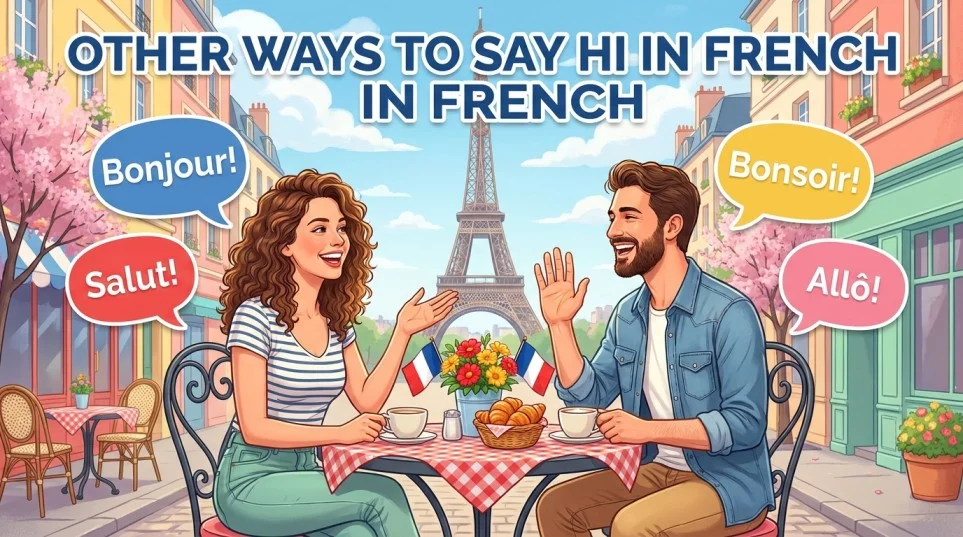
There are many natural ways to say hi in French, depending on the situation, relationship, and level of formality. The most common alternatives include Salut, Bonjour, Coucou, Bonsoir, and Hello. Whether you are greeting a friend, meeting a colleague, or starting a conversation with a French speaker, choosing the right greeting helps you sound polite, confident, and fluent.
Learning other ways to say hi in French can make your conversations more natural, friendly, and culturally appropriate. Although Bonjour is the most familiar French greeting, native speakers use many other expressions depending on the time of day, social relationship, and setting. From casual greetings with friends to respectful expressions in professional environments, each phrase communicates a slightly different tone.
Understanding these alternatives helps English learners build stronger communication skills and avoid sounding repetitive. Whether you are traveling to France, communicating with French-speaking colleagues, or practicing everyday conversations, knowing different greetings makes a noticeable difference. In this guide, you will discover 30 useful French greetings, their English meanings, pronunciation guidance, and practical examples. You will also learn when to use formal and informal expressions, helping you greet people naturally and confidently in different situations.
Quick Categories
Formal alternatives to “Hi” in French
- Bonjour
- Bonsoir
- Enchanté(e)
- Comment allez-vous ?
Pro Tip: Use formal greetings when meeting someone for the first time, addressing older people, or communicating in professional environments.
Casual alternatives
- Salut
- Coucou
- Ça va ?
- Hello
Pro Tip: Casual greetings work naturally with friends, classmates, and people you already know well.
Professional alternatives
- Bonjour, Madame
- Bonjour, Monsieur
- Ravi(e) de vous rencontrer
- Comment vous portez-vous ?
Pro Tip: Combine a respectful greeting with the person’s appropriate title to create a polite and professional first impression.
Informal expressions
- Yo !
- Hey !
- Quoi de neuf ?
- Ça roule ?
Pro Tip: These expressions are suitable for relaxed conversations. Avoid using overly casual greetings in formal emails or business meetings.
“A simple greeting can create a positive first impression before the conversation even begins.”
Common Mistakes When Saying Hi in French
1. Using Salut in Every Situation
Mistake: Saying “Salut” to a business client during a formal meeting.
Correct: “Bonjour, Monsieur.”
Why: Salut is informal and may sound too familiar in professional situations.
2. Confusing Bonjour and Bonsoir
Mistake: Saying “Bonsoir” in the morning.
Correct: Use “Bonjour” during the day and “Bonsoir” in the evening.
Why: These greetings are associated with different times of day.
3. Using Coucou With Strangers
Mistake: Greeting a new business contact with “Coucou !”
Correct: “Bonjour, enchanté(e).”
Why: Coucou sounds affectionate and is generally used with familiar people.
4. Translating English Greetings Word for Word
Mistake: Using “Comment ça va ?” in every formal introduction.
Correct: “Comment allez-vous ?”
Why: French distinguishes between informal and formal forms of address.
5. Forgetting the Social Context
Mistake: Starting a formal email with “Yo !”
Correct: “Bonjour, Madame” or “Bonjour, Monsieur.”
Why: French greetings should match the relationship and communication setting.
What Does “Hi” Mean in French?
The English word “Hi” is a friendly greeting used to acknowledge someone or begin a conversation. In French, its closest everyday equivalents include Bonjour and Salut.
French greetings vary according to formality, familiarity, and time of day.
Grammar Explanation: French greetings can be single expressions, such as Salut, or complete questions, such as Comment allez-vous ?
Example: “Bonjour, comment allez-vous ?” means “Hello, how are you?”
When to Use French Greetings
Different French greetings are appropriate in different situations.
- Meeting someone new: Use Bonjour or Enchanté(e).
- Greeting friends: Use Salut or Coucou.
- Professional meetings: Use Bonjour, Monsieur or Bonjour, Madame.
- Evening conversations: Use Bonsoir.
- Text messages: Use Coucou, Salut, or Hey.
- Travel situations: Use Bonjour when entering shops, restaurants, and other public places.
- Casual conversations: Use Ça va ? or Quoi de neuf ?
Spoken vs. Written: Bonjour and Salut work in both spoken and written communication, while expressions such as Yo are primarily conversational.
Formal vs. Informal: Bonjour is widely appropriate in formal situations, whereas Salut and Coucou are generally informal.
Is It Professional or Polite to Say “Hi” in French?
Polite? Yes
Professional? Yes, when you choose the appropriate French equivalent.
Bonjour is a polite and professional greeting that works in most business situations. Salut is more suitable for colleagues with whom you have an established informal relationship.
Business-style example:
“Bonjour, Madame Dupont. J’espère que vous allez bien.”
English translation: “Hello, Ms. Dupont. I hope you are doing well.”
Using the correct greeting demonstrates cultural awareness and respect.
Pros and Cons of Using Different French Greetings
Pros
- Natural communication: Different greetings help you sound more fluent.
- Friendly tone: Casual expressions create a welcoming atmosphere.
- Cultural understanding: You learn how French speakers communicate in different situations.
- Easy to remember: Many greetings are short and commonly used.
Cons
- Too informal for work: Some expressions may sound inappropriate in professional environments.
- Overuse: Repeating Bonjour or Salut can make conversations less varied.
- Limited context: Some greetings are suitable only at certain times or with specific people.
- Pronunciation challenges: French pronunciation can be difficult for English learners.
“Fluent French is not just about knowing words. It is about knowing when and how to use them.”
Other Ways to Say Hi in French With Examples
These alternatives will help you sound more fluent, confident, and natural in different situations.
Use them according to tone, context, and audience to greet people respectfully and comfortably.
1. Phrase: Bonjour
Meaning: Hello or good day.
Explanation: This is the most common French greeting and works in both formal and everyday situations.
Pronunciation: bohn-zhoor
Example Sentence: “Bonjour, comment allez-vous aujourd’hui ?”
English: “Hello, how are you today?”
Best Use: Everyday greetings
Worst Use: Late-night greetings
Tone: Polite, neutral, friendly
Context Variability: Casual: Bonjour, ça va ? Professional: Bonjour, Monsieur. Spoken: Bonjour, tout le monde !
2. Phrase: Salut
Meaning: Hi or bye.
Explanation: Salut is an informal greeting commonly used among friends, classmates, and familiar people.
Pronunciation: sah-loo
Example Sentence: “Salut, comment ça va ?”
English: “Hi, how are you?”
Best Use: Friendly conversations
Worst Use: Formal meetings
Tone: Casual, friendly, relaxed
Context Variability: Casual: Salut, Marie ! Professional: Salut, when addressing close colleagues informally. Spoken: Salut, tout le monde !
3. Phrase: Coucou
Meaning: Hey or hi there.
Explanation: This affectionate greeting is popular in informal conversations, especially among friends and family.
Pronunciation: koo-koo
Example Sentence: “Coucou ! Ça fait longtemps !”
English: “Hey! It’s been a long time!”
Best Use: Close relationships
Worst Use: Business meetings
Tone: Warm, playful, affectionate
Context Variability: Casual: Coucou, ça va ? Professional: Generally avoided. Spoken: Coucou, les amis !
4. Phrase: Bonsoir
Meaning: Good evening.
Explanation: Bonsoir is used to greet someone in the evening and is appropriate in both formal and informal settings.
Pronunciation: bohn-swahr
Example Sentence: “Bonsoir, comment allez-vous ?”
English: “Good evening, how are you?”
Best Use: Evening greetings
Worst Use: Morning introductions
Tone: Polite, respectful, neutral
Context Variability: Casual: Bonsoir, tout le monde ! Professional: Bonsoir, Madame. Spoken: Bonsoir, Monsieur.
5. Phrase: Enchanté(e)
Meaning: Nice to meet you.
Explanation: This expression is commonly used when introducing yourself to someone for the first time.
Pronunciation: ahn-shahn-tay
Example Sentence: “Bonjour, je m’appelle Sophie. Enchantée !”
English: “Hello, my name is Sophie. Nice to meet you!”
Best Use: First introductions
Worst Use: Greeting close friends
Tone: Polite, welcoming, respectful
Context Variability: Casual: Enchanté ! Professional: Ravi de vous rencontrer. Spoken: Enchantée de faire votre connaissance.
6. Phrase: Ça va ?
Meaning: How are you?
Explanation: This short expression is commonly used as both a greeting and a casual question.
Pronunciation: sah vah
Example Sentence: “Salut, ça va ?”
English: “Hi, how are you?”
Best Use: Casual conversations
Worst Use: Formal introductions
Tone: Friendly, relaxed, conversational
Context Variability: Casual: Ça va ? Professional: Comment allez-vous ? Spoken: Salut, ça va bien ?
7. Phrase: Hello
Meaning: Hello.
Explanation: French speakers sometimes use this English greeting, especially in casual conversations and international environments.
Pronunciation: heh-loh
Example Sentence: “Hello ! Tu vas bien ?”
English: “Hello! Are you doing well?”
Best Use: Informal settings
Worst Use: Traditional formal greetings
Tone: Modern, casual, friendly
Context Variability: Casual: Hello, ça va ? Professional: Bonjour is generally preferred. Spoken: Hello tout le monde !
8. Phrase: Hey
Meaning: Hey or hi.
Explanation: Hey is a relaxed greeting often used in messages and informal conversations.
Pronunciation: hay
Example Sentence: “Hey, ça fait plaisir de te voir !”
English: “Hey, it’s nice to see you!”
Best Use: Friendly messages
Worst Use: Formal correspondence
Tone: Relaxed, modern, informal
Context Variability: Casual: Hey, comment ça va ? Professional: Bonjour is more appropriate. Spoken: Hey, les amis !
9. Phrase: Yo !
Meaning: Yo or hey.
Explanation: Yo is a very casual greeting that is mostly used among friends and younger speakers.
Pronunciation: yoh
Example Sentence: “Yo ! Quoi de neuf ?”
English: “Yo! What’s new?”
Best Use: Close friends
Worst Use: Professional introductions
Tone: Playful, informal, energetic
Context Variability: Casual: Yo, ça roule ? Professional: Avoid in formal settings. Spoken: Yo, mon pote !
10. Phrase: Quoi de neuf ?
Meaning: What’s new?
Explanation: This expression is a friendly way to greet someone while asking about recent events in their life.
Pronunciation: kwah duh nuhf
Example Sentence: “Salut, quoi de neuf depuis la dernière fois ?”
English: “Hi, what’s new since last time?”
Best Use: Friendly conversations
Worst Use: Formal emails
Tone: Curious, casual, friendly
Context Variability: Casual: Quoi de neuf ? Professional: Comment allez-vous depuis notre dernière rencontre ? Spoken: Alors, quoi de neuf ?
11. Phrase: Ça roule ?
Meaning: Everything good? or How’s it going?
Explanation: This informal expression asks whether everything is going well.
Pronunciation: sah rool
Example Sentence: “Salut ! Ça roule ?”
English: “Hi! Everything good?”
Best Use: Close friends
Worst Use: Formal meetings
Tone: Relaxed, playful, informal
Context Variability: Casual: Ça roule ? Professional: Comment allez-vous ? Spoken: Salut, ça roule ?
12. Phrase: Comment allez-vous ?
Meaning: How are you?
Explanation: This is a polite and formal way to greet someone while asking about their well-being.
Pronunciation: koh-mahn tah-lay voo
Example Sentence: “Bonjour, Madame. Comment allez-vous ?”
English: “Hello, Madam. How are you?”
Best Use: Formal greetings
Worst Use: Close friends
Tone: Respectful, polite, formal
Context Variability: Casual: Comment vas-tu ? Professional: Comment allez-vous ? Spoken: Bonjour, comment allez-vous ?
13. Phrase: Comment vas-tu ?
Meaning: How are you?
Explanation: This expression is the informal version of Comment allez-vous and is used with familiar people.
Pronunciation: koh-mahn vah-too
Example Sentence: “Salut, Paul ! Comment vas-tu ?”
English: “Hi, Paul! How are you?”
Best Use: Friends and family
Worst Use: Formal business settings
Tone: Friendly, informal, warm
Context Variability: Casual: Comment vas-tu ? Professional: Comment allez-vous ? Spoken: Salut, comment vas-tu ?
14. Phrase: Bonjour à tous
Meaning: Hello everyone.
Explanation: This phrase is useful when greeting a group of people in a classroom, meeting, or gathering.
Pronunciation: bohn-zhoor ah too
Example Sentence: “Bonjour à tous, merci d’être ici.”
English: “Hello everyone, thank you for being here.”
Best Use: Group greetings
Worst Use: One-person greetings
Tone: Polite, welcoming, inclusive
Context Variability: Casual: Salut à tous ! Professional: Bonjour à tous. Spoken: Bonjour à toutes et à tous.
15. Phrase: Bonjour, Monsieur
Meaning: Hello, Sir.
Explanation: This respectful greeting is commonly used when addressing a man in a formal or professional setting.
Pronunciation: bohn-zhoor muh-syuh
Example Sentence: “Bonjour, Monsieur. Comment puis-je vous aider ?”
English: “Hello, Sir. How can I help you?”
Best Use: Professional greetings
Worst Use: Close friendships
Tone: Respectful, formal, courteous
Context Variability: Casual: Bonjour ! Professional: Bonjour, Monsieur. Spoken: Bonjour, Monsieur Martin.
16. Phrase: Bonjour, Madame
Meaning: Hello, Madam or Hello, Ma’am.
Explanation: This expression is a polite way to greet a woman in professional and formal environments.
Pronunciation: bohn-zhoor mah-dahm
Example Sentence: “Bonjour, Madame. Bienvenue dans notre établissement.”
English: “Hello, Madam. Welcome to our establishment.”
Best Use: Formal interactions
Worst Use: Very casual chats
Tone: Courteous, respectful, formal
Context Variability: Casual: Bonjour ! Professional: Bonjour, Madame. Spoken: Bonjour, Madame Dupont.
17. Phrase: Ravi(e) de vous rencontrer
Meaning: Pleased to meet you.
Explanation: This polite expression is suitable when meeting someone in a professional or formal situation.
Pronunciation: rah-vee duh voo rahn-kohn-tray
Example Sentence: “Bonjour, je suis Marc. Ravi de vous rencontrer.”
English: “Hello, I am Marc. Pleased to meet you.”
Best Use: Professional introductions
Worst Use: Casual reunions
Tone: Respectful, professional, welcoming
Context Variability: Casual: Ravi de te rencontrer. Professional: Ravi de vous rencontrer. Spoken: Bonjour, ravi de faire votre connaissance.
18. Phrase: Comment vous portez-vous ?
Meaning: How are you feeling?
Explanation: This is a formal and somewhat traditional expression used to ask about someone’s well-being.
Pronunciation: koh-mahn voo por-tay voo
Example Sentence: “Bonjour, Madame. Comment vous portez-vous aujourd’hui ?”
English: “Hello, Madam. How are you feeling today?”
Best Use: Formal conversations
Worst Use: Casual texting
Tone: Formal, respectful, traditional
Context Variability: Casual: Ça va ? Professional: Comment vous portez-vous ? Spoken: Comment vous portez-vous aujourd’hui ?
19. Phrase: Bien le bonjour
Meaning: A very good hello.
Explanation: This expression adds a warm and slightly old-fashioned touch to a greeting.
Pronunciation: byan luh bohn-zhoor
Example Sentence: “Bien le bonjour à vous tous !”
English: “A very good hello to all of you!”
Best Use: Warm introductions
Worst Use: Strict business emails
Tone: Warm, courteous, traditional
Context Variability: Casual: Bien le bonjour ! Professional: Bonjour à tous. Spoken: Bien le bonjour, Monsieur.
20. Phrase: Bonjour à vous
Meaning: Hello to you.
Explanation: This is a polite variation of Bonjour that emphasizes the person being greeted.
Pronunciation: bohn-zhoor ah voo
Example Sentence: “Bonjour à vous, merci d’être venu.”
English: “Hello to you, thank you for coming.”
Best Use: Polite greetings
Worst Use: Very informal chats
Tone: Polite, respectful, warm
Context Variability: Casual: Salut à toi. Professional: Bonjour à vous. Spoken: Bonjour à vous tous.
21. Phrase: Salut tout le monde
Meaning: Hi everyone.
Explanation: This informal expression is a natural way to greet a group of friends or familiar people.
Pronunciation: sah-loo too luh mohnd
Example Sentence: “Salut tout le monde ! Comment allez-vous ?”
English: “Hi everyone! How are you?”
Best Use: Friendly groups
Worst Use: Formal presentations
Tone: Friendly, casual, welcoming
Context Variability: Casual: Salut tout le monde ! Professional: Bonjour à toutes et à tous. Spoken: Salut tout le monde, ça va ?
22. Phrase: Ça fait plaisir de te voir
Meaning: It’s nice to see you.
Explanation: This warm expression works well when greeting someone you have not seen for some time.
Pronunciation: sah feh pleh-zeer duh tuh vwahr
Example Sentence: “Salut, ça fait plaisir de te voir !”
English: “Hi, it’s nice to see you!”
Best Use: Friendly reunions
Worst Use: First meetings
Tone: Warm, affectionate, friendly
Context Variability: Casual: Ça fait plaisir de te voir. Professional: Ça me fait plaisir de vous revoir. Spoken: Salut, ça fait plaisir de te revoir !
23. Phrase: Heureux de te voir
Meaning: Happy to see you.
Explanation: This expression communicates happiness when meeting someone familiar.
Pronunciation: uh-ruh duh tuh vwahr
Example Sentence: “Salut, je suis heureux de te voir !”
English: “Hi, I am happy to see you!”
Best Use: Friendly reunions
Worst Use: Formal introductions
Tone: Warm, positive, personal
Context Variability: Casual: Heureux de te voir. Professional: Heureux de vous revoir. Spoken: Salut, heureux de te revoir !
24. Phrase: Comment ça se passe ?
Meaning: How is everything going?
Explanation: This casual question can be used as a greeting when checking how someone’s life or activities are progressing.
Pronunciation: koh-mahn sah suh pahss
Example Sentence: “Salut, comment ça se passe au travail ?”
English: “Hi, how are things going at work?”
Best Use: Friendly check-ins
Worst Use: Formal introductions
Tone: Conversational, friendly, interested
Context Variability: Casual: Comment ça se passe ? Professional: Comment se déroulent vos activités ? Spoken: Salut, comment ça se passe ?
25. Phrase: Alors, ça va ?
Meaning: So, how are you?
Explanation: This expression adds a conversational opening to a simple question about someone’s well-being.
Pronunciation: ah-lohr sah vah
Example Sentence: “Alors, ça va depuis hier ?”
English: “So, how are you doing since yesterday?”
Best Use: Casual conversations
Worst Use: Formal business writing
Tone: Relaxed, friendly, conversational
Context Variability: Casual: Alors, ça va ? Professional: Comment allez-vous aujourd’hui ? Spoken: Alors, tout va bien ?
26. Phrase: Salut, mon ami
Meaning: Hi, my friend.
Explanation: This phrase adds friendliness to a greeting, although its naturalness depends on the relationship and context.
Pronunciation: sah-loo mohn ah-mee
Example Sentence: “Salut, mon ami ! Ça fait longtemps.”
English: “Hi, my friend! It’s been a long time.”
Best Use: Friendly conversations
Worst Use: Formal introductions
Tone: Warm, friendly, informal
Context Variability: Casual: Salut, mon ami ! Professional: Bonjour, Monsieur. Spoken: Salut, mon cher ami !
27. Phrase: Salut, ça fait longtemps !
Meaning: Hi, it’s been a long time!
Explanation: This expression is useful when greeting someone you have not seen for a while.
Pronunciation: sah-loo sah feh lohn-tahn
Example Sentence: “Salut, ça fait longtemps ! Comment vas-tu ?”
English: “Hi, it’s been a long time! How are you?”
Best Use: Reconnecting
Worst Use: First introductions
Tone: Friendly, nostalgic, warm
Context Variability: Casual: Salut, ça fait longtemps ! Professional: Cela fait longtemps que nous ne nous sommes pas vus. Spoken: Salut, ça fait tellement longtemps !
28. Phrase: Bienvenue
Meaning: Welcome.
Explanation: Bienvenue is used to welcome someone rather than simply say hello, making it suitable for receiving guests.
Pronunciation: byan-vuh-noo
Example Sentence: “Bonjour et bienvenue dans notre école !”
English: “Hello and welcome to our school!”
Best Use: Welcoming guests
Worst Use: Ordinary greetings
Tone: Warm, polite, welcoming
Context Variability: Casual: Bienvenue chez moi ! Professional: Bienvenue dans notre entreprise. Spoken: Bonjour, bienvenue !
29. Phrase: Allô ?
Meaning: Hello?
Explanation: Allô is primarily used when answering or starting a telephone conversation in French.
Pronunciation: ah-loh
Example Sentence: “Allô ? C’est Sophie à l’appareil.”
English: “Hello? This is Sophie speaking.”
Best Use: Phone conversations
Worst Use: Face-to-face greetings
Tone: Neutral, conversational, familiar
Context Variability: Casual: Allô, tu m’entends ? Professional: Allô, bonjour, entreprise Dupont. Spoken: Allô ? Bonjour !
30. Phrase: Salutations
Meaning: Greetings.
Explanation: This is a formal or somewhat literary way to express greetings, often found in written communication.
Pronunciation: sah-loo-tah-syohn
Example Sentence: “Salutations à toute l’équipe !”
English: “Greetings to the entire team!”
Best Use: Written greetings
Worst Use: Casual conversations
Tone: Formal, traditional, respectful
Context Variability: Casual: Salut ! Professional: Salutations distinguées. Spoken: Mes salutations à tous !
“Bonjour opens the door to almost any conversation, while Salut and Coucou bring a more personal touch.”
Mini Quiz / Self-Check
Test your knowledge of French greetings with these practical questions.
1. Which greeting is most appropriate when entering a French business meeting?
A. Yo !
B. Coucou !
C. Bonjour, Monsieur.
D. Ça roule ?
Correct Answer: C. Bonjour, Monsieur.
2. Which expression is commonly used among close friends?
A. Salut
B. Comment vous portez-vous ?
C. Bonjour, Madame
D. Salutations distinguées
Correct Answer: A. Salut
3. What is the correct French greeting for the evening?
A. Bonjour
B. Bonsoir
C. Coucou
D. Allô
Correct Answer: B. Bonsoir
4. Which expression is most suitable for answering a telephone call in French?
A. Enchanté
B. Bienvenue
C. Allô
D. Salut tout le monde
Correct Answer: C. Allô
Comparison Table: Top French Greetings
| Phrase | Tone | Best Use |
|---|---|---|
| Bonjour | Polite, neutral | Everyday greetings |
| Salut | Casual, friendly | Friends and family |
| Coucou | Warm, playful | Close relationships |
| Bonsoir | Respectful, neutral | Evening greetings |
| Enchanté(e) | Polite, welcoming | First introductions |
| Ça va ? | Casual, friendly | Informal conversations |
| Comment allez-vous ? | Formal, respectful | Professional meetings |
| Hey | Modern, informal | Casual messages |
| Quoi de neuf ? | Conversational | Friendly check-ins |
| Bonjour à tous | Polite, welcoming | Group greetings |
FAQs
1. What is the most common way to say hi in French?
Bonjour is the most common and widely appropriate French greeting. It works in everyday conversations, shops, workplaces, and formal introductions.
2. How do you say hi casually in French?
You can say Salut, Coucou, or Hey when speaking with friends and familiar people. These expressions create a relaxed and friendly tone.
3. What is the difference between Bonjour and Salut?
Bonjour is polite and suitable for both formal and everyday situations, while Salut is informal and generally used with friends, family, and familiar people.
4. How do French people greet someone in the evening?
French speakers commonly use Bonsoir, meaning good evening. It is appropriate when meeting someone during the evening.
5. What is a polite way to greet someone in French professionally?
Bonjour, Monsieur and Bonjour, Madame are respectful professional greetings. You can also say Bonjour, ravi(e) de vous rencontrer when meeting someone for the first time.
Conclusion
Learning different ways to say hi in French helps you communicate more naturally and confidently. From everyday expressions like Bonjour and Salut to formal greetings such as Enchanté(e) and Comment allez-vous, each phrase has a specific purpose. Understanding these differences allows you to choose greetings that match your relationship, setting, and communication style.
Practice these expressions regularly by using them in conversations, messages, and language-learning exercises. Pay attention to pronunciation and cultural context to make your French sound more authentic. Even a simple greeting can make conversations warmer and help you build meaningful connections with French speakers.
Discover More Post:
- 30+ Other Ways to Say Good to Hear | Natural, Professional …
- Other Ways to Say Have Fun | 30+ Fresh Phrases for Every …
- Other Ways to Say Especially | 30+ Fresh Alternatives for …

Emma Richardson is a professional content writer at Replynst.com. She creates clear, engaging and well-researched content designed to answer readers’ questions while following modern SEO best practices. Her focus is on helpful, reader-friendly articles that deliver genuine value.