Quick Answer:
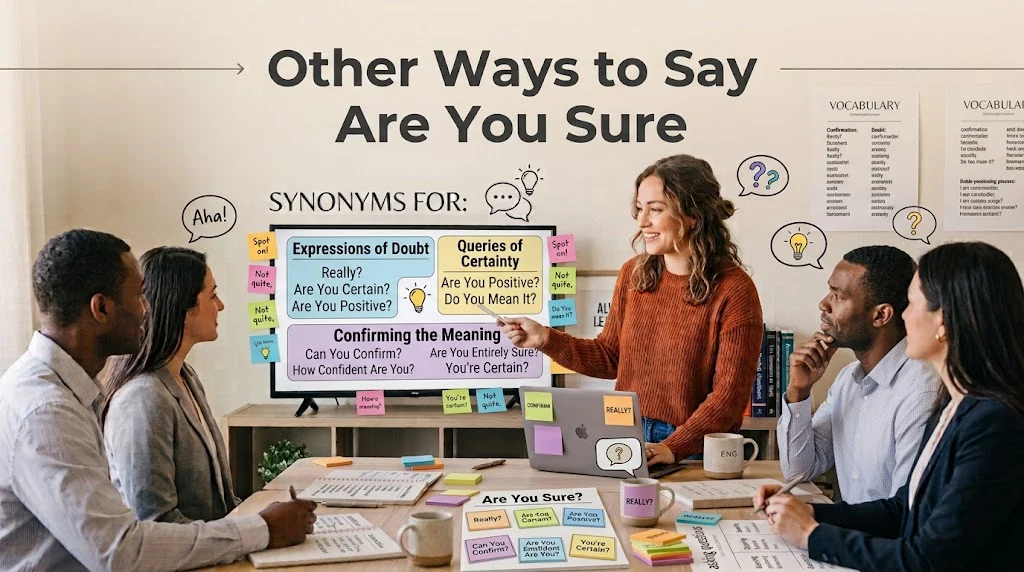
Common alternatives to are you sure include Are you certain?, Do you really think so?, Are you confident?, Is that definitely the case?, and Have you made up your mind? Choose the phrase based on your tone, relationship, and situation.
Knowing other ways to say are you sure can make your English sound more natural, flexible, and confident. Although “Are you sure?” is common and grammatically correct, repeating it can sometimes sound doubtful, repetitive, or overly direct. Learning different expressions helps you communicate the same idea while matching the situation and your relationship with the listener.
These alternatives to are you sure are useful in everyday conversations, professional communication, academic discussions, and friendly chats. Some expressions sound polite and formal, while others are casual or conversational. Just as learners practice ways to express excitement in English, understanding different forms of confirmation helps build stronger communication skills. This guide covers 30 useful phrases, their meanings, examples, tones, and best contexts.
“The right question can show curiosity without making the other person feel pressured.”
Quick Categories
Formal alternatives to “Are You Sure?”
- Are you certain?
- Are you confident about that?
- Can you confirm that?
- Is that definitely the case?
Pro Tip: Use precise and respectful wording when discussing decisions, facts, or important information.
Casual alternatives
- Really?
- You sure?
- Do you really think so?
- You really mean that?
Pro Tip: Casual expressions work best with friends, family, and people you know well.
Professional alternatives
- Could you confirm that?
- Are you confident in that decision?
- Can we be certain about this?
- Would you like to reconsider?
Pro Tip: In professional communication, focus on clarification rather than making the other person feel challenged.
Informal expressions
- You positive?
- For real?
- No doubt?
- You really want to?
Pro Tip: Informal expressions in English can sound natural in conversation but may be inappropriate in formal emails or workplace documents.
Common Mistakes
1. Using “Are you sure?” too frequently
Mistake: “Are you sure? Are you sure? Are you sure?”
Better: “Could you confirm that?”
Why: Repeating the same question can make you sound doubtful or impatient.
2. Sounding judgmental
Mistake: “Are you sure you want to wear that?”
Better: “Are you comfortable with that choice?”
Why: The original question may unintentionally sound like criticism.
3. Using casual expressions in professional writing
Mistake: “You positive about this?”
Better: “Could you confirm that this is your final decision?”
Why: Professional situations require clearer and more respectful wording.
4. Confusing confirmation with disagreement
Mistake: “Are you certain?” said with an aggressive tone.
Better: “Could you clarify whether you are certain about this?”
Why: Tone can change a neutral question into a challenge.
5. Using “really?” without context
Mistake: “Really?” during an important business discussion.
Better: “Could you explain that further?”
Why: “Really?” can sound surprised, skeptical, or dismissive depending on the situation.
“A polite confirmation question can protect both clarity and confidence.”
What Does “Are You Sure?” Mean?
“Are you sure?” is a question used to check whether someone is certain about something they have said, decided, or done.
It can express confirmation, doubt, curiosity, concern, or surprise, depending on tone and context.
Example: “Are you sure you want to leave early?”
Grammatically, it is a yes or no question formed with the verb are, the subject you, and the adjective sure.
When to Use “Are You Sure?”
You can use “Are you sure?” in several contexts:
- Checking information: When you want to confirm that something is correct.
- Confirming a decision: When someone has made a choice.
- Showing concern: When a decision may have consequences.
- Expressing surprise: When something sounds unexpected.
- Casual conversations: When speaking naturally with friends or family.
- Professional communication: When the tone is neutral and the situation does not require a softer alternative.
Spoken vs. Written: “Are you sure?” is natural in both spoken and written English.
Formal vs. Informal: The phrase itself is neutral, but its tone can become casual, doubtful, or confrontational depending on delivery.
Is It Professional or Polite to Say “Are You Sure?”
Polite? ✔️ Yes
Professional? ✔️ Yes, depending on tone and context
“Are you sure?” is not inherently rude or unprofessional. However, in sensitive workplace situations, alternatives such as Could you confirm that? or Are you confident about that decision? may sound more diplomatic.
Business-style example: “Could you confirm that this is the version you would like us to submit?”
Pros and Cons of Using “Are You Sure?”
Pros
- Simple and natural: Easy for English learners and native speakers to understand.
- Friendly tone: Can sound caring when used with the right tone.
- Common usage: Frequently used in everyday conversations.
- Easy to understand: Clearly asks whether someone is certain.
Cons
- Can sound doubtful: The listener may feel that you question their judgment.
- Can be repetitive: Frequent use can make conversations less varied.
- Limited emotional range: It does not always show whether you are concerned, surprised, or curious.
- May sound confrontational: Tone can make it feel like a challenge.
“The words may be simple, but your tone determines how the question feels.”
Other Ways to Say “Are You Sure?” With Examples
These alternatives will help you sound more fluent, confident, and natural in different situations.
Use them according to tone, context, and audience to ask for confirmation, express concern, or clarify a decision.
1. Phrase: Are You Certain?
Meaning: Are you completely sure about something?
Explanation: This is a more formal version of “Are you sure?”
Example Sentence: “Are you certain this information is accurate?”
Best Use: Formal conversations
Worst Use: Casual jokes
Tone: Formal, direct, neutral
Context Variability: Casual: “Are you certain?” Professional: “Are you certain this is correct?” Spoken: “Are you certain about that?”
2. Phrase: Are You Confident About That?
Meaning: Do you feel confident that something is correct?
Explanation: This phrase politely asks someone to confirm their confidence.
Example Sentence: “Are you confident about that recommendation?”
Best Use: Professional discussions
Worst Use: Casual teasing
Tone: Professional, respectful, thoughtful
Context Variability: Casual: “Confident about that?” Professional: “Are you confident about that assessment?” Spoken: “Are you confident about that?”
3. Phrase: Can You Confirm That?
Meaning: Can you verify that the information is correct?
Explanation: This phrase is especially useful when accuracy matters.
Example Sentence: “Can you confirm that the meeting starts at nine?”
Best Use: Workplace communication
Worst Use: Casual surprises
Tone: Professional, clear, polite
Context Variability: Casual: “Can you confirm that?” Professional: “Could you confirm that the figures are correct?” Spoken: “Can you confirm that?”
4. Phrase: Is That Definitely the Case?
Meaning: Is that certainly true?
Explanation: This phrase asks for strong confirmation without directly challenging the speaker.
Example Sentence: “Is that definitely the case, or should we verify the information?”
Best Use: Formal discussions
Worst Use: Friendly teasing
Tone: Formal, cautious, precise
Context Variability: Casual: “Is that definitely true?” Professional: “Is that definitely the case?” Spoken: “Is that definitely the case?”
5. Phrase: Do You Really Think So?
Meaning: Do you genuinely believe what you just said?
Explanation: This expression can show curiosity, surprise, or mild doubt.
Example Sentence: “Do you really think so, or are you just guessing?”
Best Use: Friendly conversations
Worst Use: Formal reports
Tone: Conversational, curious, doubtful
Context Variability: Casual: “Do you really think so?” Professional: “Could you explain why you believe that?” Spoken: “Do you really think so?”
6. Phrase: Are You Positive?
Meaning: Are you completely certain?
Explanation: This is a common conversational alternative to “Are you sure?”
Example Sentence: “Are you positive that you sent the email?”
Best Use: Casual conversations
Worst Use: Formal reports
Tone: Casual, direct, conversational
Context Variability: Casual: “Are you positive?” Professional: “Could you confirm that?” Spoken: “Are you positive about that?”
7. Phrase: Are You Certain About This?
Meaning: Do you have complete confidence in this matter?
Explanation: This phrase works well when discussing an important decision.
Example Sentence: “Are you certain about this before we move forward?”
Best Use: Important decisions
Worst Use: Light conversation
Tone: Serious, formal, respectful
Context Variability: Casual: “Are you certain?” Professional: “Are you certain about this decision?” Spoken: “Are you certain about this?”
8. Phrase: Can We Be Certain?
Meaning: Can we know that something is definitely true?
Explanation: This phrase is useful when discussing evidence or important information.
Example Sentence: “Can we be certain that these results are accurate?”
Best Use: Professional discussions
Worst Use: Casual chat
Tone: Formal, analytical, cautious
Context Variability: Casual: “Can we be sure?” Professional: “Can we be certain about these results?” Spoken: “Can we be certain?”
9. Phrase: Would You Stand By That?
Meaning: Are you willing to continue supporting what you said?
Explanation: This phrase asks someone to take responsibility for a statement or position.
Example Sentence: “Would you stand by that statement if we reviewed the data?”
Best Use: Serious discussions
Worst Use: Friendly chat
Tone: Direct, serious, challenging
Context Variability: Casual: “You still stand by that?” Professional: “Would you stand by that conclusion?” Spoken: “Would you stand by that?”
10. Phrase: Do You Feel Certain?
Meaning: Do you personally feel confident about something?
Explanation: This version focuses on someone’s personal level of certainty.
Example Sentence: “Do you feel certain that this is the right approach?”
Best Use: Thoughtful discussions
Worst Use: Quick confirmation
Tone: Gentle, thoughtful, respectful
Context Variability: Casual: “Do you feel sure?” Professional: “Do you feel certain about this approach?” Spoken: “Do you feel certain?”
11. Phrase: Is This Your Final Decision?
Meaning: Have you made your final choice?
Explanation: This is useful when someone needs to confirm a decision.
Example Sentence: “Is this your final decision before I submit the form?”
Best Use: Decision making
Worst Use: Casual surprise
Tone: Direct, formal, clear
Context Variability: Casual: “Is that your final decision?” Professional: “Is this your final decision?” Spoken: “Is this your final decision?”
12. Phrase: Have You Made Up Your Mind?
Meaning: Have you reached a final decision?
Explanation: This phrase is common in everyday English but can sound impatient in some contexts.
Example Sentence: “Have you made up your mind about the offer?”
Best Use: Casual conversations
Worst Use: Formal emails
Tone: Casual, direct, conversational
Context Variability: Casual: “Have you made up your mind?” Professional: “Have you reached a final decision?” Spoken: “Have you made up your mind?”
13. Phrase: Do You Stand By Your Decision?
Meaning: Are you still confident in your decision?
Explanation: This phrase is appropriate when someone has already made an important choice.
Example Sentence: “Do you stand by your decision after reviewing the new information?”
Best Use: Serious discussions
Worst Use: Friendly small talk
Tone: Serious, direct, respectful
Context Variability: Casual: “Still happy with your decision?” Professional: “Do you stand by your decision?” Spoken: “Do you stand by your decision?”
14. Phrase: Are You Comfortable With That?
Meaning: Do you feel okay about a choice or situation?
Explanation: This is a softer alternative when you want to show consideration.
Example Sentence: “Are you comfortable with that arrangement?”
Best Use: Sensitive situations
Worst Use: Fact checking
Tone: Gentle, considerate, polite
Context Variability: Casual: “Are you okay with that?” Professional: “Are you comfortable with that arrangement?” Spoken: “Are you comfortable with that?”
15. Phrase: Do You Really Mean That?
Meaning: Are you genuinely serious about what you said?
Explanation: This phrase is useful when someone’s statement sounds surprising or unexpected.
Example Sentence: “Do you really mean that, or are you joking?”
Best Use: Personal conversations
Worst Use: Formal meetings
Tone: Personal, curious, direct
Context Variability: Casual: “Do you really mean that?” Professional: “Could you clarify your position?” Spoken: “Do you really mean that?”
16. Phrase: Is That Your Final Answer?
Meaning: Is your response or decision final?
Explanation: This is a familiar conversational expression often used playfully or dramatically.
Example Sentence: “Is that your final answer, or would you like another minute?”
Best Use: Casual situations
Worst Use: Formal emails
Tone: Playful, conversational, direct
Context Variability: Casual: “Is that your final answer?” Professional: “Can you confirm your final decision?” Spoken: “Is that your final answer?”
17. Phrase: Can I Take That as Confirmed?
Meaning: Can I treat what you said as final confirmation?
Explanation: This phrase is particularly useful in professional communication.
Example Sentence: “Can I take that as confirmed for Friday?”
Best Use: Workplace communication
Worst Use: Casual teasing
Tone: Professional, polite, practical
Context Variability: Casual: “So we are good for Friday?” Professional: “Can I take that as confirmed?” Spoken: “Can I take that as confirmed?”
18. Phrase: Could You Confirm That?
Meaning: Could you verify that something is correct?
Explanation: This is a polite and highly useful professional expression.
Example Sentence: “Could you confirm that the attached document is the final version?”
Best Use: Professional emails
Worst Use: Casual surprise
Tone: Polite, formal, clear
Context Variability: Casual: “Can you confirm?” Professional: “Could you confirm that?” Spoken: “Could you confirm that?”
19. Phrase: Are You Firm on That?
Meaning: Have you made a decision that you do not plan to change?
Explanation: This expression asks whether someone’s position is fixed.
Example Sentence: “Are you firm on that decision?”
Best Use: Decision discussions
Worst Use: Formal reports
Tone: Direct, serious, conversational
Context Variability: Casual: “Are you firm on that?” Professional: “Is your decision final?” Spoken: “Are you firm on that?”
20. Phrase: Are You Certain This Is What You Want?
Meaning: Do you definitely want the proposed option?
Explanation: This phrase is useful when someone is making a personal or important choice.
Example Sentence: “Are you certain this is what you want before we proceed?”
Best Use: Important choices
Worst Use: Casual greetings
Tone: Caring, serious, respectful
Context Variability: Casual: “Is this really what you want?” Professional: “Are you certain this is what you want?” Spoken: “Are you certain this is what you want?”
21. Phrase: Is There Any Doubt?
Meaning: Is there any uncertainty about the matter?
Explanation: This phrase can emphasize strong confidence or ask whether uncertainty remains.
Example Sentence: “Is there any doubt that the deadline has changed?”
Best Use: Formal discussions
Worst Use: Casual chat
Tone: Formal, confident, rhetorical
Context Variability: Casual: “Any doubt?” Professional: “Is there any doubt about the deadline?” Spoken: “Is there any doubt?”
22. Phrase: Do You Have Any Doubts?
Meaning: Are you uncertain about your decision or belief?
Explanation: This phrase directly invites someone to share concerns.
Example Sentence: “Do you have any doubts about accepting the position?”
Best Use: Decision making
Worst Use: Quick confirmation
Tone: Thoughtful, direct, supportive
Context Variability: Casual: “Any doubts?” Professional: “Do you have any doubts about the proposal?” Spoken: “Do you have any doubts?”
23. Phrase: Are You Still Sure?
Meaning: Are you still confident after considering new information?
Explanation: This phrase is useful when circumstances have changed.
Example Sentence: “Are you still sure you want to go ahead with the plan?”
Best Use: Changing situations
Worst Use: Formal reports
Tone: Concerned, conversational, direct
Context Variability: Casual: “Still sure?” Professional: “Are you still confident in the decision?” Spoken: “Are you still sure?”
24. Phrase: Have You Considered This Carefully?
Meaning: Have you thought sufficiently about the matter?
Explanation: This is a more indirect way to question someone’s certainty.
Example Sentence: “Have you considered this carefully before making your decision?”
Best Use: Serious decisions
Worst Use: Casual chat
Tone: Thoughtful, formal, cautious
Context Variability: Casual: “Have you thought about it?” Professional: “Have you considered this carefully?” Spoken: “Have you considered this carefully?”
25. Phrase: Would You Like to Reconsider?
Meaning: Would you like to think about your decision again?
Explanation: This phrase gently suggests reviewing a choice without directly questioning someone’s certainty.
Example Sentence: “Would you like to reconsider before we finalize the agreement?”
Best Use: Sensitive decisions
Worst Use: Casual greetings
Tone: Polite, diplomatic, formal
Context Variability: Casual: “Want to think about it again?” Professional: “Would you like to reconsider?” Spoken: “Would you like to reconsider?”
26. Phrase: Are You Happy With That Choice?
Meaning: Do you feel satisfied with your decision?
Explanation: This is a softer alternative that focuses on satisfaction rather than certainty.
Example Sentence: “Are you happy with that choice after reviewing the options?”
Best Use: Personal decisions
Worst Use: Fact checking
Tone: Friendly, supportive, gentle
Context Variability: Casual: “Happy with your choice?” Professional: “Are you satisfied with the decision?” Spoken: “Are you happy with that choice?”
27. Phrase: Is That Definitely What You Want?
Meaning: Do you definitely want the selected option?
Explanation: This expression seeks confirmation while showing that the decision matters.
Example Sentence: “Is that definitely what you want before I place the order?”
Best Use: Important choices
Worst Use: Formal reports
Tone: Direct, caring, conversational
Context Variability: Casual: “Is that really what you want?” Professional: “Could you confirm that this is your preferred option?” Spoken: “Is that definitely what you want?”
28. Phrase: Do You Want to Double Check?
Meaning: Would you like to verify something once more?
Explanation: This is a polite way to suggest confirmation without directly questioning someone.
Example Sentence: “Do you want to double check the address before sending it?”
Best Use: Everyday situations
Worst Use: Formal reports
Tone: Helpful, casual, polite
Context Variability: Casual: “Want to double check?” Professional: “Would you like to verify the information?” Spoken: “Do you want to double check?”
29. Phrase: Can You Be Certain?
Meaning: Are you able to establish that something is definitely true?
Explanation: This phrase is useful when certainty is especially important.
Example Sentence: “Can you be certain that the information came from a reliable source?”
Best Use: Formal discussions
Worst Use: Friendly chat
Tone: Formal, analytical, direct
Context Variability: Casual: “Can you be sure?” Professional: “Can you be certain about the source?” Spoken: “Can you be certain?”
30. Phrase: Do You Feel Confident About Your Decision?
Meaning: Do you feel certain and comfortable with your choice?
Explanation: This is a thoughtful professional alternative that avoids sounding confrontational.
Example Sentence: “Do you feel confident about your decision after reviewing the proposal?”
Best Use: Professional discussions
Worst Use: Casual jokes
Tone: Professional, supportive, thoughtful
Context Variability: Casual: “Do you feel good about your choice?” Professional: “Do you feel confident about your decision?” Spoken: “Do you feel confident about your decision?”
“Good communication is not only about asking for certainty. It is also about respecting how people make decisions.”
Mini Quiz / Self Check
1. Which phrase is most appropriate for a professional email?
A. You positive?
B. You sure?
C. Could you confirm that?
D. For real?
Answer: C. Could you confirm that?
2. Which expression sounds most casual?
A. Are you certain?
B. Can you confirm that?
C. You sure?
D. Is that definitely the case?
Answer: C. You sure?
3. You want to gently ask a colleague whether they are comfortable with a decision. Which phrase works best?
A. Are you comfortable with that?
B. You positive?
C. Are you certain?
D. Is that your final answer?
Answer: A. Are you comfortable with that?
4. Someone has given you surprising information. Which phrase naturally expresses curiosity?
A. Could you confirm that?
B. Do you really think so?
C. Can we be certain?
D. Would you like to reconsider?
Answer: B. Do you really think so?
Comparison Table: Top Alternatives
| Phrase | Tone | Best Use |
|---|---|---|
| Are you certain? | Formal, neutral | Formal discussions |
| Are you confident about that? | Professional, respectful | Workplace discussions |
| Can you confirm that? | Professional, clear | Business communication |
| Is that definitely the case? | Formal, cautious | Fact checking |
| Do you really think so? | Casual, curious | Friendly conversations |
| Are you positive? | Casual, direct | Everyday speech |
| Are you comfortable with that? | Gentle, polite | Sensitive situations |
| Could you confirm that? | Formal, polite | Professional emails |
| Would you like to reconsider? | Diplomatic, formal | Important decisions |
| Do you want to double check? | Casual, helpful | Everyday situations |
FAQs
What are the best other ways to say “Are you sure”?
Useful alternatives include Are you certain?, Are you confident about that?, Can you confirm that?, Do you really think so?, and Could you confirm that?
What is a polite way to say “Are you sure?”
Could you confirm that? and Are you comfortable with that? are polite alternatives that can sound less challenging.
How can I say “Are you sure?” professionally?
Try Could you confirm that?, Are you confident about that decision?, or Can we be certain about this? depending on the situation.
Is “Are you certain?” more formal than “Are you sure?”
Yes. Are you certain? generally sounds more formal and deliberate than Are you sure?
Is “You sure?” grammatically correct?
In casual spoken English, You sure? is commonly used as a shortened form of Are you sure? It is informal and should generally be avoided in formal writing.
Conclusion
Learning other ways to say are you sure gives you more control over your English. You can choose a direct phrase such as Are you certain?, a professional expression such as Could you confirm that?, or a gentle option such as Are you comfortable with that?
Practice these expressions in different situations so you can recognize how tone changes meaning. Strong English communication is not only about knowing vocabulary. It is also about choosing words that fit your audience, purpose, and relationship with the listener.
Read More Related Articles:
- 30+ Other Ways to Say Demonstrate | Smart Alternatives for Clear …
- Other Ways to Say Especially | 30+ Fresh Alternatives for …
- Other Ways to Say Fuck |30+ Powerful Alternatives for Every …

Ethan Parker is a professional content writer at Replynst.com. He creates clear, engaging and well-researched articles focused on providing useful information, answering readers’ questions.