Quick Answer:
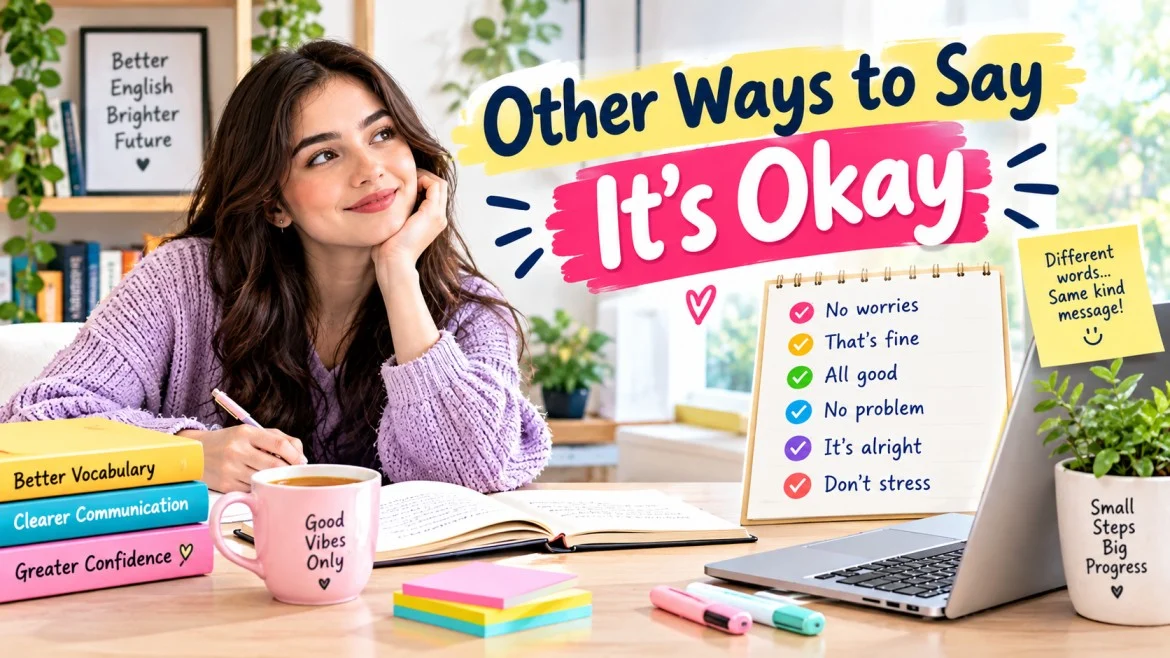
There are many natural other ways to say it’s okay, including no problem, that’s fine, don’t worry, it’s all right, and no worries. The best choice depends on whether you want to sound casual, polite, reassuring, or professional.
Knowing other ways to say it’s okay can make your English sound more natural, flexible, and confident. Although “it’s okay” is simple and widely understood, repeating it in every conversation can make your communication feel limited. Learning suitable alternatives helps you respond naturally when someone apologizes, asks for permission, makes a mistake, or needs reassurance.
These alternatives to it’s okay are especially useful for English learners, professionals, and anyone who wants to communicate with greater confidence. Some expressions work well with friends, while others sound more polished in professional conversations. Understanding tone is just as important as knowing the words. This guide gives you practical expressions, examples, and context so you can choose the right phrase for everyday conversations and professional situations.
Quick Categories
Formal alternatives to “It’s okay”
- That is acceptable
- That is perfectly fine
- There is no issue
- That is quite all right
Pro Tip: Use formal alternatives when you want to sound respectful, composed, and professional.
Casual alternatives
- No problem
- No worries
- That’s fine
- It’s all right
Pro Tip: These phrases work naturally with friends, family, classmates, and familiar colleagues.
Professional alternatives
- That should be fine
- There is no concern
- That works for me
- I understand
Pro Tip: In professional communication, choose expressions that reassure others without sounding too casual.
Informal expressions
- Don’t worry about it
- You’re good
- All good
- Forget about it
Pro Tip: Informal expressions in English are useful in relaxed conversations, but avoid overly casual phrases in formal emails.
“The right alternative can make a simple response sound warmer, clearer, and more confident.”
Common Mistakes
1. Using “It’s okay” for every situation
Mistake: “It’s okay” after every apology or request.
Better: Choose a phrase that matches the situation, such as “No problem” or “That works for me.”
Why: Different alternatives communicate different meanings.
2. Using “You’re good” in formal communication
Mistake: “You’re good, no need to send another email.”
Better: “There is no need to send another email.”
Why: “You’re good” is informal and conversational.
3. Confusing reassurance with agreement
Mistake: “No worries” when you actually need to approve a proposal.
Better: “That works for me.”
Why: “No worries” reassures someone, while “That works for me” clearly communicates agreement.
4. Saying “Forget about it” to a manager
Mistake: “Forget about it, everything is fine.”
Better: “There is no issue.”
Why: “Forget about it” can sound too casual or dismissive in professional settings.
5. Using “That’s fine” when you are unhappy
Mistake: Saying “That’s fine” with an irritated tone.
Better: “I understand. Let’s discuss it.”
Why: “That’s fine” can sometimes sound sarcastic depending on tone and context.
What Does “It’s Okay” Mean?
“It’s okay” is a common English expression used to show acceptance, reassurance, agreement, or that something is not a serious problem.
The expression can respond to apologies, mistakes, requests, or difficult situations.
Example: “I’m sorry I forgot to call you.” “It’s okay. Don’t worry about it.”
The exact meaning depends heavily on context and tone.
When to Use “It’s Okay”
You can use “it’s okay” in many everyday situations:
- After an apology: “It’s okay. Everyone makes mistakes.”
- To reassure someone: “It’s okay. You don’t need to worry.”
- To accept something: “It’s okay if you leave early.”
- To express agreement: “It’s okay with me.”
- In casual conversation: “It’s okay, we can try again.”
Spoken vs. Written: It is natural in both spoken and written English.
Formal vs. Informal: It is generally neutral, but more polished alternatives may be preferable in formal professional communication.
Is It Professional or Polite to Say “It’s Okay”?
Polite? ✔️ Yes
Professional? ✔️ Yes, depending on context
“It’s okay” is generally polite and acceptable. However, in business communication, alternatives such as that works for me, there is no issue, or that is perfectly fine can sound more precise.
Business-style example: “Thank you for letting me know. That works for me.”
“Professional English is not always about using difficult words. It is about choosing the right words for the situation.”
Pros and Cons of Using “It’s Okay”
Pros
- Simple and natural: Easy to understand and use.
- Friendly tone: Can sound warm and reassuring.
- Common usage: Native speakers use it frequently.
- Easy to understand: Works across many everyday situations.
Cons
- Can be vague: The listener may not know exactly what you mean.
- Can sound repetitive: Frequent use can limit vocabulary variety.
- Tone can change meaning: It may sometimes sound reluctant or annoyed.
- Less precise: Professional situations may benefit from clearer alternatives.
Other Ways to Say “It’s Okay” With Examples
These alternatives will help you sound more fluent, confident, and natural in different situations.
Use them according to tone, context, and audience to express reassurance, agreement, acceptance, or understanding.
1. Phrase: No Problem
Meaning: The situation is not difficult or troublesome.
Explanation: This is one of the most natural ways to reassure someone after an apology or request.
Example Sentence: “No problem. I can send the document again.”
Best Use: Casual conversations
Worst Use: Formal reports
Tone: Friendly, relaxed, reassuring
Context Variability: Casual: “No problem.” Professional: “No problem, I can handle it.” Spoken: “No problem at all.”
2. Phrase: No Worries
Meaning: There is nothing to worry about.
Explanation: This friendly phrase is commonly used to reassure someone.
Example Sentence: “No worries. We can reschedule the meeting.”
Best Use: Casual communication
Worst Use: Formal documents
Tone: Friendly, relaxed, reassuring
Context Variability: Casual: “No worries.” Professional: “No worries, we can adjust the schedule.” Spoken: “No worries at all.”
3. Phrase: That’s Fine
Meaning: Something is acceptable.
Explanation: This simple expression can show acceptance or agreement.
Example Sentence: “That’s fine. We can meet tomorrow instead.”
Best Use: Everyday communication
Worst Use: Emotional reassurance
Tone: Neutral, polite, simple
Context Variability: Casual: “That’s fine.” Professional: “That’s fine with me.” Spoken: “That’s perfectly fine.”
4. Phrase: It’s All Right
Meaning: Everything is acceptable or okay.
Explanation: This is a natural alternative that can reassure someone after a mistake.
Example Sentence: “It’s all right. You don’t need to apologize.”
Best Use: Reassurance
Worst Use: Formal reports
Tone: Gentle, neutral, reassuring
Context Variability: Casual: “It’s all right.” Professional: “It is all right to proceed.” Spoken: “It’s all right, really.”
5. Phrase: That’s Perfectly Fine
Meaning: Something is completely acceptable.
Explanation: This phrase provides stronger reassurance than simply saying “that’s fine.”
Example Sentence: “That’s perfectly fine. Please take your time.”
Best Use: Polite conversations
Worst Use: Casual jokes
Tone: Polite, reassuring, positive
Context Variability: Casual: “That’s perfectly fine.” Professional: “That is perfectly fine with me.” Spoken: “That’s perfectly fine.”
6. Phrase: Don’t Worry
Meaning: There is no need to feel concerned.
Explanation: This is a direct and common way to reassure another person.
Example Sentence: “Don’t worry. We have plenty of time.”
Best Use: Reassurance
Worst Use: Formal emails
Tone: Friendly, reassuring, direct
Context Variability: Casual: “Don’t worry.” Professional: “Please do not worry about the delay.” Spoken: “Don’t worry about it.”
7. Phrase: Don’t Worry About It
Meaning: The issue does not require concern.
Explanation: This expression is especially common after someone apologizes or feels guilty.
Example Sentence: “Don’t worry about it. These things happen.”
Best Use: Casual reassurance
Worst Use: Formal writing
Tone: Casual, friendly, comforting
Context Variability: Casual: “Don’t worry about it.” Professional: “There is no need to be concerned.” Spoken: “Don’t worry about it.”
8. Phrase: That Works for Me
Meaning: Something is acceptable or suitable for you.
Explanation: This phrase is especially useful when agreeing to a plan, time, or suggestion.
Example Sentence: “Friday afternoon works for me.”
Best Use: Professional agreement
Worst Use: Apologies
Tone: Professional, clear, cooperative
Context Variability: Casual: “That works for me.” Professional: “Friday at three works for me.” Spoken: “That works perfectly for me.”
9. Phrase: I Understand
Meaning: You recognize and accept someone’s situation.
Explanation: This phrase is useful when you want to respond with empathy rather than simply saying something is acceptable.
Example Sentence: “I understand. These things can happen.”
Best Use: Sensitive situations
Worst Use: Simple scheduling
Tone: Empathetic, professional, calm
Context Variability: Casual: “I understand.” Professional: “I understand your situation.” Spoken: “I completely understand.”
10. Phrase: There’s No Problem
Meaning: The situation does not cause difficulty.
Explanation: This phrase provides clear reassurance.
Example Sentence: “There’s no problem. We can make the change.”
Best Use: Everyday reassurance
Worst Use: Formal reports
Tone: Friendly, neutral, reassuring
Context Variability: Casual: “There’s no problem.” Professional: “There is no problem with the proposed change.” Spoken: “There’s no problem at all.”
11. Phrase: There Is No Issue
Meaning: Nothing is wrong or problematic.
Explanation: This is a professional way to reassure someone.
Example Sentence: “There is no issue with moving the meeting.”
Best Use: Workplace communication
Worst Use: Casual friendships
Tone: Professional, neutral, concise
Context Variability: Casual: “No problem.” Professional: “There is no issue with the request.” Spoken: “There’s no issue.”
12. Phrase: That Is Acceptable
Meaning: Something meets the required standard.
Explanation: This formal phrase clearly communicates acceptance.
Example Sentence: “That solution is acceptable to the team.”
Best Use: Formal settings
Worst Use: Friendly chats
Tone: Formal, precise, neutral
Context Variability: Casual: “That’s fine.” Professional: “That solution is acceptable.” Spoken: “That is acceptable to me.”
13. Phrase: That Is Quite All Right
Meaning: Something is completely acceptable.
Explanation: This polite expression provides reassurance in a somewhat formal style.
Example Sentence: “That is quite all right. Please continue.”
Best Use: Polite communication
Worst Use: Casual texting
Tone: Polite, formal, reassuring
Context Variability: Casual: “That’s all right.” Professional: “That is quite all right.” Spoken: “That’s quite all right.”
14. Phrase: I’m Fine With That
Meaning: You accept or agree with something.
Explanation: This phrase directly communicates personal acceptance.
Example Sentence: “I’m fine with that if everyone else agrees.”
Best Use: Agreement
Worst Use: Apology responses
Tone: Neutral, cooperative, conversational
Context Variability: Casual: “I’m fine with that.” Professional: “I’m fine with that approach.” Spoken: “I’m completely fine with that.”
15. Phrase: That’s Okay With Me
Meaning: You personally accept a proposal or situation.
Explanation: This phrase is useful when responding to a suggestion or change.
Example Sentence: “That’s okay with me. We can start at nine.”
Best Use: Everyday agreement
Worst Use: Formal reports
Tone: Friendly, neutral, cooperative
Context Variability: Casual: “That’s okay with me.” Professional: “That arrangement is acceptable to me.” Spoken: “That’s okay with me.”
16. Phrase: All Good
Meaning: Everything is fine.
Explanation: This informal expression is popular in relaxed spoken English.
Example Sentence: “All good. You can send it tomorrow.”
Best Use: Informal speech
Worst Use: Formal emails
Tone: Casual, relaxed, friendly
Context Variability: Casual: “All good.” Professional: “Everything is fine.” Spoken: “All good, no worries.”
17. Phrase: You’re Good
Meaning: You do not need to worry because everything is fine.
Explanation: This informal phrase is often used to reassure someone after an apology or mistake.
Example Sentence: “You’re good. There’s nothing to worry about.”
Best Use: Casual speech
Worst Use: Formal communication
Tone: Informal, friendly, reassuring
Context Variability: Casual: “You’re good.” Professional: “There is no issue.” Spoken: “You’re good, don’t worry.”
18. Phrase: Forget About It
Meaning: Do not worry about the issue.
Explanation: This informal phrase can dismiss a minor problem or apology.
Example Sentence: “Forget about it. It was only a small mistake.”
Best Use: Casual reassurance
Worst Use: Workplace emails
Tone: Informal, direct, relaxed
Context Variability: Casual: “Forget about it.” Professional: “There is no need to worry.” Spoken: “Forget about it, it’s fine.”
19. Phrase: No Need to Apologize
Meaning: The other person’s apology is unnecessary.
Explanation: This phrase is especially useful when someone feels bad about a minor mistake.
Example Sentence: “No need to apologize. It happens to everyone.”
Best Use: Reassurance
Worst Use: Formal reports
Tone: Warm, reassuring, polite
Context Variability: Casual: “No need to apologize.” Professional: “There is no need to apologize.” Spoken: “No need to apologize at all.”
20. Phrase: It’s Not a Problem
Meaning: The situation is not causing difficulty.
Explanation: This is a clear and reassuring alternative to “it’s okay.”
Example Sentence: “It’s not a problem. I can wait.”
Best Use: Everyday speech
Worst Use: Formal reports
Tone: Friendly, neutral, reassuring
Context Variability: Casual: “It’s not a problem.” Professional: “This is not a problem.” Spoken: “It’s really not a problem.”
21. Phrase: Everything Is Fine
Meaning: There is no serious problem.
Explanation: This phrase reassures someone that the overall situation is under control.
Example Sentence: “Everything is fine. We have already fixed the issue.”
Best Use: Reassurance
Worst Use: Specific agreement
Tone: Neutral, calm, reassuring
Context Variability: Casual: “Everything is fine.” Professional: “Everything is fine now.” Spoken: “Everything is completely fine.”
22. Phrase: No Harm Done
Meaning: Nothing seriously bad happened.
Explanation: This phrase is used when a mistake caused little or no damage.
Example Sentence: “No harm done. We can correct the mistake.”
Best Use: Minor mistakes
Worst Use: Serious problems
Tone: Friendly, reassuring, informal
Context Variability: Casual: “No harm done.” Professional: “The error caused no significant issue.” Spoken: “No harm done.”
23. Phrase: That’s Not an Issue
Meaning: Something does not create a problem.
Explanation: This phrase works particularly well in professional communication.
Example Sentence: “That’s not an issue. We can update the schedule.”
Best Use: Workplace communication
Worst Use: Emotional support
Tone: Professional, neutral, clear
Context Variability: Casual: “No problem.” Professional: “That’s not an issue.” Spoken: “That’s not an issue at all.”
24. Phrase: I Have No Problem With That
Meaning: You completely accept something.
Explanation: This phrase clearly communicates agreement or acceptance.
Example Sentence: “I have no problem with that arrangement.”
Best Use: Agreement
Worst Use: Apologies
Tone: Direct, neutral, cooperative
Context Variability: Casual: “I have no problem with that.” Professional: “I have no objection to that arrangement.” Spoken: “I have no problem with that.”
25. Phrase: I Don’t Mind
Meaning: Something does not bother you.
Explanation: This phrase expresses a willingness to accept a situation.
Example Sentence: “I don’t mind if we start a little later.”
Best Use: Casual agreement
Worst Use: Strong approval
Tone: Casual, neutral, flexible
Context Variability: Casual: “I don’t mind.” Professional: “I have no objection.” Spoken: “I don’t mind at all.”
26. Phrase: That Should Be Fine
Meaning: Something will probably be acceptable.
Explanation: This phrase is useful when confirming a plan without sounding overly definite.
Example Sentence: “That should be fine for tomorrow’s meeting.”
Best Use: Professional planning
Worst Use: Strong reassurance
Tone: Professional, cautious, polite
Context Variability: Casual: “That should be fine.” Professional: “That should be fine for the schedule.” Spoken: “That should be fine.”
27. Phrase: We’re Fine
Meaning: Everything is acceptable between the people involved.
Explanation: This phrase can reassure someone that there is no conflict or problem.
Example Sentence: “Don’t worry about the misunderstanding. We’re fine.”
Best Use: Personal reassurance
Worst Use: Formal approval
Tone: Friendly, personal, reassuring
Context Variability: Casual: “We’re fine.” Professional: “Everything is resolved.” Spoken: “We’re completely fine.”
28. Phrase: It’s Not a Big Deal
Meaning: Something is not very important or serious.
Explanation: This casual phrase is useful for minimizing a minor problem.
Example Sentence: “It’s not a big deal. We can fix it tomorrow.”
Best Use: Casual reassurance
Worst Use: Serious issues
Tone: Casual, relaxed, reassuring
Context Variability: Casual: “It’s not a big deal.” Professional: “It is a minor issue.” Spoken: “It’s really not a big deal.”
29. Phrase: No Concern
Meaning: There is nothing to worry about.
Explanation: This concise phrase can be used in professional or formal communication.
Example Sentence: “There is no concern regarding the revised schedule.”
Best Use: Professional communication
Worst Use: Casual friendship
Tone: Formal, concise, reassuring
Context Variability: Casual: “No worries.” Professional: “There is no concern.” Spoken: “There is no concern at this point.”
30. Phrase: I’m Okay With That
Meaning: You accept or agree with something.
Explanation: This natural expression is useful when responding to suggestions, plans, or changes.
Example Sentence: “I’m okay with that if it works for everyone.”
Best Use: Everyday agreement
Worst Use: Formal reports
Tone: Neutral, friendly, cooperative
Context Variability: Casual: “I’m okay with that.” Professional: “I’m comfortable with that arrangement.” Spoken: “I’m okay with that.”
“A small change in wording can help you sound more natural without changing your meaning.”
Mini Quiz / Self-Check
1. Which phrase is best for a professional agreement?
A. You’re good
B. All good
C. That works for me
D. Forget about it
Answer: C. That works for me.
2. Which expression is most casual?
A. There is no issue
B. That is acceptable
C. All good
D. That should be fine
Answer: C. All good.
3. Someone apologizes for being late. Which response sounds reassuring?
A. No need to apologize
B. That is acceptable
C. There is no concern
D. Increased flexibility
Answer: A. No need to apologize.
4. Which phrase clearly shows agreement with a plan?
A. Don’t worry
B. That works for me
C. Forget about it
D. No harm done
Answer: B. That works for me.
Comparison Table: Top Alternatives
| Phrase | Tone | Best Use |
|---|---|---|
| No problem | Friendly, neutral | Everyday reassurance |
| No worries | Casual, friendly | Casual conversations |
| That’s fine | Neutral, polite | Everyday communication |
| It’s all right | Gentle, neutral | Reassurance |
| That works for me | Professional, clear | Workplace agreement |
| I understand | Empathetic, calm | Sensitive situations |
| There is no issue | Professional, concise | Business communication |
| That is perfectly fine | Polite, reassuring | Formal conversations |
| Don’t worry about it | Casual, comforting | Informal reassurance |
| I’m okay with that | Friendly, neutral | Agreement |
FAQs
What are the best other ways to say it’s okay?
Popular alternatives include no problem, no worries, that’s fine, it’s all right, that works for me, and I understand.
What is a professional way to say it’s okay?
Use phrases such as that works for me, there is no issue, that is perfectly fine, or that should be fine in professional situations.
How can I say it’s okay after an apology?
You can say no problem, no need to apologize, don’t worry about it, or it’s all right, depending on how formal the situation is.
Is “no worries” a professional phrase?
“No worries” is polite and widely understood, but it is more casual. In formal business writing, there is no issue or that is perfectly fine may sound more appropriate.
What is the difference between “it’s okay” and “that’s fine”?
Both can express acceptance, but “it’s okay” often provides reassurance, while “that’s fine” frequently communicates agreement or acceptance of a specific situation.
Conclusion
Learning other ways to say it’s okay gives you more flexibility when speaking and writing English. Expressions such as no problem, no worries, that works for me, and there is no issue allow you to communicate acceptance, reassurance, and agreement in different situations.
The key is to match your phrase with the audience and context. Practice these alternatives in everyday conversations, emails, and workplace situations. With regular practice, you can make your English sound more natural, confident, and appropriate.
Read More Related Articles:
- 30+ Other Ways to Say Demonstrate | Smart Alternatives for Clear …
- Other Ways to Say Especially | 30+ Fresh Alternatives for …
- Other Ways to Say Fuck |30+ Powerful Alternatives for Every …

Ethan Parker is a professional content writer at Replynst.com. He creates clear, engaging and well-researched articles focused on providing useful information, answering readers’ questions.