Quick Answer:
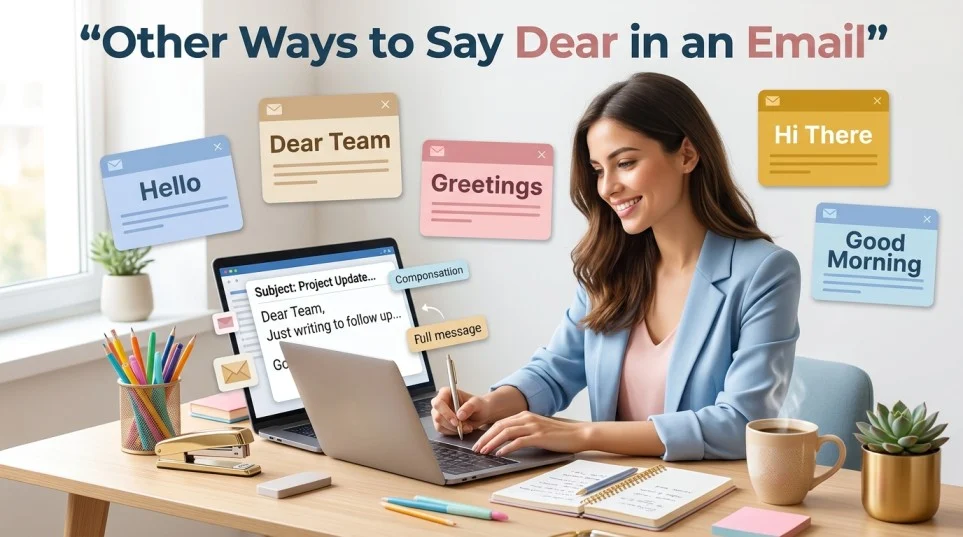
Looking for other ways to say dear in an email? You can use Hello, Hi, Greetings, Good morning, or Dear [Name] depending on your relationship with the recipient and the level of formality. Choosing the right email greeting helps you sound professional, polite, and confident.
Choosing the right greeting can make a meaningful difference in professional communication. Although “Dear” is a traditional way to begin an email, it may sometimes sound too formal, outdated, or less natural for everyday workplace conversations. Learning other ways to say dear in an email helps you create a welcoming first impression while matching your message to the recipient.
Whether you are contacting a colleague, client, manager, recruiter, or someone you have never met, the right opening sets the tone for your entire message. Some greetings communicate professionalism, while others create a friendly and approachable atmosphere. Understanding these differences can improve your email writing skills, strengthen business relationships, and help you communicate more naturally in English. This guide explores 30 useful alternatives with meanings, examples, and practical tips for choosing the right greeting.
Quick Categories
Formal alternatives to “Dear” in an email
- Greetings
- Good morning
- Good afternoon
- Dear Mr./Ms. [Last Name]
Pro Tips Box
Use formal greetings when contacting senior professionals, unfamiliar recipients, or people in official business situations.
Casual alternatives
- Hi [Name]
- Hello [Name]
- Hey [Name]
- Hi there
Pro Tips Box
Choose friendly greetings when communicating with colleagues or people you already know. Keep your tone respectful even in casual emails.
Professional alternatives
- Hello [Full Name]
- Good day
- Dear Hiring Manager
- To Whom It May Concern
Pro Tips Box
In professional emails, personalize your greeting whenever possible. Using someone’s name can make your message feel more thoughtful.
Informal expressions
- Morning [Name]
- Hey there
- Hello everyone
- Hi team
Pro Tips Box
Informal expressions in English work well with familiar colleagues and teams. Avoid overly casual greetings when writing to clients or senior executives.
“Your email greeting is your first impression in writing. Choose words that reflect both your personality and your professionalism.”
Common Mistakes
1. Using overly casual greetings in formal emails
Mistake: “Hey boss,”
Correct: “Good morning, Mr. Johnson,”
Why: Casual greetings may sound disrespectful when addressing unfamiliar senior professionals.
2. Using “To Whom It May Concern” unnecessarily
Mistake: “To Whom It May Concern,” when emailing someone whose name is available.
Correct: “Hello, Sarah,”
Why: Personalized greetings generally sound more natural and engaging.
3. Forgetting the recipient’s name
Mistake: “Dear,” without identifying the recipient.
Correct: “Dear Hiring Manager,”
Why: A complete greeting makes your message clearer and more professional.
4. Using “Hey” in every business email
Mistake: “Hey, I am contacting you regarding the contract.”
Correct: “Hello, I am contacting you regarding the contract.”
Why: “Hey” may sound too informal depending on the recipient and workplace culture.
5. Mixing greeting styles
Mistake: “Good morning Dear Sarah,”
Correct: “Good morning, Sarah,”
Why: Combining multiple greetings can make an email opening sound awkward or unnecessarily complicated.
What Does “Dear” Mean in an Email?
Dear is a traditional greeting used at the beginning of letters and emails to address someone politely and respectfully.
It functions as a salutation rather than a description of affection. Although the word can express emotional closeness in other contexts, in professional correspondence it usually communicates courtesy.
Grammar Explanation: Dear is commonly followed by a person’s name, title, or professional designation.
Example: “Dear Mr. Williams, I am writing to discuss the upcoming project.”
When to Use “Dear” in an Email
The word “Dear” is suitable in several communication situations:
- Formal business emails: When contacting clients, managers, or unfamiliar professionals.
- Job applications: When addressing recruiters or hiring managers.
- Official correspondence: When writing to institutions, organizations, or authorities.
- Personal emails: When writing to friends or relatives in a traditional style.
- Customer communication: When maintaining a polite and respectful tone.
Spoken vs. Written: “Dear” is primarily used in written communication. It is not a natural everyday spoken greeting.
Formal vs. Informal: It is generally formal or semi-formal, although its suitability depends on the recipient and communication culture.
Is It Professional or Polite to Say “Dear” in an Email?
Polite? ✔️ Yes
Professional? ✔️ Yes
“Dear” remains a polite and professionally acceptable email greeting. However, in modern workplaces, alternatives such as “Hello” and “Hi” are also widely used.
Business-style example:
“Dear Ms. Anderson,
I hope you are doing well. I am writing to follow up on our recent discussion.”
For a more conversational workplace email, you could write:
“Hello Ms. Anderson,
I wanted to follow up on our recent discussion.”
Both options are respectful, but the second may sound more conversational.
Pros and Cons of Using “Dear” in an Email
Pros
- Simple and natural: It is a familiar email greeting.
- Friendly tone: It can communicate warmth and courtesy.
- Common usage: It is widely recognized in professional correspondence.
- Easy to understand: It works across many written communication situations.
Cons
- Too formal for some workplaces: It may sound traditional in casual office environments.
- Overused: Repeating it in every email can make communication feel routine.
- Limited emotional range: It may not communicate a particularly friendly or conversational tone.
- Not suitable for every situation: Some quick messages may sound more natural with “Hi” or “Hello.”
“Professional English is not always about using formal words. It is about choosing the right words for the right audience.”
Other Ways to Say Dear in an Email With Examples
These alternatives will help you sound more fluent, confident, and natural in different professional situations.
Use them according to tone, context, and audience to create effective professional greetings and stronger email openings.
1. Phrase: Hello [Name]
Meaning: A polite and friendly way to address someone.
Explanation: This greeting works in professional and everyday emails without sounding overly formal.
Example Sentence: “Hello Sarah, I wanted to share the updated project details.”
Best Use: Professional emails
Worst Use: Very formal letters
Tone: Friendly, professional, neutral
Context Variability: Casual: “Hello, Sarah!” Professional: “Hello, Ms. Smith.” Spoken: “Hello, how are you?”
2. Phrase: Hi [Name]
Meaning: A friendly and approachable greeting.
Explanation: It is one of the most natural alternatives for everyday workplace communication.
Example Sentence: “Hi James, thank you for sending the report.”
Best Use: Workplace emails
Worst Use: Formal applications
Tone: Friendly, casual, polite
Context Variability: Casual: “Hi, James!” Professional: “Hi James, regarding the meeting…” Spoken: “Hi, how are you?”
3. Phrase: Greetings
Meaning: A polite expression used to welcome or address someone.
Explanation: This greeting is suitable when you want a neutral opening without using a person’s name.
Example Sentence: “Greetings, I am contacting you regarding your recent inquiry.”
Best Use: Formal correspondence
Worst Use: Friendly conversations
Tone: Formal, neutral, respectful
Context Variability: Casual: “Greetings, everyone.” Professional: “Greetings, Mr. Brown.” Spoken: “Greetings and welcome.”
4. Phrase: Good Morning [Name]
Meaning: A polite greeting used during the morning.
Explanation: It creates a warm and professional opening for business communication.
Example Sentence: “Good morning, Emily. I hope your day is going well.”
Best Use: Morning emails
Worst Use: Evening messages
Tone: Polite, warm, professional
Context Variability: Casual: “Good morning, Emily!” Professional: “Good morning, Mr. Davis.” Spoken: “Good morning, everyone.”
5. Phrase: Good Afternoon [Name]
Meaning: A courteous greeting used during the afternoon.
Explanation: It is a suitable alternative when starting a formal or professional afternoon email.
Example Sentence: “Good afternoon, Mr. Wilson. I am following up on your request.”
Best Use: Business correspondence
Worst Use: Morning emails
Tone: Formal, courteous, professional
Context Variability: Casual: “Good afternoon, everyone.” Professional: “Good afternoon, Ms. Taylor.” Spoken: “Good afternoon, how can I help?”
6. Phrase: Good Evening [Name]
Meaning: A respectful greeting used during the evening.
Explanation: It works when sending messages later in the day, especially in formal communication.
Example Sentence: “Good evening, Dr. Miller. Thank you for your response.”
Best Use: Evening correspondence
Worst Use: Morning messages
Tone: Respectful, formal, warm
Context Variability: Casual: “Good evening!” Professional: “Good evening, Dr. Miller.” Spoken: “Good evening, everyone.”
7. Phrase: Hi There
Meaning: A friendly greeting that does not require a person’s name.
Explanation: This expression is useful for approachable and informal professional communication.
Example Sentence: “Hi there, I wanted to ask about the available appointment times.”
Best Use: Casual emails
Worst Use: Official letters
Tone: Friendly, relaxed, approachable
Context Variability: Casual: “Hi there!” Professional: “Hi there, I am following up on your inquiry.” Spoken: “Hi there, how’s it going?”
8. Phrase: Hello There
Meaning: A warm and conversational way to greet someone.
Explanation: It sounds welcoming and works in friendly correspondence.
Example Sentence: “Hello there, I hope everything is going smoothly.”
Best Use: Friendly communication
Worst Use: Strictly formal emails
Tone: Warm, conversational, friendly
Context Variability: Casual: “Hello there!” Professional: “Hello there, thank you for reaching out.” Spoken: “Hello there, nice to meet you.”
9. Phrase: Dear Mr. [Last Name]
Meaning: A traditional formal greeting addressed to a man.
Explanation: It is appropriate when the recipient’s professional title and surname are known.
Example Sentence: “Dear Mr. Johnson, I am writing to request further information.”
Best Use: Formal letters
Worst Use: Casual messages
Tone: Respectful, traditional, formal
Context Variability: Casual: “Hello, Mr. Johnson.” Professional: “Dear Mr. Johnson.” Spoken: “Good morning, Mr. Johnson.”
10. Phrase: Dear Ms. [Last Name]
Meaning: A formal greeting used to address a woman.
Explanation: It is a respectful option when the recipient’s surname is known and their preferred title is appropriate.
Example Sentence: “Dear Ms. Roberts, thank you for considering my application.”
Best Use: Official emails
Worst Use: Informal chats
Tone: Formal, respectful, courteous
Context Variability: Casual: “Hi, Ms. Roberts.” Professional: “Dear Ms. Roberts.” Spoken: “Good morning, Ms. Roberts.”
11. Phrase: Dear Hiring Manager
Meaning: A formal greeting for the person responsible for recruitment.
Explanation: It is useful when applying for a job and the recruiter’s name is unavailable.
Example Sentence: “Dear Hiring Manager, I am excited to apply for the marketing position.”
Best Use: Job applications
Worst Use: Personal emails
Tone: Formal, professional, respectful
Context Variability: Casual: “Hello, Hiring Manager.” Professional: “Dear Hiring Manager.” Spoken: “Good morning, Hiring Manager.”
12. Phrase: To Whom It May Concern
Meaning: A formal greeting for an unknown recipient.
Explanation: It is generally reserved for official correspondence when identifying a specific recipient is not possible.
Example Sentence: “To Whom It May Concern, I am writing to request verification of my employment.”
Best Use: Official documents
Worst Use: Personalized emails
Tone: Formal, traditional, impersonal
Context Variability: Casual: “Hello.” Professional: “To Whom It May Concern.” Spoken: Rarely used.
13. Phrase: Dear Team
Meaning: A polite greeting addressed to a group of colleagues.
Explanation: It works well when communicating with an entire department or project team.
Example Sentence: “Dear Team, please review the updated project schedule.”
Best Use: Group emails
Worst Use: One-to-one messages
Tone: Professional, respectful, inclusive
Context Variability: Casual: “Hi team!” Professional: “Dear Team.” Spoken: “Good morning, team.”
14. Phrase: Hi Team
Meaning: A friendly greeting directed toward a group.
Explanation: It is common in modern workplaces and creates an approachable communication style.
Example Sentence: “Hi Team, I have attached the revised presentation.”
Best Use: Team updates
Worst Use: Formal applications
Tone: Friendly, professional, conversational
Context Variability: Casual: “Hey team!” Professional: “Hi Team.” Spoken: “Hi, team!”
15. Phrase: Hello Everyone
Meaning: A general greeting for multiple recipients.
Explanation: This phrase is useful when sending announcements or updates to a group.
Example Sentence: “Hello everyone, I would like to share an important update.”
Best Use: Group announcements
Worst Use: Personal messages
Tone: Warm, neutral, inclusive
Context Variability: Casual: “Hi everyone!” Professional: “Hello everyone.” Spoken: “Hello, everyone.”
16. Phrase: Good Day
Meaning: A polite and general greeting.
Explanation: It can be used in professional communication, although its naturalness varies across English-speaking regions.
Example Sentence: “Good day, I am writing to confirm your appointment.”
Best Use: Formal correspondence
Worst Use: Casual texting
Tone: Polite, formal, neutral
Context Variability: Casual: “Good day!” Professional: “Good day, Mr. Smith.” Spoken: “Good day to you.”
17. Phrase: Morning [Name]
Meaning: A shortened, friendly version of “Good morning.”
Explanation: This greeting is suitable for familiar colleagues in relaxed workplace environments.
Example Sentence: “Morning, Alex. Have you had a chance to review the proposal?”
Best Use: Team communication
Worst Use: Formal applications
Tone: Casual, friendly, relaxed
Context Variability: Casual: “Morning, Alex!” Professional: “Good morning, Alex.” Spoken: “Morning, everyone.”
18. Phrase: Hello [Full Name]
Meaning: A polite greeting using the recipient’s complete name.
Explanation: It provides a professional opening when you want to avoid assumptions about someone’s title.
Example Sentence: “Hello Sarah Johnson, I am contacting you about the upcoming interview.”
Best Use: First contact
Worst Use: Very casual messages
Tone: Neutral, professional, respectful
Context Variability: Casual: “Hi Sarah.” Professional: “Hello Sarah Johnson.” Spoken: “Hello, Sarah Johnson.”
19. Phrase: Dear Colleague
Meaning: A respectful greeting addressed to a fellow professional.
Explanation: It is useful in formal workplace communication when writing to someone whose name is unknown or not specified.
Example Sentence: “Dear Colleague, I would like to share the latest departmental updates.”
Best Use: Formal workplace emails
Worst Use: Close colleagues
Tone: Formal, respectful, professional
Context Variability: Casual: “Hi colleague.” Professional: “Dear Colleague.” Spoken: “Hello, colleague.”
20. Phrase: Dear Customer
Meaning: A formal greeting addressed to a customer.
Explanation: It can be used in customer service messages when a personalized name is unavailable, although using the customer’s name is often more natural.
Example Sentence: “Dear Customer, thank you for contacting our support team.”
Best Use: Customer service
Worst Use: Personal emails
Tone: Formal, courteous, professional
Context Variability: Casual: “Hi there.” Professional: “Dear Customer.” Spoken: “Hello, valued customer.”
21. Phrase: Dear Sir or Madam
Meaning: A traditional formal greeting for an unidentified recipient.
Explanation: It is used in official correspondence when the recipient’s name and gender are unknown.
Example Sentence: “Dear Sir or Madam, I am writing to request information about your services.”
Best Use: Formal letters
Worst Use: Modern casual emails
Tone: Traditional, formal, respectful
Context Variability: Casual: “Hello.” Professional: “Dear Sir or Madam.” Spoken: Rarely used.
22. Phrase: Hello [Title and Name]
Meaning: A professional greeting using someone’s title and name.
Explanation: This phrase is appropriate when addressing professionals such as doctors, professors, or executives.
Example Sentence: “Hello Dr. Williams, thank you for reviewing my application.”
Best Use: Professional introductions
Worst Use: Casual friendships
Tone: Respectful, polished, professional
Context Variability: Casual: “Hi Dr. Williams.” Professional: “Hello Dr. Williams.” Spoken: “Good morning, Dr. Williams.”
23. Phrase: Dear Professor [Last Name]
Meaning: A respectful academic greeting addressed to a professor.
Explanation: It is particularly suitable for university emails and academic correspondence.
Example Sentence: “Dear Professor Anderson, I have a question regarding the upcoming assignment.”
Best Use: Academic emails
Worst Use: Casual conversations
Tone: Formal, respectful, academic
Context Variability: Casual: “Hello Professor.” Professional: “Dear Professor Anderson.” Spoken: “Good morning, Professor Anderson.”
24. Phrase: Hi All
Meaning: A brief greeting addressed to everyone in an email group.
Explanation: This expression is common in workplace communication, particularly when sending quick updates.
Example Sentence: “Hi all, please find the meeting notes attached.”
Best Use: Group updates
Worst Use: Formal applications
Tone: Casual, concise, friendly
Context Variability: Casual: “Hey all!” Professional: “Hi all.” Spoken: “Hi, everyone.”
25. Phrase: Hello Colleagues
Meaning: A professional greeting addressed to coworkers or professional peers.
Explanation: It is suitable for group communication when you want to sound respectful and inclusive.
Example Sentence: “Hello colleagues, I would like to discuss the new workplace guidelines.”
Best Use: Professional groups
Worst Use: Personal emails
Tone: Formal, inclusive, respectful
Context Variability: Casual: “Hi everyone.” Professional: “Hello colleagues.” Spoken: “Hello, colleagues.”
26. Phrase: Hey [Name]
Meaning: A relaxed and friendly way to address someone.
Explanation: It is suitable for familiar coworkers or friends but may be too casual for first contact.
Example Sentence: “Hey Daniel, could you send me the updated document?”
Best Use: Familiar colleagues
Worst Use: Formal clients
Tone: Relaxed, friendly, informal
Context Variability: Casual: “Hey Daniel!” Professional: “Hi Daniel.” Spoken: “Hey, how are you?”
27. Phrase: Hey There
Meaning: An informal greeting that creates a friendly atmosphere.
Explanation: It is commonly used in relaxed communication when the recipient is familiar.
Example Sentence: “Hey there, just checking whether you received my previous email.”
Best Use: Casual emails
Worst Use: Official correspondence
Tone: Warm, relaxed, informal
Context Variability: Casual: “Hey there!” Professional: “Hello there.” Spoken: “Hey there, what’s up?”
28. Phrase: Dear [First Name]
Meaning: A polite greeting using someone’s first name.
Explanation: It combines a traditional salutation with a more personal approach.
Example Sentence: “Dear Emily, thank you for your thoughtful response.”
Best Use: Semi-formal emails
Worst Use: Very casual chats
Tone: Polite, warm, semi-formal
Context Variability: Casual: “Hi Emily.” Professional: “Dear Emily.” Spoken: “Hello, Emily.”
29. Phrase: Welcome [Name]
Meaning: A greeting used to acknowledge someone joining a conversation, group, or organization.
Explanation: It is more suitable for welcoming someone than replacing “Dear” in a standard email.
Example Sentence: “Welcome, Michael. We are pleased to have you join our team.”
Best Use: Welcome emails
Worst Use: Routine correspondence
Tone: Warm, encouraging, professional
Context Variability: Casual: “Welcome aboard, Michael!” Professional: “Welcome, Michael.” Spoken: “Welcome to the team.”
30. Phrase: Hello and Welcome
Meaning: A warm greeting that welcomes someone into a new environment or interaction.
Explanation: This phrase is useful for introductory emails, onboarding messages, and group communication.
Example Sentence: “Hello and welcome to our program. We are delighted to have you with us.”
Best Use: Introductory emails
Worst Use: Routine follow-ups
Tone: Warm, professional, welcoming
Context Variability: Casual: “Hi and welcome!” Professional: “Hello and welcome to our organization.” Spoken: “Hello and welcome, everyone.”
“A personalized greeting can make even a short professional email feel more thoughtful and approachable.”
Mini Quiz / Self-Check
Test your understanding of professional email greetings with these quick questions.
1. Which greeting is most appropriate for a formal job application when the recruiter’s name is unknown?
A. Hey there B. Dear Hiring Manager C. Hi buddy D. Morning
Correct Answer: B. Dear Hiring Manager
2. Which greeting sounds most natural when emailing a familiar colleague?
A. To Whom It May Concern B. Dear Sir or Madam C. Hi Sarah D. Dear Respected Person
Correct Answer: C. Hi Sarah
3. You are emailing a professor about an assignment. Which greeting is appropriate?
A. Hey professor B. Dear Professor Anderson C. What’s up, Professor? D. Hi buddy
Correct Answer: B. Dear Professor Anderson
4. Which greeting is most suitable for a group of coworkers?
A. Dear Unknown Person B. Hi Team C. Dear Sir D. To Whom It May Concern
Correct Answer: B. Hi Team
Comparison Table: Top Alternatives
| Phrase | Tone | Best Use |
|---|---|---|
| Hello [Name] | Professional, friendly | Business emails |
| Hi [Name] | Casual, polite | Workplace communication |
| Greetings | Formal, neutral | Official correspondence |
| Good Morning [Name] | Warm, professional | Morning emails |
| Dear Hiring Manager | Formal, respectful | Job applications |
| Hello Everyone | Friendly, inclusive | Group announcements |
| Dear [First Name] | Semi-formal, warm | Professional relationships |
| Good Afternoon [Name] | Polite, formal | Business correspondence |
| Hi Team | Friendly, professional | Team updates |
| To Whom It May Concern | Traditional, formal | Official letters |
FAQs
1. What are the best alternatives to dear in an email?
Popular alternatives include Hello, Hi, Greetings, Good morning, and Dear [First Name]. The best option depends on your relationship with the recipient and the formality of your message.
2. What is a professional way to start an email without saying dear?
You can start with “Hello [Name],” or “Good morning, [Name].” Both greetings sound professional while maintaining a friendly and natural tone.
3. Is it okay to use Hi instead of Dear in a business email?
Yes. “Hi” is widely accepted in modern workplace communication, particularly when addressing colleagues, clients, or people you already know.
4. What should I write instead of dear when I do not know someone’s name?
You can use “Dear Hiring Manager,” “Greetings,” or “To Whom It May Concern.” However, identifying the recipient’s actual name is preferable whenever possible.
5. What is the most polite email greeting for a professional?
“Dear [Title and Last Name]” is a traditional polite greeting. “Hello [Name]” is another respectful option that sounds natural in contemporary professional communication.
Conclusion
Learning other ways to say dear in an email helps you communicate more effectively across professional and personal situations. From traditional greetings like “Dear Mr. Johnson” to modern expressions like “Hello Sarah” and “Hi Team,” each alternative creates a different impression. Understanding these differences allows you to choose greetings that reflect your purpose and relationship with the recipient.
Practice using these expressions in your everyday emails to develop stronger English communication skills. Pay attention to your audience, workplace culture, and level of formality. A thoughtful greeting may seem like a small detail, but it can make your emails sound more polished, respectful, and approachable.
Read More Related Articles:
- Other Ways to Say Especially | 30+ Fresh Alternatives for …
- Other Ways to Say Problem Solver | Smart, Professional …
- Ways to Say Bye in Other Languages | Global Goodbye Guide …

Emma Richardson is a professional content writer at Replynst.com. She creates clear, engaging and well-researched content designed to answer readers’ questions while following modern SEO best practices. Her focus is on helpful, reader-friendly articles that deliver genuine value.