Quick Answer:
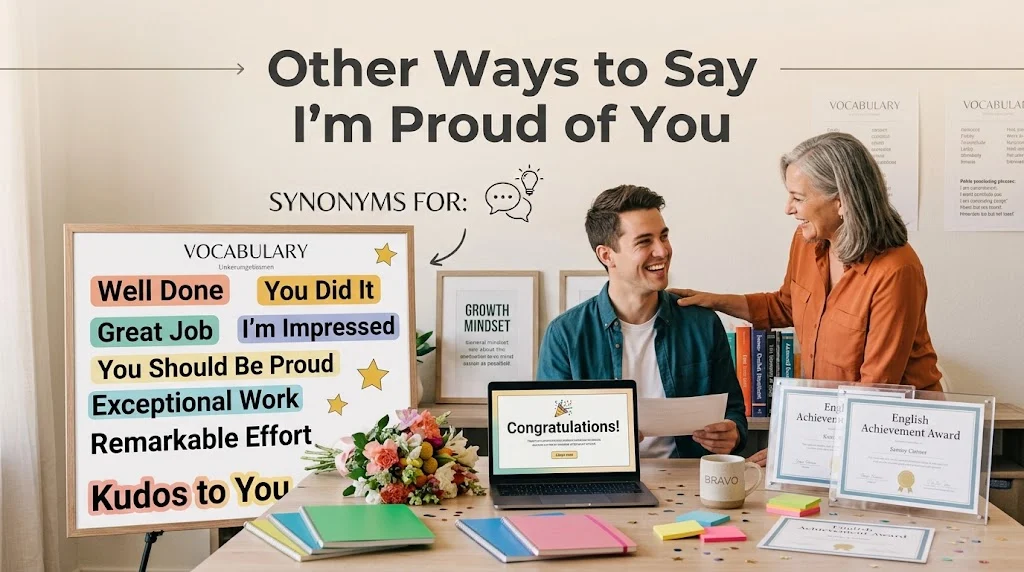
The best alternatives to I’m proud of you include You did an amazing job, You should be proud of yourself, I’m impressed by you, You’ve come so far, and You did incredibly well. The right phrase depends on your relationship, the achievement, and whether you want to sound warm, professional, emotional, or casual.
Knowing other ways to say I’m proud of you can help you express appreciation, encouragement, and admiration more naturally. Although “I’m proud of you” is warm and common, repeating the same phrase can sometimes make your communication feel predictable. Learning different expressions gives you more ways to celebrate someone’s success and recognize their effort.
Whether you are congratulating a friend, encouraging a child, supporting a colleague, or praising someone you love, choosing the right words makes your message more meaningful. These alternatives to I’m proud of you can help you sound sincere without becoming repetitive. Just as learners practice how to express excitement in English, understanding different praise phrases helps you communicate positive emotions with confidence, warmth, and precision.
Quick Categories
Formal alternatives to “I’m proud of you”
- I’m very impressed with your achievement
- Your accomplishment is truly commendable
- You have done an excellent job
- Your dedication is admirable
Pro Tip: Use specific praise in formal settings by connecting the compliment to an achievement, effort, or professional result.
Casual alternatives
- You did an amazing job
- You absolutely nailed it
- You’ve come so far
- I’m really impressed
Pro Tip: Casual praise sounds most natural when it matches the closeness of your relationship and the size of the achievement.
Professional alternatives
- Excellent work
- Your effort really shows
- You should be proud of this accomplishment
- Your progress has been remarkable
Pro Tip: In professional communication, focus on results, contribution, progress, or dedication rather than using overly personal language.
Informal expressions
- You crushed it
- You did great
- Look at you go
- You’ve got every reason to celebrate
Pro Tip: Informal expressions in English work best with friends, family members, and people you know well.
“The most meaningful praise does more than celebrate success. It shows that you noticed the effort behind it.”
Common Mistakes
1. Using “I’m proud of you” for every situation
Mistake: “I’m proud of you” after every small accomplishment.
Better: “You handled that really well.”
Why: Specific praise can sound more genuine than repeating the same expression.
2. Making praise too vague
Mistake: “Good job.”
Better: “You did a great job explaining that presentation.”
Why: Specific compliments show that you noticed what the person actually achieved.
3. Using very casual praise in professional settings
Mistake: “You crushed it!” in a formal performance review.
Better: “Your presentation was excellent.”
Why: Professional communication usually benefits from clear and appropriate language.
4. Praising only the final result
Mistake: “You passed, so I’m proud of you.”
Better: “Your hard work really paid off. You should be proud of yourself.”
Why: Recognizing effort can make encouragement more meaningful.
5. Making the compliment about yourself
Mistake: “I’m proud because you made me look good.”
Better: “You worked incredibly hard, and it shows.”
Why: Effective praise should focus on the person’s achievement or growth.
What Does “I’m Proud of You” Mean?
I’m proud of you means that you feel pleased, impressed, or deeply satisfied because of someone’s achievement, effort, progress, behavior, or personal growth.
The expression usually communicates admiration, encouragement, affection, or approval. It can be used for major achievements, such as graduating, as well as personal progress, such as overcoming a difficult challenge.
Grammatically, I’m is the contraction of I am, while proud is an adjective followed by the preposition of.
Example: “You worked hard for this opportunity, and I’m proud of you.”
When to Use “I’m Proud of You”
You can use this phrase in many situations:
- After an achievement: When someone reaches an important goal.
- After personal growth: When someone makes meaningful progress.
- During difficult moments: When someone handles a challenge courageously.
- With family: Parents, siblings, and relatives often use it to show support.
- With friends: It can communicate genuine happiness about a friend’s progress.
- In romantic relationships: It can express affection and admiration.
- With students: Teachers can use it when recognizing effort or improvement.
Spoken vs. Written: The phrase is natural in both spoken and written English.
Formal vs. Informal: It is emotionally warm and widely understood, but some professional contexts may benefit from more achievement-focused alternatives.
Is It Professional or Polite to Say “I’m Proud of You”?
Polite? ✔️ Yes
Professional? ✔️ Sometimes
The phrase is positive and respectful, but in a workplace setting, the relationship between the speakers matters. A manager may prefer phrases such as Your work has been excellent or Your progress has been impressive because they focus directly on professional performance.
Business-style example: “Your dedication to this project has been impressive, and your hard work has clearly paid off.”
For a close colleague, mentor, or employee, the phrase can be appropriate when the relationship supports a warmer tone.
Pros and Cons of Using “I’m Proud of You”
Pros
- Simple and natural: The meaning is immediately clear.
- Warm tone: It communicates genuine positive emotion.
- Common usage: Native speakers frequently use it to celebrate achievements.
- Easy to understand: English learners can use it confidently in many personal situations.
Cons
- Can sound repetitive: Using it for every accomplishment may reduce its impact.
- Sometimes too personal: It may not fit every professional relationship.
- Can sound parental: Depending on the relationship, it may feel like praise from a parent or authority figure.
- Limited emotional range: It does not always explain exactly what impressed you.
“Specific praise often feels more powerful because it tells people exactly what you noticed.”
Other Ways to Say “I’m Proud of You” With Examples
These alternatives will help you sound more fluent, confident, and natural in different situations.
Use them according to tone, context, and audience to express encouragement, admiration, approval, or appreciation.
1. Phrase: You Did an Amazing Job
Meaning: You performed exceptionally well.
Explanation: This is a warm and natural way to praise someone’s performance.
Example Sentence: “You did an amazing job on your presentation today.”
Best Use: Personal encouragement
Worst Use: Formal evaluation
Tone: Warm, positive, enthusiastic
Context Variability: Casual: “You did an amazing job!” Professional: “You did an excellent job on the presentation.” Spoken: “You did an amazing job today.”
2. Phrase: You Should Be Proud of Yourself
Meaning: You have achieved something worthy of personal satisfaction.
Explanation: This phrase encourages someone to recognize their own effort and progress.
Example Sentence: “You worked through every challenge, and you should be proud of yourself.”
Best Use: Personal growth
Worst Use: Casual teasing
Tone: Encouraging, supportive, sincere
Context Variability: Casual: “You should be proud of yourself.” Professional: “You should be proud of this accomplishment.” Spoken: “You really should be proud of yourself.”
3. Phrase: I’m Really Impressed
Meaning: You have made a strong positive impression.
Explanation: This is a flexible expression that works well when someone has exceeded expectations.
Example Sentence: “I’m really impressed by how confidently you handled that situation.”
Best Use: Genuine praise
Worst Use: Minor mistakes
Tone: Positive, sincere, confident
Context Variability: Casual: “I’m really impressed!” Professional: “I’m very impressed with your work.” Spoken: “I’m really impressed with you.”
4. Phrase: You’ve Come So Far
Meaning: You have made significant progress from where you started.
Explanation: This phrase is especially meaningful when praising personal development or long-term effort.
Example Sentence: “You’ve come so far since you started learning English.”
Best Use: Personal growth
Worst Use: First achievement
Tone: Warm, reflective, encouraging
Context Variability: Casual: “Look how far you’ve come!” Professional: “Your progress has been remarkable.” Spoken: “You’ve really come so far.”
5. Phrase: You Did Incredibly Well
Meaning: You performed exceptionally well.
Explanation: This phrase offers strong praise without sounding overly emotional.
Example Sentence: “You did incredibly well in the interview.”
Best Use: Major achievement
Worst Use: Serious criticism
Tone: Positive, confident, encouraging
Context Variability: Casual: “You did incredibly well!” Professional: “You performed exceptionally well.” Spoken: “You did incredibly well today.”
6. Phrase: You’ve Done an Excellent Job
Meaning: Your performance has been very good.
Explanation: This phrase is professional enough for workplace situations while remaining warm.
Example Sentence: “You’ve done an excellent job managing the project.”
Best Use: Professional praise
Worst Use: Casual teasing
Tone: Professional, positive, respectful
Context Variability: Casual: “You did a great job.” Professional: “You’ve done an excellent job.” Spoken: “You’ve done an excellent job with this.”
7. Phrase: Your Hard Work Has Paid Off
Meaning: Your effort has produced a successful result.
Explanation: This expression recognizes both the person’s effort and the outcome.
Example Sentence: “You studied consistently for months, and your hard work has paid off.”
Best Use: Long-term effort
Worst Use: Instant results
Tone: Encouraging, sincere, rewarding
Context Variability: Casual: “Your hard work paid off!” Professional: “Your sustained effort has clearly paid off.” Spoken: “All your hard work has paid off.”
8. Phrase: You’ve Earned This
Meaning: You deserve the achievement or recognition because of your effort.
Explanation: This phrase emphasizes that success is the result of meaningful work.
Example Sentence: “After everything you have accomplished, you’ve earned this promotion.”
Best Use: Major milestone
Worst Use: Minor favor
Tone: Supportive, confident, affirming
Context Variability: Casual: “You’ve earned this!” Professional: “You have certainly earned this recognition.” Spoken: “You’ve really earned this.”
9. Phrase: I’m So Impressed by Your Progress
Meaning: Your improvement has made a strong positive impression.
Explanation: This is particularly useful when praising learning, development, or gradual improvement.
Example Sentence: “I’m so impressed by your progress with your English.”
Best Use: Progress recognition
Worst Use: One-time success
Tone: Warm, encouraging, sincere
Context Variability: Casual: “I’m so impressed by your progress.” Professional: “I’m very impressed by your progress.” Spoken: “I’m really impressed with how far you’ve come.”
10. Phrase: Your Effort Really Shows
Meaning: The quality of your work demonstrates how much effort you invested.
Explanation: This phrase praises dedication without focusing only on the final result.
Example Sentence: “Your effort really shows in the quality of this project.”
Best Use: Workplace praise
Worst Use: Unfinished work
Tone: Professional, positive, sincere
Context Variability: Casual: “Your effort really shows.” Professional: “Your dedication is evident in the final result.” Spoken: “Your effort really shows.”
11. Phrase: You Should Feel Good About What You’ve Achieved
Meaning: Your achievement is worthy of personal satisfaction.
Explanation: This is a thoughtful alternative that encourages self-recognition.
Example Sentence: “You should feel good about what you’ve achieved this year.”
Best Use: Personal milestones
Worst Use: Routine tasks
Tone: Warm, thoughtful, encouraging
Context Variability: Casual: “You should feel good about this.” Professional: “You should be pleased with this accomplishment.” Spoken: “You should feel really good about what you achieved.”
12. Phrase: You’ve Made Me So Happy
Meaning: Someone’s success or behavior has brought you happiness.
Explanation: This phrase focuses more on your emotional response than directly evaluating their achievement.
Example Sentence: “Seeing you graduate has made me so happy.”
Best Use: Family moments
Worst Use: Professional feedback
Tone: Emotional, warm, affectionate
Context Variability: Casual: “You’ve made me so happy!” Professional: “It was wonderful to see the team succeed.” Spoken: “You’ve made me so happy.”
13. Phrase: I’m So Happy for You
Meaning: You genuinely feel happy because someone else succeeded.
Explanation: This is a natural expression for celebrating another person’s good news.
Example Sentence: “You got the promotion? I’m so happy for you!”
Best Use: Celebrating success
Worst Use: Performance review
Tone: Warm, joyful, supportive
Context Variability: Casual: “I’m so happy for you!” Professional: “Congratulations on your well-deserved promotion.” Spoken: “I’m really happy for you.”
14. Phrase: You’ve Made Great Progress
Meaning: You have improved significantly.
Explanation: This phrase is especially useful for students, employees, and people developing new skills.
Example Sentence: “You’ve made great progress with your communication skills.”
Best Use: Skill development
Worst Use: No improvement
Tone: Professional, encouraging, positive
Context Variability: Casual: “You’ve made great progress.” Professional: “You have made significant progress.” Spoken: “You’ve made so much progress.”
15. Phrase: Your Achievement Is Remarkable
Meaning: Your accomplishment is unusually impressive.
Explanation: This formal phrase is suitable for significant accomplishments and written praise.
Example Sentence: “Your achievement is remarkable, especially given the challenges you faced.”
Best Use: Formal praise
Worst Use: Small tasks
Tone: Formal, admiring, respectful
Context Variability: Casual: “That’s an amazing achievement.” Professional: “Your achievement is remarkable.” Spoken: “Your achievement is truly remarkable.”
16. Phrase: Your Dedication Is Admirable
Meaning: Your commitment and persistence deserve respect.
Explanation: This phrase praises the effort behind a person’s success.
Example Sentence: “Your dedication to helping the team is admirable.”
Best Use: Professional recognition
Worst Use: Brief effort
Tone: Formal, respectful, appreciative
Context Variability: Casual: “I really admire your dedication.” Professional: “Your dedication is admirable.” Spoken: “I really admire your dedication.”
17. Phrase: You Deserve This Success
Meaning: Your achievement is justified by your effort or qualities.
Explanation: This expression directly recognizes someone’s right to celebrate a positive outcome.
Example Sentence: “You worked for this opportunity for years, and you deserve this success.”
Best Use: Major achievement
Worst Use: Uncertain outcome
Tone: Supportive, confident, sincere
Context Variability: Casual: “You deserve this!” Professional: “You deserve this recognition.” Spoken: “You absolutely deserve this success.”
18. Phrase: You’ve Done Yourself Proud
Meaning: Your actions or achievement are worthy of personal pride.
Explanation: This expression is especially natural in British English and can sound warm and encouraging.
Example Sentence: “You stayed focused throughout the competition and did yourself proud.”
Best Use: Major achievement
Worst Use: Formal report
Tone: Warm, encouraging, conversational
Context Variability: Casual: “You did yourself proud!” Professional: “Your performance was excellent.” Spoken: “You really did yourself proud.”
19. Phrase: I Admire What You’ve Accomplished
Meaning: You respect and appreciate someone’s achievement.
Explanation: This phrase expresses admiration while keeping the focus on the person’s accomplishment.
Example Sentence: “I admire what you’ve accomplished through such consistent effort.”
Best Use: Sincere praise
Worst Use: Casual joke
Tone: Respectful, warm, thoughtful
Context Variability: Casual: “I really admire what you’ve done.” Professional: “I admire what you have accomplished.” Spoken: “I really admire what you’ve accomplished.”
20. Phrase: You’re Doing an Amazing Job
Meaning: You are currently performing very well.
Explanation: Unlike praise for a completed achievement, this phrase encourages someone while they are still working.
Example Sentence: “Keep going. You’re doing an amazing job.”
Best Use: Ongoing encouragement
Worst Use: Completed failure
Tone: Warm, motivating, positive
Context Variability: Casual: “You’re doing an amazing job!” Professional: “You’re doing an excellent job.” Spoken: “You’re doing such a great job.”
21. Phrase: I Knew You Could Do It
Meaning: You believed the person was capable of succeeding.
Explanation: This phrase communicates confidence and happiness after someone achieves a goal.
Example Sentence: “You passed the exam! I knew you could do it.”
Best Use: Celebrating success
Worst Use: Unexpected failure
Tone: Encouraging, confident, affectionate
Context Variability: Casual: “I knew you could do it!” Professional: “I knew you were capable of achieving this.” Spoken: “I knew you could do it.”
22. Phrase: Look How Far You’ve Come
Meaning: You have made significant progress compared with the past.
Explanation: This expression highlights personal growth and is especially effective for long-term journeys.
Example Sentence: “Look how far you’ve come since your first day at work.”
Best Use: Personal growth
Worst Use: Immediate result
Tone: Warm, reflective, encouraging
Context Variability: Casual: “Look how far you’ve come!” Professional: “Your development has been remarkable.” Spoken: “Just look how far you’ve come.”
23. Phrase: You Absolutely Nailed It
Meaning: You performed something extremely well.
Explanation: This is a lively informal expression that communicates strong approval.
Example Sentence: “That presentation was fantastic. You absolutely nailed it.”
Best Use: Casual praise
Worst Use: Formal report
Tone: Energetic, informal, enthusiastic
Context Variability: Casual: “You nailed it!” Professional: “You delivered an excellent presentation.” Spoken: “You absolutely nailed it.”
24. Phrase: You Crushed It
Meaning: You performed extremely well.
Explanation: This informal expression is popular in conversational English and is best used with people you know well.
Example Sentence: “You crushed it at the competition today.”
Best Use: Friendly encouragement
Worst Use: Formal email
Tone: Energetic, casual, enthusiastic
Context Variability: Casual: “You crushed it!” Professional: “You performed exceptionally well.” Spoken: “You absolutely crushed it.”
25. Phrase: You’re an Inspiration
Meaning: Your actions motivate or encourage other people.
Explanation: This phrase is stronger than ordinary praise because it recognizes the influence someone’s behavior has on others.
Example Sentence: “Your determination throughout this journey is an inspiration.”
Best Use: Meaningful achievement
Worst Use: Minor task
Tone: Warm, admiring, uplifting
Context Variability: Casual: “You’re such an inspiration.” Professional: “Your dedication has been an inspiration to the team.” Spoken: “You’re an inspiration to all of us.”
26. Phrase: I’m Impressed by Your Determination
Meaning: Your persistence has earned admiration.
Explanation: This phrase focuses on the person’s resilience and continued effort.
Example Sentence: “I’m impressed by your determination to keep improving.”
Best Use: Long-term effort
Worst Use: Quick success
Tone: Respectful, encouraging, sincere
Context Variability: Casual: “I’m impressed by your determination.” Professional: “Your determination has been impressive.” Spoken: “I’m really impressed by your determination.”
27. Phrase: You’ve Earned My Respect
Meaning: Your actions have caused someone to respect you more.
Explanation: This phrase focuses on respect rather than emotional pride.
Example Sentence: “You handled that difficult situation with honesty. You’ve earned my respect.”
Best Use: Character praise
Worst Use: Small accomplishment
Tone: Serious, respectful, sincere
Context Variability: Casual: “You’ve earned my respect.” Professional: “Your professionalism has earned my respect.” Spoken: “You’ve definitely earned my respect.”
28. Phrase: I’m Proud of How Far You’ve Come
Meaning: Your development over time makes the speaker feel proud.
Explanation: This is a more specific and emotional variation of the original expression.
Example Sentence: “I’m proud of how far you’ve come since you started.”
Best Use: Personal growth
Worst Use: One-time event
Tone: Emotional, warm, supportive
Context Variability: Casual: “I’m so proud of how far you’ve come.” Professional: “I’m impressed by how much you’ve progressed.” Spoken: “I’m really proud of how far you’ve come.”
29. Phrase: You Have Every Reason to Celebrate
Meaning: Your achievement gives you a valid reason to feel happy and celebrate.
Explanation: This phrase encourages someone to recognize the importance of their success.
Example Sentence: “You completed the course after months of study. You have every reason to celebrate.”
Best Use: Major milestones
Worst Use: Minor progress
Tone: Positive, encouraging, celebratory
Context Variability: Casual: “You have every reason to celebrate!” Professional: “This achievement gives you every reason to celebrate.” Spoken: “You definitely have every reason to celebrate.”
30. Phrase: I’m Honored to See Your Growth
Meaning: You feel privileged to witness someone’s development.
Explanation: This is an emotional and thoughtful alternative that works especially well in meaningful personal relationships.
Example Sentence: “I’m honored to see your growth and everything you’ve accomplished.”
Best Use: Meaningful milestones
Worst Use: Routine tasks
Tone: Emotional, respectful, heartfelt
Context Variability: Casual: “I’m honored to see you grow.” Professional: “It has been rewarding to see your professional growth.” Spoken: “I’m honored to see how much you’ve grown.”
“Praise becomes more powerful when it recognizes the person, the effort, and the journey.”
Mini Quiz / Self-Check
1. Which phrase is most suitable for a professional email?
A. You crushed it!
B. You absolutely nailed it!
C. You’ve done an excellent job.
D. Look at you go!
Answer: C. You’ve done an excellent job.
2. Which phrase best emphasizes long-term personal growth?
A. You’ve come so far.
B. You crushed it.
C. Good job.
D. You did great.
Answer: A. You’ve come so far.
3. Which expression is most informal?
A. Your dedication is admirable.
B. Your achievement is remarkable.
C. You absolutely nailed it.
D. Your progress has been remarkable.
Answer: C. You absolutely nailed it.
4. Someone has worked for months to achieve a goal. Which phrase best recognizes their effort?
A. Your hard work has paid off.
B. Look at you go.
C. You have a stomach problem.
D. Good morning.
Answer: A. Your hard work has paid off.
Comparison Table: Top Alternatives
| Phrase | Tone | Best Use |
|---|---|---|
| You did an amazing job | Warm, positive | Personal encouragement |
| You should be proud of yourself | Supportive, sincere | Personal growth |
| I’m really impressed | Positive, confident | Genuine praise |
| You’ve come so far | Warm, reflective | Long-term progress |
| You did incredibly well | Encouraging, positive | Major achievement |
| You’ve done an excellent job | Professional, respectful | Workplace praise |
| Your hard work has paid off | Encouraging, sincere | Long-term effort |
| You’ve earned this | Supportive, affirming | Major milestones |
| Your dedication is admirable | Formal, respectful | Professional recognition |
| You absolutely nailed it | Casual, energetic | Informal praise |
FAQs
What are the best other ways to say I’m proud of you?
Natural alternatives include you did an amazing job, you should be proud of yourself, I’m really impressed, you’ve come so far, and your hard work has paid off.
How do you say I’m proud of you professionally?
In professional English, try you’ve done an excellent job, your dedication is admirable, your progress has been remarkable, or your effort really shows.
What is a heartfelt way to say I’m proud of you?
I’m proud of how far you’ve come, I admire what you’ve accomplished, and I’m honored to see your growth are heartfelt alternatives.
What can I say instead of I’m proud of you to a friend?
For a friend, natural choices include you absolutely nailed it, you did an amazing job, I’m so happy for you, and you’ve earned this.
Is “you should be proud of yourself” a good alternative to I’m proud of you?
Yes. It shifts the focus from the speaker’s feelings to the person’s own sense of achievement, making it especially useful for encouraging confidence and personal growth.
Conclusion
Learning other ways to say I’m proud of you gives you more flexibility when expressing encouragement, admiration, and appreciation. Instead of relying on one phrase, you can choose language that reflects the person’s achievement, effort, growth, or character.
Practice these alternatives in real conversations and messages. Pay attention to tone and context, especially when moving between personal and professional English. With regular practice, your praise will sound more natural, specific, and sincere.
Read More Related Articles:
- 30+ Other Ways to Say Demonstrate | Smart Alternatives for Clear …
- Other Ways to Say Especially | 30+ Fresh Alternatives for …
- Other Ways to Say Fuck |30+ Powerful Alternatives for Every …

Emma Richardson is a professional content writer at Replynst.com. She creates clear, engaging and well-researched content designed to answer readers’ questions while following modern SEO best practices. Her focus is on helpful, reader-friendly articles that deliver genuine value.