Quick Answer:
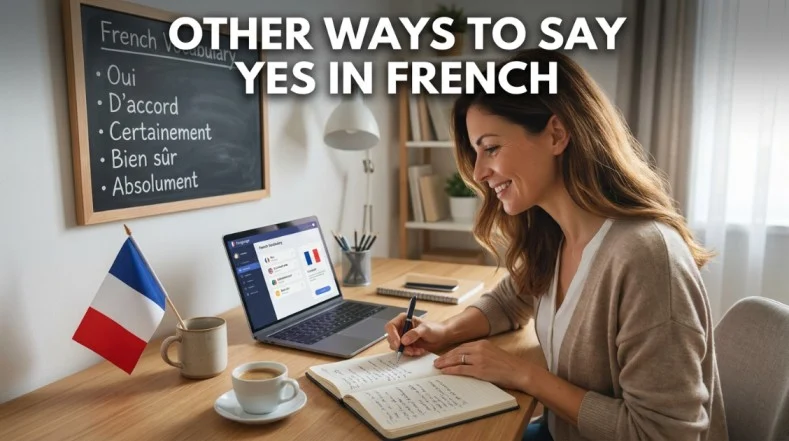
The best other ways to say yes in French include oui, absolument, bien sûr, d’accord, and avec plaisir. The right phrase depends on whether you want to agree, accept an invitation, show enthusiasm, or respond politely.
Learning other ways to say yes in French helps you sound more natural and confident in everyday conversations. While oui is the basic word for agreement, French speakers use many other phrases to show approval, acceptance, enthusiasm, or polite cooperation. Knowing these expressions can make your conversations feel warmer and more fluent.
These alternatives to yes in French are useful when speaking with friends, answering questions, accepting invitations, or communicating professionally. This guide explains 30 useful phrases, their meanings, and the situations where they work best. It also shows how to choose the right tone, just as you learn to express excitement in English.
Quick Categories
Formal alternatives to “yes” in French
- Certainement
- Absolument
- Tout à fait
- Je vous confirme que oui
Pro Tip: Use these expressions when you want to sound respectful, confident, and clear in formal conversations.
Casual alternatives
- Ouais
- Bien sûr
- D’accord
- Ça marche
Pro Tip: Casual phrases sound natural with friends, but choose a more formal expression when speaking to a client or senior colleague.
Professional alternatives
- Absolument
- Tout à fait
- Je suis d’accord
- Je vous confirme que oui
Pro Tip: Professional English and French both value clear agreement. Choose phrases that show cooperation without sounding too casual.
Informal expressions
- Carrément
- Grave
- Ouais, bien sûr
- Pas de souci
Pro Tip: Informal expressions in English and French can show enthusiasm, but they may not suit formal writing or workplace communication.
“A simple oui is useful, but the right expression can make your French sound much more natural.”
Common Mistakes
1. Using “ouais” in every situation
Mistake: “Ouais, monsieur, je suis d’accord.”
Better: “Oui, monsieur, je suis d’accord.”
Why: Ouais is casual and may sound too informal in respectful situations.
2. Confusing “d’accord” with “absolutely”
Mistake: “D’accord!” always means strong enthusiasm.
Better: Use absolument when you want to show strong agreement.
Why: D’accord often means “okay” or “I agree,” while absolument is stronger.
3. Using “bien sûr” when you mean “yes”
Mistake: “Bien sûr” always means a simple yes.
Better: Use oui for a basic answer and bien sûr when you want to sound reassuring.
Why: Bien sûr often adds warmth or confidence.
4. Saying “grave” in formal communication
Mistake: “Grave, je suis d’accord avec vous.”
Better: “Tout à fait, je suis d’accord avec vous.”
Why: Grave is informal slang and may sound inappropriate in professional settings.
5. Using “pas de souci” for every agreement
Mistake: “Pas de souci” when someone asks for a formal confirmation.
Better: “Je vous confirme que oui.”
Why: Pas de souci means “no problem” and is not always a direct or formal way to confirm agreement.
What Does “Yes” Mean in French?
The French word oui means “yes.” It is used to agree, answer a question positively, or show acceptance.
The word is an adverb and can stand alone or appear in a sentence. Other expressions may add meaning, such as enthusiasm, politeness, or certainty.
Example: “Oui, je suis d’accord.”
English: “Yes, I agree.”
When to Use “Yes” in French
You can use oui and its alternatives in several common situations:
- Everyday conversations: Answering questions or agreeing with friends.
- Accepting invitations: Showing that you would like to join someone.
- Professional communication: Confirming information or agreeing with a proposal.
- Polite conversations: Responding respectfully to someone.
- Written messages: Choosing a phrase that matches the tone of the message.
Spoken vs. Written: Oui works naturally in both spoken and written French.
Formal vs. Informal: Oui is neutral, while phrases such as ouais and grave are more casual.
Is It Professional or Polite to Say “Yes” in French?
Polite? ✔️ Yes
Professional? ✔️ Yes
Oui is polite and professional in most situations. However, the exact phrase you choose can make your response sound more formal, enthusiastic, or casual.
Business style example: “Oui, je vous confirme que la réunion est maintenue.”
For stronger agreement, absolument or tout à fait may sound more confident.
Pros and Cons of Using “Oui”
Pros
- Simple and natural: Easy to use in everyday conversations.
- Friendly tone: Sounds warm when spoken naturally.
- Common usage: Understood by all French speakers.
- Easy to understand: Clearly shows agreement.
Cons
- Too basic for strong agreement: It may not show enthusiasm.
- Overused: Repeating the same word can make conversations less varied.
- Limited emotional range: It does not always show excitement or certainty.
- Not suitable for every formal situation: Some contexts need a more precise response.
“The best French response depends on whether you want to agree, accept, reassure, or show enthusiasm.”
Other Ways to Say “Yes” in French With Examples
These alternatives will help you sound more fluent, confident, and natural in different situations.
Use them according to tone, context, and audience to express agreement, acceptance, excitement, or approval.
1. Phrase: Oui
Meaning: Yes.
Explanation: This is the basic and most common French word for agreement.
Example Sentence: “Oui, je suis d’accord.”
Best Use: Everyday agreement
Worst Use: Strong enthusiasm
Tone: Neutral, clear, natural
Context Variability: Casual: “Oui, bien sûr.” Professional: “Oui, je vous confirme.” Spoken: “Oui, je comprends.”
2. Phrase: Absolument
Meaning: Absolutely.
Explanation: This phrase shows strong agreement or complete certainty.
Example Sentence: “Absolument, je suis d’accord avec vous.”
Best Use: Strong agreement
Worst Use: Casual hesitation
Tone: Confident, formal, positive
Context Variability: Casual: “Absolument!” Professional: “Absolument, nous acceptons votre proposition.” Spoken: “Absolument, c’est une bonne idée.”
3. Phrase: Bien sûr
Meaning: Of course.
Explanation: This phrase shows agreement in a friendly and reassuring way.
Example Sentence: “Bien sûr, je peux vous aider.”
Best Use: Friendly agreement
Worst Use: Formal confirmation
Tone: Warm, polite, natural
Context Variability: Casual: “Bien sûr!” Professional: “Bien sûr, nous pouvons vous aider.” Spoken: “Bien sûr, avec plaisir.”
4. Phrase: D’accord
Meaning: Okay or I agree.
Explanation: This is a common phrase for accepting an idea or agreeing to something.
Example Sentence: “D’accord, nous pouvons commencer.”
Best Use: Everyday agreement
Worst Use: Strong approval
Tone: Neutral, casual, cooperative
Context Variability: Casual: “D’accord, à demain.” Professional: “D’accord, nous allons suivre cette procédure.” Spoken: “D’accord, je comprends.”
5. Phrase: Tout à fait
Meaning: Exactly or completely.
Explanation: This phrase shows strong agreement with what someone has said.
Example Sentence: “Tout à fait, vous avez raison.”
Best Use: Strong agreement
Worst Use: Casual acceptance
Tone: Formal, confident, precise
Context Variability: Casual: “Tout à fait!” Professional: “Tout à fait, nous partageons votre point de vue.” Spoken: “Tout à fait, c’est exact.”
6. Phrase: Certainement
Meaning: Certainly.
Explanation: This is a polite and formal way to express agreement or willingness.
Example Sentence: “Certainement, je vais vous aider.”
Best Use: Polite agreement
Worst Use: Casual jokes
Tone: Formal, polite, confident
Context Variability: Casual: “Certainement.” Professional: “Certainement, nous pouvons organiser cela.” Spoken: “Certainement, je comprends.”
7. Phrase: Avec plaisir
Meaning: With pleasure.
Explanation: This phrase is used when accepting a request or invitation warmly.
Example Sentence: “Avec plaisir, je viendrai à votre dîner.”
Best Use: Accepting invitations
Worst Use: Simple answers
Tone: Warm, polite, friendly
Context Variability: Casual: “Avec plaisir!” Professional: “Avec plaisir, nous vous enverrons les documents.” Spoken: “Avec plaisir, je peux vous aider.”
8. Phrase: Volontiers
Meaning: Gladly or willingly.
Explanation: This phrase shows that you are happy to accept an offer or request.
Example Sentence: “Volontiers, je prendrai un café.”
Best Use: Friendly acceptance
Worst Use: Strong agreement
Tone: Polite, warm, natural
Context Variability: Casual: “Volontiers!” Professional: “Volontiers, je participerai à la réunion.” Spoken: “Volontiers, merci.”
9. Phrase: Je suis d’accord
Meaning: I agree.
Explanation: This phrase directly states that you share someone’s opinion or accept a suggestion.
Example Sentence: “Je suis d’accord avec votre proposition.”
Best Use: Clear agreement
Worst Use: Casual invitations
Tone: Neutral, clear, professional
Context Variability: Casual: “Je suis d’accord.” Professional: “Je suis d’accord avec cette décision.” Spoken: “Je suis d’accord avec vous.”
10. Phrase: Je le pense aussi
Meaning: I think so too.
Explanation: This phrase shows that you share someone’s opinion.
Example Sentence: “Je le pense aussi, cette idée est excellente.”
Best Use: Sharing opinions
Worst Use: Accepting requests
Tone: Friendly, thoughtful, natural
Context Variability: Casual: “Je le pense aussi.” Professional: “Je le pense aussi, cette solution est efficace.” Spoken: “Oui, je le pense aussi.”
11. Phrase: C’est vrai
Meaning: That is true.
Explanation: This phrase shows agreement with a statement or observation.
Example Sentence: “C’est vrai, le français est une belle langue.”
Best Use: Agreeing with facts
Worst Use: Accepting invitations
Tone: Neutral, natural, conversational
Context Variability: Casual: “C’est vrai!” Professional: “C’est vrai, les résultats sont encourageants.” Spoken: “Oui, c’est vrai.”
12. Phrase: Exactement
Meaning: Exactly.
Explanation: This phrase shows that someone’s statement is correct.
Example Sentence: “Exactement, c’est ce que je voulais dire.”
Best Use: Confirming ideas
Worst Use: Polite requests
Tone: Confident, clear, direct
Context Variability: Casual: “Exactement!” Professional: “Exactement, cette solution répond au problème.” Spoken: “Oui, exactement.”
13. Phrase: Tout naturellement
Meaning: Naturally or of course.
Explanation: This phrase can express agreement when something seems obvious or expected.
Example Sentence: “Tout naturellement, nous avons accepté.”
Best Use: Natural acceptance
Worst Use: Simple answers
Tone: Formal, natural, confident
Context Variability: Casual: “Tout naturellement.” Professional: “Tout naturellement, nous avons accepté votre proposition.” Spoken: “Oui, tout naturellement.”
14. Phrase: Sans aucun doute
Meaning: Without a doubt.
Explanation: This phrase shows strong certainty or agreement.
Example Sentence: “Sans aucun doute, c’est la meilleure solution.”
Best Use: Strong certainty
Worst Use: Casual hesitation
Tone: Formal, confident, emphatic
Context Variability: Casual: “Sans aucun doute!” Professional: “Sans aucun doute, cette option est préférable.” Spoken: “Oui, sans aucun doute.”
15. Phrase: Je confirme
Meaning: I confirm.
Explanation: This phrase is useful when confirming information or an arrangement.
Example Sentence: “Je confirme notre rendez-vous de demain.”
Best Use: Formal confirmation
Worst Use: Casual agreement
Tone: Professional, direct, clear
Context Variability: Casual: “Je confirme!” Professional: “Je confirme la réception de votre message.” Spoken: “Oui, je confirme.”
16. Phrase: Je vous confirme que oui
Meaning: I confirm that yes.
Explanation: This is a polite and professional way to confirm a positive answer.
Example Sentence: “Je vous confirme que oui, nous pouvons accepter votre demande.”
Best Use: Professional confirmation
Worst Use: Casual chat
Tone: Formal, polite, precise
Context Variability: Casual: “Oui, c’est confirmé.” Professional: “Je vous confirme que oui, la réunion aura lieu.” Spoken: “Je vous confirme que oui.”
17. Phrase: C’est exact
Meaning: That is correct.
Explanation: This phrase confirms that information is accurate.
Example Sentence: “C’est exact, le rendez-vous est à dix heures.”
Best Use: Confirming facts
Worst Use: Accepting invitations
Tone: Formal, precise, professional
Context Variability: Casual: “C’est exact.” Professional: “C’est exact, les documents ont été envoyés.” Spoken: “Oui, c’est exact.”
18. Phrase: Vous avez raison
Meaning: You are right.
Explanation: This phrase agrees with someone’s opinion or statement.
Example Sentence: “Vous avez raison, cette solution est plus simple.”
Best Use: Respectful agreement
Worst Use: Casual acceptance
Tone: Polite, respectful, confident
Context Variability: Casual: “Tu as raison.” Professional: “Vous avez raison, cette option est préférable.” Spoken: “Oui, vous avez raison.”
19. Phrase: Tu as raison
Meaning: You are right.
Explanation: This is the informal version of vous avez raison.
Example Sentence: “Tu as raison, nous devrions partir plus tôt.”
Best Use: Friendly agreement
Worst Use: Formal meetings
Tone: Casual, friendly, natural
Context Variability: Casual: “Tu as raison!” Professional: “Vous avez raison.” Spoken: “Oui, tu as raison.”
20. Phrase: Je partage votre avis
Meaning: I share your opinion.
Explanation: This is a formal phrase for expressing agreement with someone’s viewpoint.
Example Sentence: “Je partage votre avis sur cette question.”
Best Use: Professional opinions
Worst Use: Casual invitations
Tone: Formal, respectful, professional
Context Variability: Casual: “Je suis d’accord.” Professional: “Je partage votre avis sur cette décision.” Spoken: “Oui, je partage votre avis.”
21. Phrase: Je partage ton avis
Meaning: I share your opinion.
Explanation: This is the informal version used with friends or people you know well.
Example Sentence: “Je partage ton avis, ce film est excellent.”
Best Use: Friendly opinions
Worst Use: Formal meetings
Tone: Casual, friendly, natural
Context Variability: Casual: “Je partage ton avis.” Professional: “Je partage votre avis.” Spoken: “Oui, je partage ton avis.”
22. Phrase: Je suis entièrement d’accord
Meaning: I completely agree.
Explanation: This phrase shows strong agreement with someone’s idea or opinion.
Example Sentence: “Je suis entièrement d’accord avec votre analyse.”
Best Use: Strong agreement
Worst Use: Casual answers
Tone: Formal, confident, emphatic
Context Variability: Casual: “Je suis entièrement d’accord!” Professional: “Je suis entièrement d’accord avec votre recommandation.” Spoken: “Oui, je suis entièrement d’accord.”
23. Phrase: Je suis de votre avis
Meaning: I agree with you.
Explanation: This phrase is a polite way to show that you share someone’s opinion.
Example Sentence: “Je suis de votre avis, cette décision est importante.”
Best Use: Formal agreement
Worst Use: Casual invitations
Tone: Formal, polite, respectful
Context Variability: Casual: “Je suis de ton avis.” Professional: “Je suis de votre avis.” Spoken: “Oui, je suis de votre avis.”
24. Phrase: Je suis de ton avis
Meaning: I agree with you.
Explanation: This is the informal version used with friends or familiar people.
Example Sentence: “Je suis de ton avis, nous devrions essayer.”
Best Use: Friendly agreement
Worst Use: Formal communication
Tone: Casual, friendly, natural
Context Variability: Casual: “Je suis de ton avis.” Professional: “Je suis de votre avis.” Spoken: “Oui, je suis de ton avis.”
25. Phrase: Carrément
Meaning: Totally or absolutely.
Explanation: This informal expression shows strong agreement or enthusiasm.
Example Sentence: “Carrément, je veux venir avec vous!”
Best Use: Informal enthusiasm
Worst Use: Formal writing
Tone: Casual, enthusiastic, expressive
Context Variability: Casual: “Carrément!” Professional: “Absolument.” Spoken: “Oui, carrément!”
26. Phrase: Grave
Meaning: Totally or definitely.
Explanation: This is informal slang used to show strong agreement.
Example Sentence: “Grave, cette idée est géniale!”
Best Use: Casual speech
Worst Use: Professional meetings
Tone: Informal, enthusiastic, slang
Context Variability: Casual: “Grave!” Professional: “Tout à fait.” Spoken: “Oui, grave!”
27. Phrase: Ouais
Meaning: Yeah.
Explanation: This is a casual alternative to oui used in relaxed conversations.
Example Sentence: “Ouais, je suis d’accord.”
Best Use: Casual conversations
Worst Use: Formal situations
Tone: Informal, relaxed, conversational
Context Variability: Casual: “Ouais, bien sûr.” Professional: “Oui, je suis d’accord.” Spoken: “Ouais, je comprends.”
28. Phrase: Ça marche
Meaning: That works or okay.
Explanation: This phrase is used to accept a plan or agree to an arrangement.
Example Sentence: “Ça marche, on se retrouve à six heures.”
Best Use: Accepting plans
Worst Use: Formal confirmation
Tone: Casual, friendly, cooperative
Context Variability: Casual: “Ça marche!” Professional: “D’accord, nous allons procéder ainsi.” Spoken: “Ça marche, à demain.”
29. Phrase: Pas de souci
Meaning: No problem.
Explanation: This phrase shows that you agree to a request or that something is not a problem.
Example Sentence: “Pas de souci, je peux vous aider.”
Best Use: Friendly cooperation
Worst Use: Formal confirmation
Tone: Casual, polite, reassuring
Context Variability: Casual: “Pas de souci!” Professional: “Bien sûr, nous pouvons vous aider.” Spoken: “Pas de souci, je m’en occupe.”
30. Phrase: Pourquoi pas
Meaning: Why not?
Explanation: This phrase shows that you are open to an idea or suggestion.
Example Sentence: “Pourquoi pas, nous pourrions essayer ce restaurant.”
Best Use: Accepting suggestions
Worst Use: Strong certainty
Tone: Casual, open, friendly
Context Variability: Casual: “Pourquoi pas!” Professional: “Pourquoi pas, nous pouvons étudier cette option.” Spoken: “Oui, pourquoi pas.”
“Learning several ways to agree helps you sound less repetitive and more natural in French.”
Mini Quiz / Self Check
1. Which phrase is most suitable for a formal business conversation?
A. Grave
B. Ouais
C. Absolument
D. Carrément
Answer: C. Absolument
2. Which phrase is best for accepting an invitation warmly?
A. Avec plaisir
B. C’est exact
C. Je confirme
D. Tout à fait
Answer: A. Avec plaisir
3. Which phrase is most casual?
A. Je partage votre avis
B. Je vous confirme que oui
C. Ouais
D. Certainement
Answer: C. Ouais
4. Which phrase means “I agree”?
A. Je suis d’accord
B. Pourquoi pas
C. Ça marche
D. Bien sûr
Answer: A. Je suis d’accord
Comparison Table: Top Alternatives
| Phrase | Tone | Best Use |
|---|---|---|
| Oui | Neutral, clear | Everyday agreement |
| Absolument | Formal, confident | Strong agreement |
| Bien sûr | Warm, polite | Friendly agreement |
| D’accord | Neutral, casual | Everyday acceptance |
| Tout à fait | Formal, precise | Strong agreement |
| Avec plaisir | Warm, friendly | Accepting invitations |
| Volontiers | Polite, natural | Friendly acceptance |
| Je suis d’accord | Professional, clear | Sharing opinions |
| Je vous confirme que oui | Formal, precise | Professional confirmation |
| Ouais | Informal, relaxed | Casual conversations |
FAQs
What are the best other ways to say yes in French?
The best alternatives include absolument, bien sûr, d’accord, tout à fait, and avec plaisir. Each phrase has a different tone and use.
What is a polite way to say yes in French?
Bien sûr, avec plaisir, and volontiers are polite alternatives. For formal communication, certainement is also a good choice.
What is the professional way to say yes in French?
Use absolument, tout à fait, je suis d’accord, or je vous confirme que oui in professional conversations.
Is “ouais” a formal alternative to yes in French?
No. Ouais is an informal expression in French. It is common in casual speech but should be avoided in formal communication.
Can I use “d’accord” instead of “oui”?
Yes. D’accord often means “okay” or “I agree.” It is useful when accepting a suggestion, plan, or request.
Conclusion
Learning other ways to say yes in French helps you communicate with greater confidence and variety. From the simple oui to the enthusiastic absolument, each phrase adds a different meaning to your response.
Practice these expressions in short sentences and everyday conversations. The more you notice tone, context, and meaning, the more naturally you will communicate in French.
Read More Related Articles:
- Other Ways to Say I Appreciate | Warm Words That Leave an …
- Other Ways to Say Diarrhea | Polite, Professional & Clear …
- 30+ Other Ways to Say Ethical | Smarter Words That Reflect …

Ethan Parker is a professional content writer at Replynst.com. He creates clear, engaging and well-researched articles focused on providing useful information, answering readers’ questions.