Quick Answer:
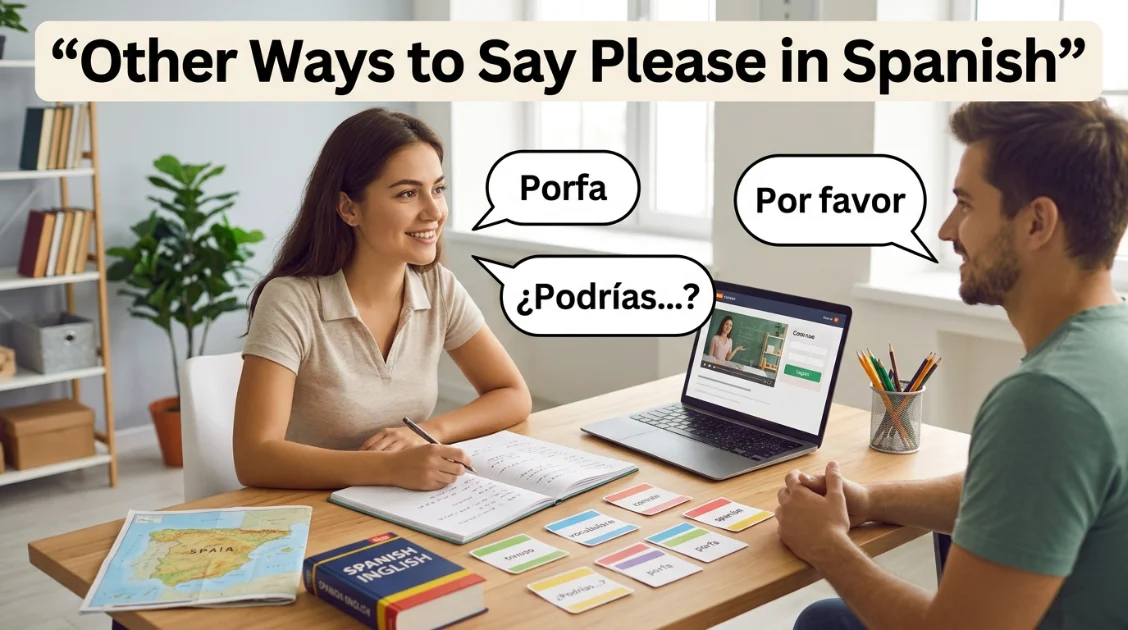
The most common ways to say please in Spanish include por favor, porfa, porfi, si puedes, ¿podrías?, ¿me podrías?, ¿te importaría?, and ¿sería posible?. The best choice depends on whether you are speaking casually, professionally, or respectfully.
Learning other ways to say please in Spanish can make your Spanish sound more natural, polite, and flexible. While por favor is the standard translation, native speakers use many other expressions depending on the relationship, situation, and level of formality.
Knowing these alternatives to please in Spanish is especially useful for English learners, travelers, professionals, and anyone communicating with Spanish speakers. Some expressions are friendly and casual, while others are better for business emails, customer service, or respectful requests. Just as learners practice how to express excitement in English, understanding polite request phrases can help you communicate with greater confidence and cultural awareness.
“Politeness is not only about the words you choose, but also about choosing the right tone for the situation.”
Quick Categories
Formal alternatives to “please in Spanish”
- Le agradecería que…
- Tenga la amabilidad de…
- ¿Sería tan amable de…?
- ¿Sería posible…?
Pro Tip: Use formal constructions with clients, officials, senior colleagues, and people you do not know well.
Casual alternatives
- Porfa
- Porfi
- Si puedes
- Cuando puedas
Pro Tip: Casual phrases work best with friends, family, classmates, and people with whom you have a relaxed relationship.
Professional alternatives
- ¿Podría…?
- ¿Me podría…?
- Le agradecería que…
- ¿Le importaría…?
Pro Tip: In professional Spanish, indirect requests often sound more courteous than direct commands.
Informal expressions
- Porfis
- Por favorcito
- Hazme el favor de…
- Anda, por favor
Pro Tip: These expressions depend heavily on context, so avoid overly familiar wording in professional communication.
“A polite request can sound completely different when you change just one phrase.”
Common Mistakes
1. Using “porfa” in formal situations
Mistake: “Porfa, envíeme el contrato.”
Better: “Por favor, ¿podría enviarme el contrato?”
Why: “Porfa” is informal and may sound too casual in professional communication.
2. Treating “¿podrías?” as a command
Mistake: Assuming “¿podrías…?” is rude.
Example: “¿Podrías ayudarme con esto, por favor?”
Why: The conditional form makes a request softer and more polite.
3. Using “hazme el favor” without considering tone
Mistake: “Hazme el favor de cerrar la puerta.”
Better: “¿Podrías cerrar la puerta, por favor?”
Why: Depending on tone and context, “hazme el favor” can sound demanding.
4. Confusing “porfi” with formal Spanish
Mistake: “Porfi, revise el documento.”
Better: “Por favor, revise el documento.”
Why: “Porfi” is highly informal and is generally unsuitable for professional writing.
5. Using a direct command when a polite request is needed
Mistake: “Envíame el informe.”
Better: “¿Podrías enviarme el informe, por favor?”
Why: A conditional question often creates a softer and more respectful tone.
What Does “Please in Spanish” Mean?
The standard Spanish equivalent of please is por favor. It is used to make requests sound polite and is appropriate in both casual and formal situations.
Spanish also has many indirect request structures that communicate politeness without always using por favor.
Example: “Por favor, cierra la puerta.”
This means “Please close the door.”
When to Use “Please in Spanish”
You can use polite Spanish request expressions in many situations:
- Everyday requests: Asking someone to pass something or help you.
- Restaurants: Requesting food, drinks, or assistance.
- Travel: Asking for directions or information.
- Workplace communication: Making requests to colleagues or clients.
- Customer service: Speaking politely with customers or staff.
- Formal situations: Making respectful requests to unfamiliar people.
Spoken vs. Written: Informal expressions such as porfa and porfi are mainly conversational, while formal structures such as le agradecería que work well in writing.
Formal vs. Informal: Por favor is flexible and can be used across many levels of formality.
Is “Please in Spanish” Professional or Polite?
Polite? ✔️ Yes
Professional? ✔️ Yes
The standard expression por favor is both polite and professional. However, the specific alternative you choose can make your request more or less formal.
Business-style example: “¿Podría enviarme el informe cuando tenga un momento, por favor?”
This sounds courteous and appropriate for professional communication.
Pros and Cons of Using “Por Favor”
Pros
- Simple and natural: It is the standard way to make a polite request.
- Friendly tone: It can soften direct requests.
- Common usage: Spanish speakers use it across many situations.
- Easy to understand: Learners can use it confidently with native speakers.
Cons
- Can become repetitive: Using it in every request may limit vocabulary variety.
- Not always necessary: Spanish often expresses politeness through sentence structure.
- Limited emotional range: It does not communicate every possible level of warmth or formality.
- Context still matters: Tone and relationship affect how a request sounds.
“Learning alternatives gives you more control over politeness, formality, and natural Spanish.”
Other Ways to Say “Please in Spanish” With Examples
These alternatives will help you sound more fluent, confident, and natural when making requests in Spanish.
Use them according to tone, context, and audience to communicate politely and appropriately.
1. Phrase: Por Favor
Meaning: A standard polite way to say “please.”
Explanation: This is the most versatile expression for polite requests.
Example Sentence: “Por favor, abre la ventana.”
Best Use: Everyday requests
Worst Use: None generally
Tone: Polite, neutral, natural
Context Variability: Casual: “Por favor, ayúdame.” Professional: “Por favor, revise el documento.” Spoken: “Por favor, espera.”
2. Phrase: Porfa
Meaning: A shortened informal form of “por favor.”
Explanation: It is commonly used in relaxed conversations and messages.
Example Sentence: “Porfa, mándame la dirección.”
Best Use: Friendly chats
Worst Use: Formal emails
Tone: Casual, friendly, relaxed
Context Variability: Casual: “Porfa, ayúdame.” Professional: Avoid it. Spoken: “Porfa, espera.”
3. Phrase: Porfi
Meaning: A cute or playful variation of “por favor.”
Explanation: It is especially informal and can sound affectionate or childlike.
Example Sentence: “Porfi, quédate un poco más.”
Best Use: Close relationships
Worst Use: Business communication
Tone: Playful, affectionate, informal
Context Variability: Casual: “Porfi, ayúdame.” Professional: Avoid it. Spoken: “Porfi, ven conmigo.”
4. Phrase: Porfis
Meaning: An informal and playful variation of “por favor.”
Explanation: It is often used in texts and friendly conversations.
Example Sentence: “Porfis, tráeme un poco de agua.”
Best Use: Casual messages
Worst Use: Formal writing
Tone: Playful, casual, friendly
Context Variability: Casual: “Porfis, ayúdame.” Professional: Avoid it. Spoken: “Porfis, espera.”
5. Phrase: Si Puedes
Meaning: “If you can.”
Explanation: This phrase makes a request softer by presenting it as something the listener can do if possible.
Example Sentence: “Si puedes, llámame esta tarde.”
Best Use: Gentle requests
Worst Use: Urgent instructions
Tone: Polite, casual, flexible
Context Variability: Casual: “Si puedes, ven.” Professional: “Si puede, envíeme el archivo.” Spoken: “Si puedes, ayúdame.”
6. Phrase: Cuando Puedas
Meaning: “When you can.”
Explanation: It politely indicates that the request does not necessarily need immediate action.
Example Sentence: “Cuando puedas, revisa este documento.”
Best Use: Nonurgent requests
Worst Use: Immediate tasks
Tone: Friendly, polite, relaxed
Context Variability: Casual: “Cuando puedas, llámame.” Professional: “Cuando pueda, ¿podría revisarlo?” Spoken: “Hazlo cuando puedas.”
7. Phrase: ¿Podrías…?
Meaning: “Could you…?”
Explanation: The conditional form creates a polite and natural request.
Example Sentence: “¿Podrías ayudarme con esta tarea?”
Best Use: Polite requests
Worst Use: Very formal letters
Tone: Polite, friendly, respectful
Context Variability: Casual: “¿Podrías ayudarme?” Professional: “¿Podrías enviarme el informe?” Spoken: “¿Podrías esperar?”
8. Phrase: ¿Me Podrías…?
Meaning: “Could you… for me?”
Explanation: Adding me makes the request personal while maintaining a polite tone.
Example Sentence: “¿Me podrías enviar el enlace?”
Best Use: Everyday requests
Worst Use: Formal notices
Tone: Polite, natural, friendly
Context Variability: Casual: “¿Me podrías ayudar?” Professional: “¿Me podrías enviar el documento?” Spoken: “¿Me podrías llamar?”
9. Phrase: ¿Podría…?
Meaning: “Could you…?” in a formal form.
Explanation: This form uses the formal usted structure and is useful with people you address respectfully.
Example Sentence: “¿Podría ayudarme con este formulario?”
Best Use: Formal requests
Worst Use: Close friends
Tone: Formal, polite, respectful
Context Variability: Casual: Usually too formal. Professional: “¿Podría enviarme el informe?” Spoken: “¿Podría esperar un momento?”
10. Phrase: ¿Me Podría…?
Meaning: “Could you… for me?” in formal Spanish.
Explanation: It is useful when making courteous requests to clients, officials, or unfamiliar people.
Example Sentence: “¿Me podría indicar cómo llegar al hotel?”
Best Use: Respectful requests
Worst Use: Close friends
Tone: Formal, courteous, respectful
Context Variability: Casual: Usually unnecessary. Professional: “¿Me podría enviar la información?” Spoken: “¿Me podría ayudar?”
11. Phrase: ¿Te Importaría…?
Meaning: “Would you mind…?”
Explanation: This is a polite way to ask someone to do something.
Example Sentence: “¿Te importaría cerrar la puerta?”
Best Use: Polite conversation
Worst Use: Formal announcements
Tone: Polite, indirect, friendly
Context Variability: Casual: “¿Te importaría ayudarme?” Professional: “¿Le importaría esperar?” Spoken: “¿Te importaría mover esto?”
12. Phrase: ¿Le Importaría…?
Meaning: “Would you mind…?” using formal Spanish.
Explanation: This expression creates a respectful and indirect request.
Example Sentence: “¿Le importaría esperar unos minutos?”
Best Use: Formal requests
Worst Use: Casual friends
Tone: Formal, respectful, courteous
Context Variability: Casual: Too formal. Professional: “¿Le importaría revisar el documento?” Spoken: “¿Le importaría esperar?”
13. Phrase: ¿Sería Posible…?
Meaning: “Would it be possible…?”
Explanation: This expression makes a request sound indirect and professional.
Example Sentence: “¿Sería posible cambiar la fecha de la reunión?”
Best Use: Professional requests
Worst Use: Casual favors
Tone: Formal, indirect, courteous
Context Variability: Casual: “¿Podrías cambiarlo?” Professional: “¿Sería posible cambiar la fecha?” Spoken: “¿Sería posible entrar?”
14. Phrase: ¿Serías Tan Amable de…?
Meaning: “Would you be so kind as to…?”
Explanation: This is a respectful way to ask someone to do something.
Example Sentence: “¿Serías tan amable de cerrar la puerta?”
Best Use: Respectful requests
Worst Use: Casual texting
Tone: Courteous, formal, respectful
Context Variability: Casual: Can sound formal. Professional: “¿Sería tan amable de enviarme el archivo?” Spoken: “¿Serías tan amable de ayudarme?”
15. Phrase: ¿Sería Tan Amable de…?
Meaning: A formal version of “Would you be so kind as to…?”
Explanation: It is particularly suitable when addressing someone with usted.
Example Sentence: “¿Sería tan amable de firmar aquí?”
Best Use: Formal situations
Worst Use: Close friends
Tone: Very polite, formal, respectful
Context Variability: Casual: Too formal. Professional: “¿Sería tan amable de responder?” Spoken: “¿Sería tan amable de esperar?”
16. Phrase: Le Agradecería Que…
Meaning: “I would appreciate it if…”
Explanation: This phrase communicates gratitude while making a polite request.
Example Sentence: “Le agradecería que me enviara la información.”
Best Use: Business emails
Worst Use: Casual favors
Tone: Professional, courteous, formal
Context Variability: Casual: Usually too formal. Professional: “Le agradecería que confirmara la cita.” Written: “Le agradecería que respondiera a la brevedad.”
17. Phrase: Te Agradecería Que…
Meaning: “I would appreciate it if…”
Explanation: This is the informal tú version of a courteous request.
Example Sentence: “Te agradecería que me avisaras cuando llegues.”
Best Use: Friendly requests
Worst Use: Formal business letters
Tone: Polite, warm, respectful
Context Variability: Casual: “Te agradecería que vinieras.” Professional: “Te agradecería que enviaras el archivo.” Spoken: “Te agradecería que me ayudaras.”
18. Phrase: Tenga la Amabilidad de…
Meaning: “Please be so kind as to…”
Explanation: This is a highly formal expression used for respectful requests.
Example Sentence: “Tenga la amabilidad de completar este formulario.”
Best Use: Official communication
Worst Use: Casual conversation
Tone: Very formal, respectful, courteous
Context Variability: Casual: Too formal. Professional: “Tenga la amabilidad de firmar aquí.” Written: “Tenga la amabilidad de proporcionar los datos solicitados.”
19. Phrase: Hazme el Favor de…
Meaning: “Do me the favor of…”
Explanation: It can be polite in some contexts but may sound demanding depending on tone.
Example Sentence: “Hazme el favor de cerrar la puerta.”
Best Use: Familiar requests
Worst Use: Client communication
Tone: Direct, informal, context-dependent
Context Variability: Casual: “Hazme el favor de ayudarme.” Professional: Better use “¿Podría…?” Spoken: “Hazme el favor de esperar.”
20. Phrase: Si No Es Mucha Molestia…
Meaning: “If it is not too much trouble…”
Explanation: This phrase shows consideration for the other person’s time or effort.
Example Sentence: “Si no es mucha molestia, ¿podrías ayudarme?”
Best Use: Gentle requests
Worst Use: Simple instructions
Tone: Polite, considerate, indirect
Context Variability: Casual: “Si no es mucha molestia, ayúdame.” Professional: “Si no es mucha molestia, ¿podría enviarlo?” Spoken: “Si no es mucha molestia, ¿puedes venir?”
21. Phrase: Si No Te Molesta…
Meaning: “If you don’t mind…”
Explanation: This informal phrase softens a request or asks for permission.
Example Sentence: “Si no te molesta, me sentaré aquí.”
Best Use: Casual situations
Worst Use: Formal letters
Tone: Casual, polite, considerate
Context Variability: Casual: “Si no te molesta, ayúdame.” Professional: “Si no le molesta, ¿podría esperar?” Spoken: “Si no te molesta, voy contigo.”
22. Phrase: Si No Le Molesta…
Meaning: “If you don’t mind…” in formal Spanish.
Explanation: It is useful when speaking respectfully with someone you address using usted.
Example Sentence: “Si no le molesta, quisiera hacerle una pregunta.”
Best Use: Formal conversations
Worst Use: Close friends
Tone: Formal, courteous, respectful
Context Variability: Casual: Usually unnecessary. Professional: “Si no le molesta, quisiera confirmar la fecha.” Spoken: “Si no le molesta, ¿puedo entrar?”
23. Phrase: Cuando Tengas un Momento…
Meaning: “When you have a moment…”
Explanation: This phrase politely indicates that a request is not necessarily urgent.
Example Sentence: “Cuando tengas un momento, ¿puedes revisar esto?”
Best Use: Workplace requests
Worst Use: Emergency situations
Tone: Friendly, polite, relaxed
Context Variability: Casual: “Cuando tengas un momento, llámame.” Professional: “Cuando tenga un momento, ¿podría revisarlo?” Spoken: “Hazlo cuando tengas un momento.”
24. Phrase: Cuando Tenga un Momento…
Meaning: “When you have a moment…” in formal Spanish.
Explanation: This expression politely respects the listener’s schedule.
Example Sentence: “Cuando tenga un momento, ¿podría revisar el informe?”
Best Use: Professional requests
Worst Use: Urgent matters
Tone: Professional, polite, considerate
Context Variability: Casual: Usually use “tengas.” Professional: “Cuando tenga un momento, ¿podría llamarme?” Written: “Cuando tenga un momento, le agradecería que revisara el documento.”
25. Phrase: ¿Me Harías el Favor de…?
Meaning: “Would you do me the favor of…?”
Explanation: This is an informal but polite request when speaking to someone you know.
Example Sentence: “¿Me harías el favor de guardar esto?”
Best Use: Friendly favors
Worst Use: Formal clients
Tone: Friendly, direct, polite
Context Variability: Casual: “¿Me harías el favor de ayudarme?” Professional: Prefer “¿Podría…?” Spoken: “¿Me harías el favor de esperar?”
26. Phrase: ¿Podrías Hacerme el Favor de…?
Meaning: “Could you do me the favor of…?”
Explanation: This combines a conditional request with a familiar expression of asking for help.
Example Sentence: “¿Podrías hacerme el favor de llamar a Ana?”
Best Use: Friendly requests
Worst Use: Formal documents
Tone: Polite, friendly, conversational
Context Variability: Casual: “¿Podrías hacerme el favor de venir?” Professional: Can sound familiar. Spoken: “¿Podrías hacerme el favor de esperar?”
27. Phrase: Anda, Por Favor
Meaning: “Come on, please.”
Explanation: This expression can show persuasion, impatience, disbelief, or playful insistence depending on tone.
Example Sentence: “Anda, por favor, quédate un poco más.”
Best Use: Friendly persuasion
Worst Use: Formal requests
Tone: Informal, persuasive, expressive
Context Variability: Casual: “Anda, por favor, ayúdame.” Professional: Avoid it. Spoken: “Anda, por favor, ven conmigo.”
28. Phrase: Por Favorcito
Meaning: A diminutive and affectionate form of “por favor.”
Explanation: It adds a playful or pleading quality and is generally used informally.
Example Sentence: “Por favorcito, déjame elegir la película.”
Best Use: Playful requests
Worst Use: Professional emails
Tone: Playful, affectionate, informal
Context Variability: Casual: “Por favorcito, ayúdame.” Professional: Avoid it. Spoken: “Por favorcito, espera.”
29. Phrase: Si Te Es Posible…
Meaning: “If it is possible for you…”
Explanation: This phrase makes a request less forceful by acknowledging that the listener may not be able to do it.
Example Sentence: “Si te es posible, ven un poco antes.”
Best Use: Gentle requests
Worst Use: Strict instructions
Tone: Polite, considerate, indirect
Context Variability: Casual: “Si te es posible, llámame.” Professional: “Si le es posible, envíe el documento hoy.” Spoken: “Si te es posible, ayúdame.”
30. Phrase: Si Le Es Posible…
Meaning: “If it is possible for you…” in formal Spanish.
Explanation: This is a courteous option for professional or respectful requests.
Example Sentence: “Si le es posible, ¿podría enviarnos la información hoy?”
Best Use: Professional requests
Worst Use: Casual friends
Tone: Formal, polite, respectful
Context Variability: Casual: Usually too formal. Professional: “Si le es posible, confirme la cita.” Written: “Si le es posible, agradeceríamos su respuesta.”
“The difference between casual and professional Spanish often comes down to how directly you make the request.”
Mini Quiz / Self-Check
1. Which phrase is most appropriate for a formal business email?
A. Porfa
B. Porfi
C. Le agradecería que…
D. Porfis
Answer: C. Le agradecería que…
2. Which expression is best for a close friend?
A. Tenga la amabilidad de…
B. Porfa
C. ¿Sería tan amable de…?
D. Le agradecería que…
Answer: B. Porfa
3. Which phrase means “Would you mind…?”
A. ¿Te importaría…?
B. Cuando puedas
C. Porfis
D. Si puedes
Answer: A. ¿Te importaría…?
4. Which expression is highly formal?
A. Porfa
B. Porfi
C. Por favorcito
D. Tenga la amabilidad de…
Answer: D. Tenga la amabilidad de…
Comparison Table: Top Alternatives
| Phrase | Tone | Best Use |
|---|---|---|
| Por favor | Neutral, polite | General requests |
| Porfa | Casual, friendly | Friends and texts |
| ¿Podrías…? | Polite, natural | Everyday requests |
| ¿Podría…? | Formal, respectful | Professional settings |
| ¿Sería posible…? | Formal, indirect | Business requests |
| Le agradecería que… | Professional, courteous | Business emails |
| ¿Te importaría…? | Polite, friendly | Everyday conversation |
| Tenga la amabilidad de… | Very formal | Official communication |
| Cuando puedas | Casual, relaxed | Nonurgent requests |
| Si le es posible… | Formal, considerate | Professional requests |
FAQs
What are the most common other ways to say please in Spanish?
The most common alternatives include por favor, porfa, porfi, ¿podrías?, ¿podría?, si puedes, and ¿sería posible?.
What is the polite way to say please in Spanish?
Por favor is the standard polite expression. Depending on the context, ¿podría…? and ¿sería posible…? can sound especially courteous.
What is a casual way to say please in Spanish?
Porfa, porfi, and porfis are casual alternatives commonly used with friends, family, or in informal messages.
How do you say please professionally in Spanish?
For professional communication, phrases such as ¿podría…?, ¿sería posible…?, and le agradecería que… are useful choices.
Is “porfa” appropriate in a professional email?
Usually no. Porfa is informal, so por favor or a more formal request structure is generally better for professional emails.
Conclusion
Learning different ways to say please in Spanish gives you greater control over tone, politeness, and context. While por favor is the safest general choice, expressions such as porfa, ¿podrías…?, ¿sería posible…?, and le agradecería que… allow you to adapt your Spanish naturally.
Practice these expressions in realistic conversations and written examples. Pay attention to whether you are speaking with a friend, colleague, customer, or unfamiliar person. Understanding these differences will make your Spanish more fluent, respectful, and confident.
Discover More Post:
- 30+ Other Ways to Say Leave Me Alone | Set Boundaries with …
- Other Ways to Say It Means a Lot | Meaningful Expressions …
- 30+ What Are Other Ways to Say According to? Smart …

Emma Richardson is a professional content writer at Replynst.com. She creates clear, engaging and well-researched content designed to answer readers’ questions while following modern SEO best practices. Her focus is on helpful, reader-friendly articles that deliver genuine value.